| Article number: | 10.00.005 |
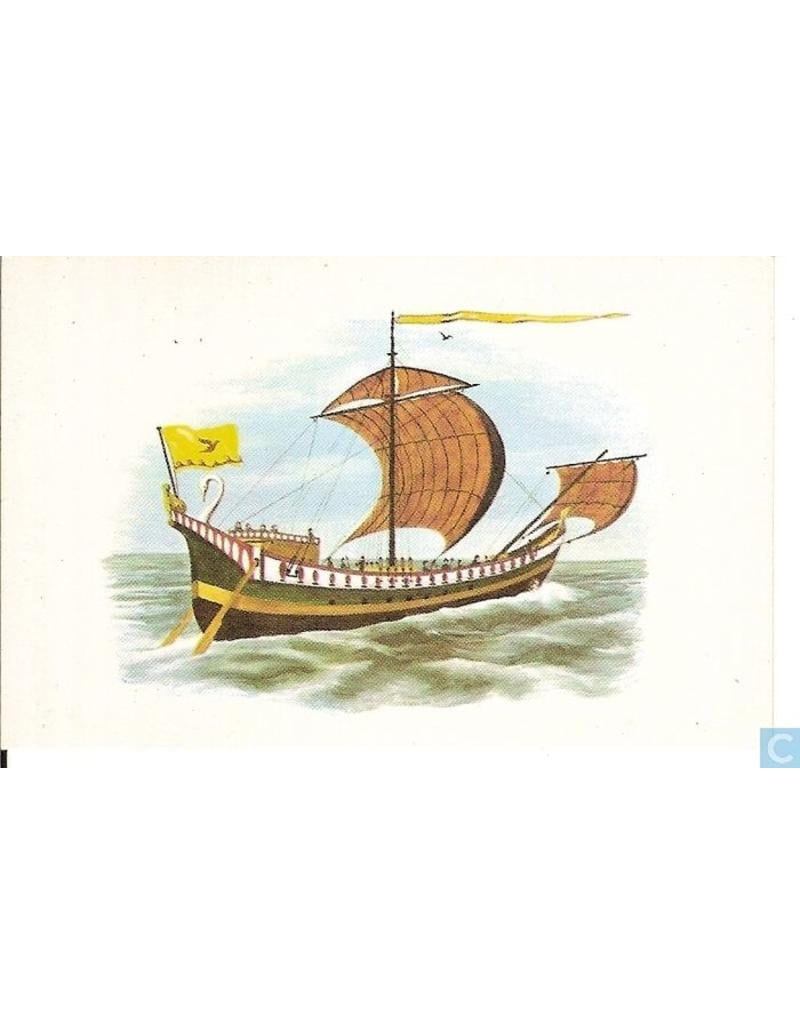
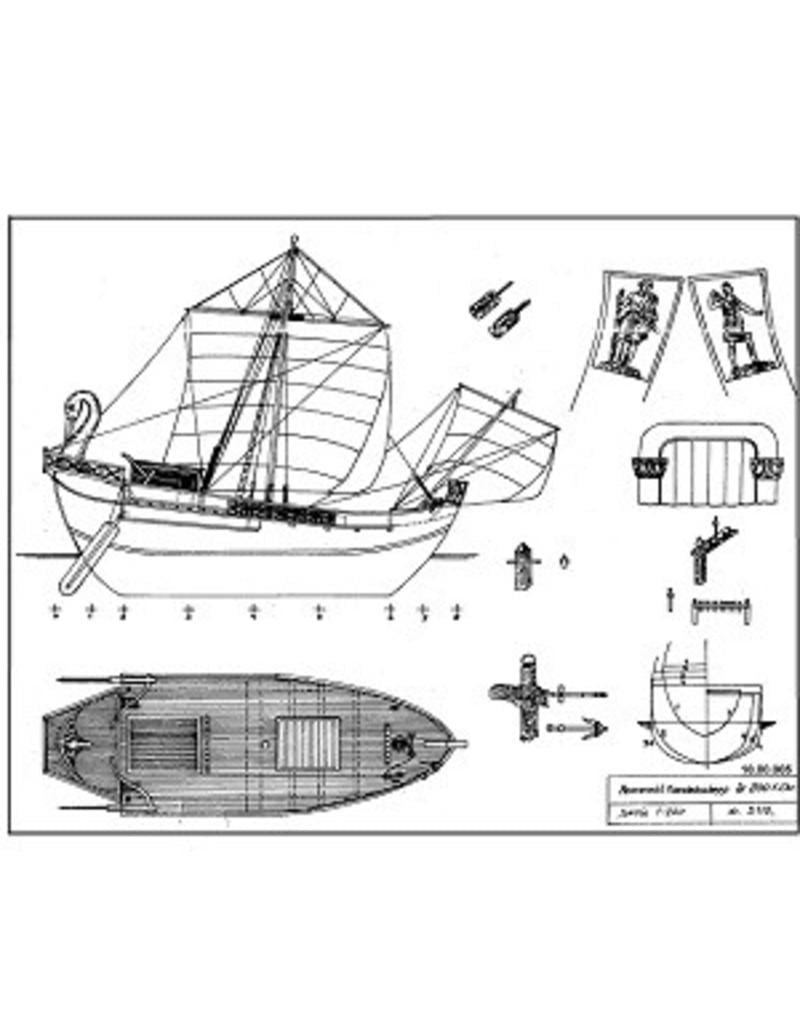
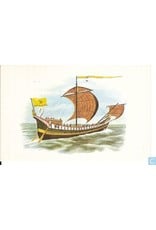
A Roman merchant ship was a type of vessel used by the ancient Romans for sea trade. These ships played a crucial role in the expansion of the Roman Empire, as they facilitated the exchange of goods, culture, and ideas between different parts of the empire, from the west in Spain to the east in present-day Turkey and Egypt.
Roman merchant ships were primarily designed for commercial and transport purposes. Unlike the military vessels used for warfare, merchant ships were often more stable and better suited for long voyages across the sea. The main characteristics of these ships were:
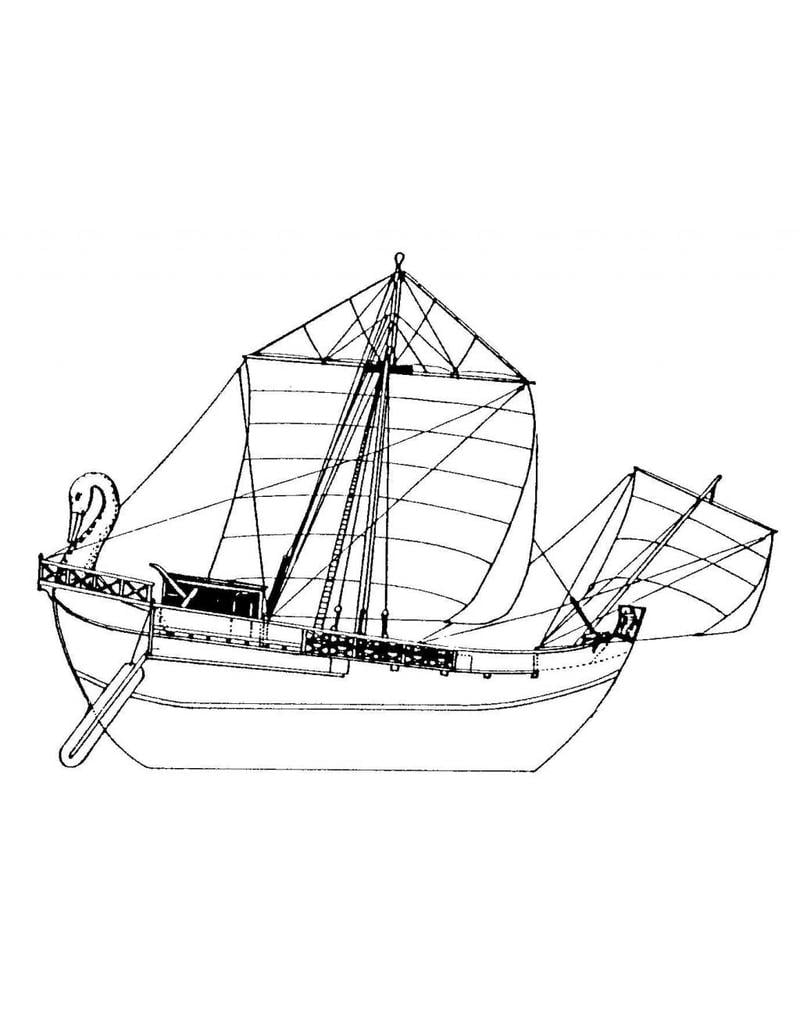
Type of ship: Most Roman merchant ships were dragon- or round-hulled ships (such as the navis oneraria), which were relatively simple to operate, yet robust enough to transport large cargoes. They had a relatively shallow draught, which made them suitable for both open sea and shallow waters.
Sails and oars: Roman merchant ships had both sails and oars, which allowed them to sail with the wind as well as progress with rowers when the wind was unfavourable. They often used lateen sails, which enabled an efficient way of sailing, especially along the coast.
Cargo: The ships were used for transporting all kinds of merchandise, from grain, olives, and wine to copper, stone, and textiles. Roman merchant ships were therefore essential for trade in the Mediterranean region and for maintaining the economic networks within the empire.
Dimensions: The size of these ships varied, but most were between 15 and 25 metres long, although there were larger ships that could be up to 50 metres long.
The Roman merchant ships were indispensable for transporting trade goods across the vast Roman Empire, and their trade routes extended throughout the entire Mediterranean region and even further. Some important trading points included:
Rome: The capital of the empire, which depended on the transport of food, especially grain from North Africa, as well as luxury goods from other parts of the empire.
Alexandria (Egypt): This was one of the most important ports for the grain trade, with ships sailing from here to Italy to supply the city with food.
Carthage (North Africa): This was another important trading point, where goods converged from ships across the entire Mediterranean region.
Gibraltar: Ships also passed through the Strait of Gibraltar to the coasts of Spain, Gaul, and even to the Britons.
The Romans were known for their ingenious technology, and this also extended to their shipbuilding. Roman merchant ships were often equipped with reinforced bows to better protect the ship against storms and hostile attacks. The navis oneraria was also equipped with large cargo holds to transport large quantities of goods, which contributed to the flourishing trade in the empire.
The rise of the Byzantine Empire after the fall of the Western Roman Empire led to changes in trade and shipping. During the early Middle Ages, after the fall of the Western Roman Empire in the 5th century AD, sea trade declined due to unrest and invasions by various barbarian tribes. It was only after the 11th century that European seafaring began to recover, with the emergence of the Hanseatic League and the Republic of Venice.
The Roman merchant ship was therefore a fundamental element in the flourishing of the Roman economy and interregional trade, contributing to prosperity and the cultural exchange process within the empire. The engineering and design of Roman ships also later influenced other maritime cultures.
If you would like to know more about specific ships, trade routes, or the influence of Roman shipping on later maritime cultures, please let me know!
Specifications :
|
Drawing number |
10.00.005 |
|
|
Description |
Roman merchant ship |
|
|
Quality |
frames; general plan; some details |
|
|
Scale |
1 : 200 |
|
|
Number of sheets A00 |
0 |
|
|
Number of sheets A0 |
0 |
|
|
Number of sheets A1 |
0 |
|
|
Number of sheets A2 |
0 |
|
|
Number of sheets A3 |
0 |
|
|
Number of sheets A4 |
1 |
|
|
Number of sheets A4 text |
0 |
|
|
Weight in grams |
30 |
|
|
Special features |
l.o.a. 16 cm |
|
|
Remarks |
||