| Article number: | 10.05.025 |
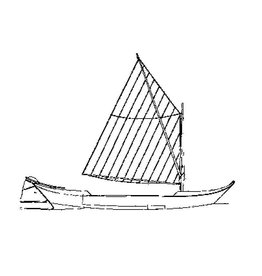
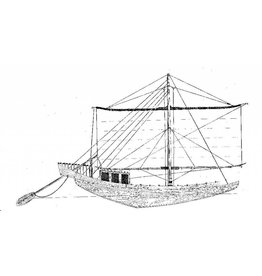
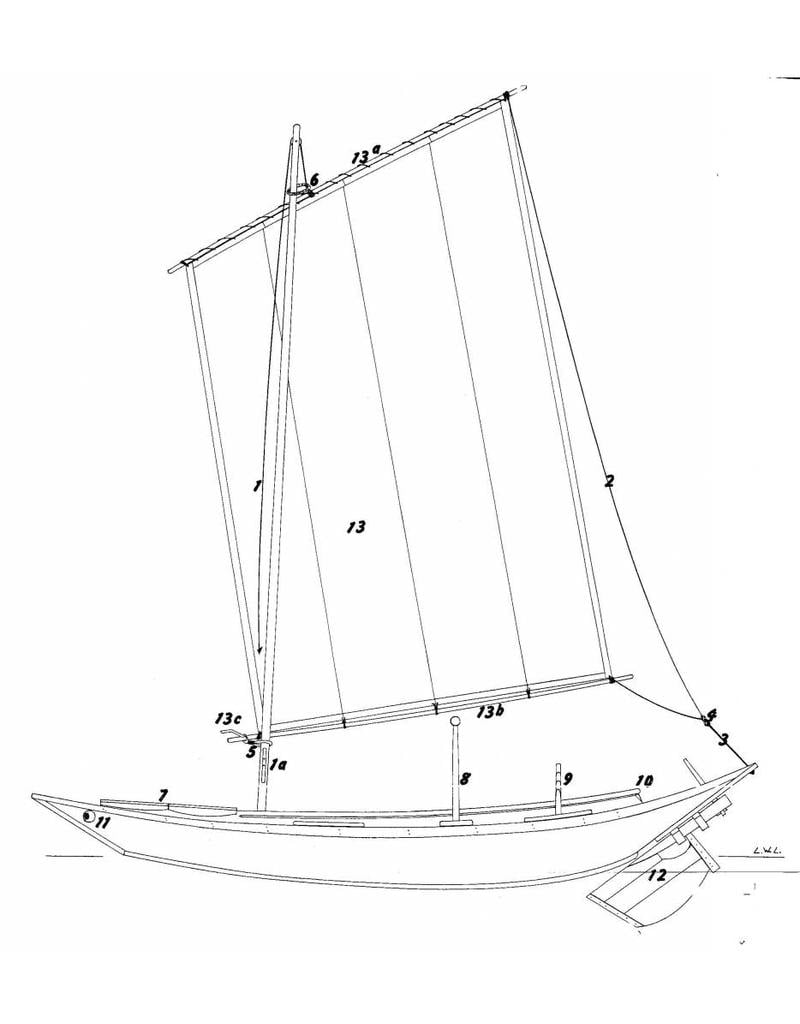
A Shanghai sampan is a type of traditional Chinese boat that was widely used in and around Shanghai, particularly in the 19th and 20th centuries. The word sampan comes from Cantonese (三板, literally ‘three planks’) and refers to a small, simple wooden vessel used on rivers, canals and coastal waters in East and Southeast Asia. The Shanghai variant had several specific features that adapted it to the urban and commercial context of this port city.
Construction:
Wooden, flat-bottomed hull.
Usually 5 to 9 metres long.
Built for stability on rivers and sheltered bays such as the Huangpu Jiang (Shanghai River).
Propulsion:
Traditionally with oars or a single-bladed paddle at the stern (the ‘yuloh’ or Chinese oar).
Some had a small sail or were fitted with a small outboard motor in the 20th century.
Canopy:
A typical feature was a semi-circular bamboo or wooden canopy over the centre of the boat, which provided protection from the sun and rain.
This canopy made it possible to live on the boat, which was common among poorer fishing and boat-dwelling families.
Use:
Passenger transport within the city (a kind of water taxi).
Freight transport to and from markets or larger ships.
Living space for poor families – some lived on board their entire lives.
Fishing boats in the rivers and coastal waters of the Yangtze Delta.
In colonial Shanghai (from the late 19th century to the mid-20th century), the harbour and riverbanks were teeming with sampans. They were indispensable to urban logistics.
The boats were often manned by poor Chinese people who knew the rivers like the back of their hands. Women also regularly steered sampans – particularly within families.
Many foreign travellers and photographers in the 19th century captured the bustling life on Shanghai’s rivers, with the sampan as an iconic feature.
With the modernisation of Shanghai, the disappearance of traditional port activities, and the advent of motorised transport, sampans have virtually vanished from the everyday cityscape. Yet they remain an important symbol of the old maritime life in Chinese port cities.
In some parts of Southeast Asia, sampans can still be seen, often as a tourist attraction or for small-scale fishing.
Specifications:
|
Drawing number |
10.05.025 |
|
Author |
W. Asbach |
|
Description |
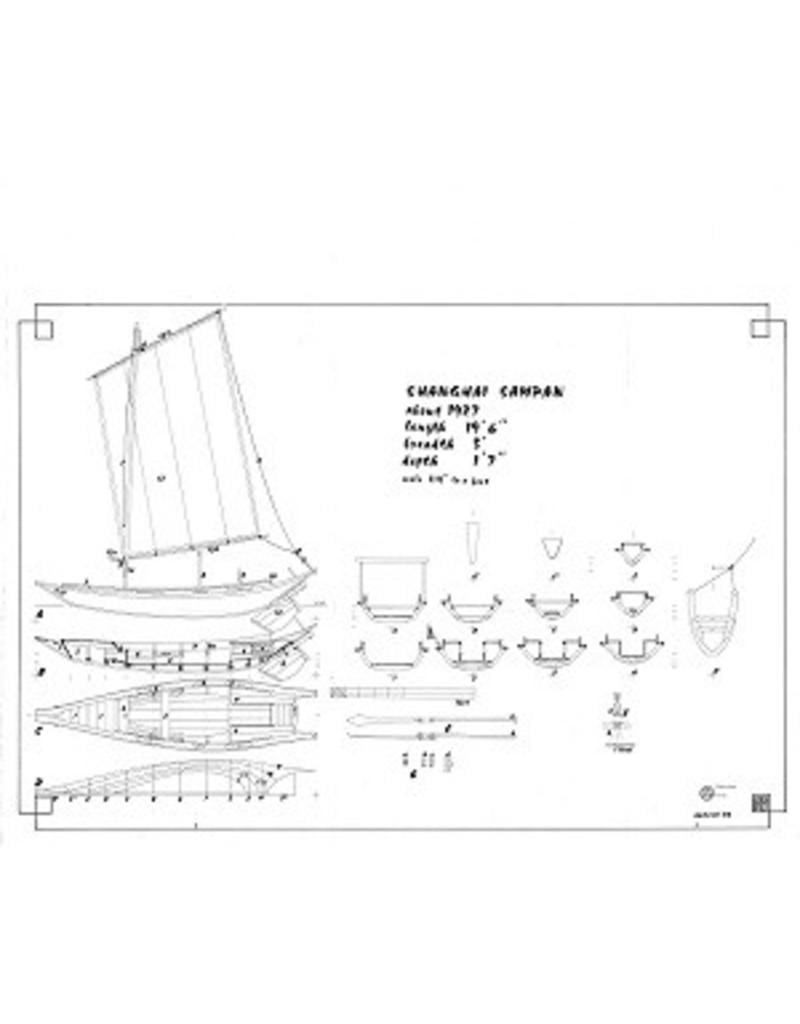
Shanghai Sampan (circa 1927) |
|
Quality |
general plan; side/lines; sections; rigging plan; details; description |
|
Scale |
1 : 16 |
|
Number of sheets A00 |
0 |
|
Number of A0 sheets |
1 |
|
Number of A1 sheets |
0 |
|
Number of A2 sheets |
0 |
|
Number of A3 sheets |
0 |
|
Number of A4 sheets |
1 |
|
Total number of drawing sheets |
2 |
|
Number of A4 text sheets |
5 |
|
Weight in grams |
125 |
|
Special features |
A small workboat used almost everywhere in China. |