| Article number: | 10.11.096 |
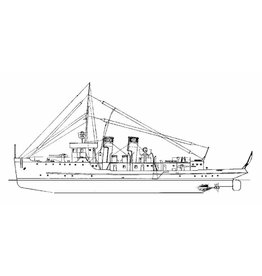
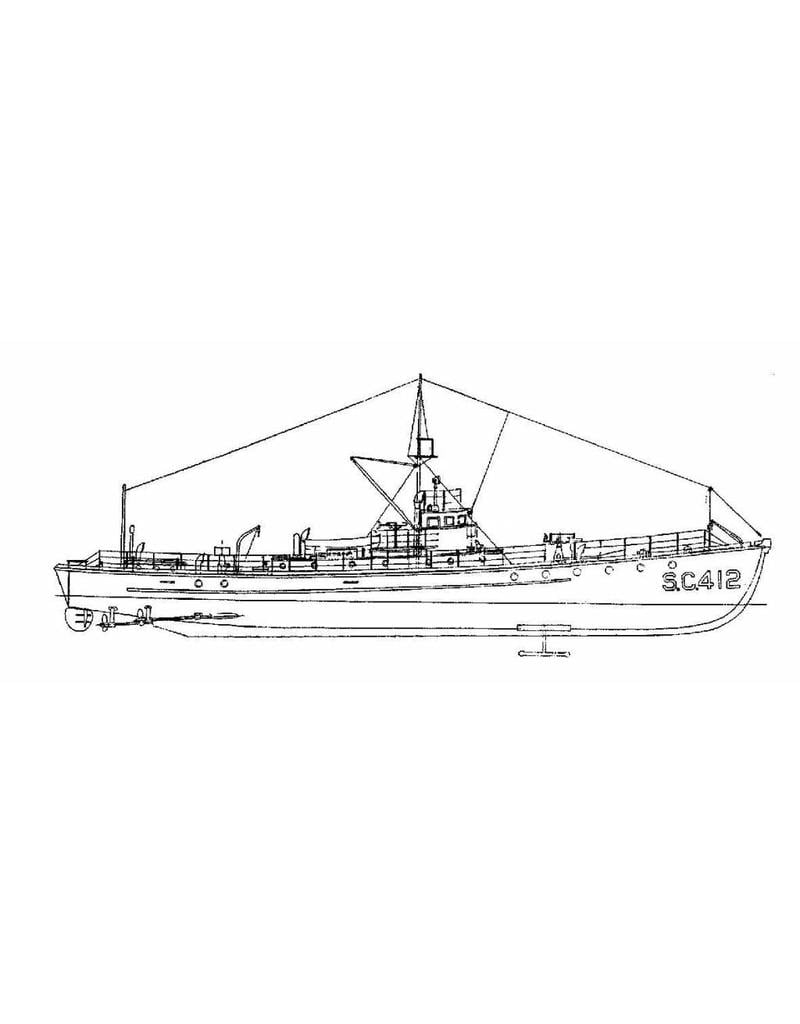
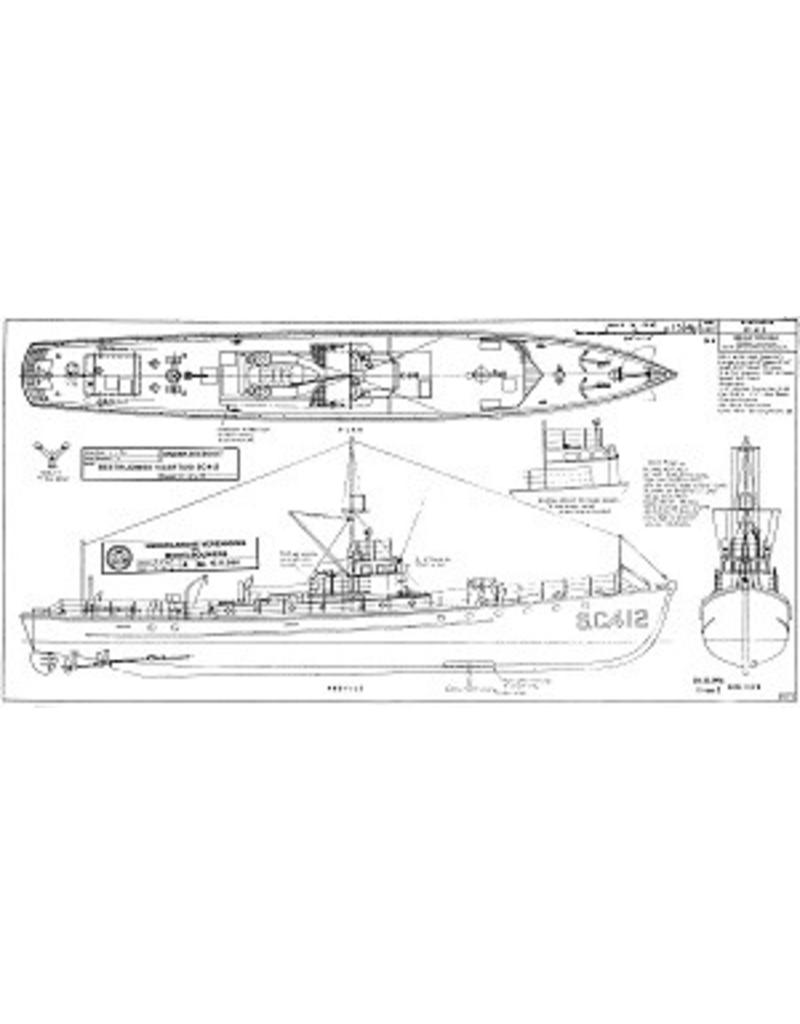
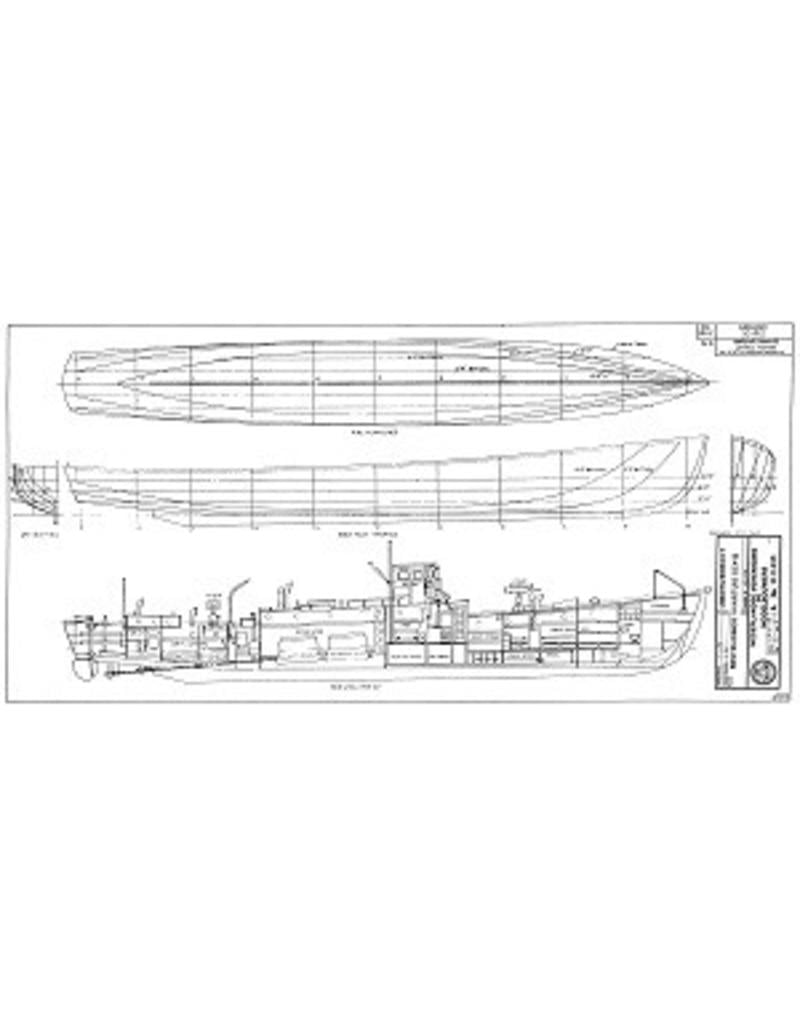
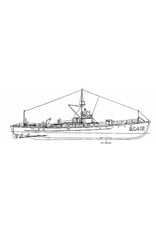
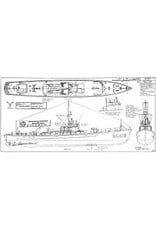
Description of the USS S.C. 412, one of the S.C.-1-class submarine chasers of the US Navy from the First World War.
Full name: USS Submarine Chaser 412
Type: Submarine Chaser
Class: S.C.-1 class
Hull number: S.C. 412
Builder: New York Yacht, Launch & Engine Company, Morris Heights, New York
Keel laid: 1918
Launched: 1918
Commissioned: 1918
Decommissioned: circa 1921
During the First World War, the US Navy faced the growing threat of German U-boats. To combat this, a large fleet of small, manoeuvrable wooden submarine chasers was developed — the S.C.-1 class, often affectionately known asthe ‘Splinter Fleet’due to their wooden hulls.
In total, more than 440 vessels of this type were built between 1917 and 1919.
| Specification | Data |
|---|---|
| Displacement | approx. 85 tonnes (standard) |
| Length | 34.1 m (110 ft) |
| Beam | 5.3 m (17.5 ft) |
| Draught | 1.8 m (6 ft) |
| Propulsion | 3 × 220 hp petrol engines (Standard Motor Construction Co.) |
| Speed | approx. 18 knots |
| Range | approx. 1,000 nautical miles at 10 knots |
| Crew | 25–30 |
| Armament | 1 × 3-inch (76 mm) gun, 2 × depth charge launchers, light machine guns |
War service (1918):
S.C. 412 was commissioned in 1918 and assigned to the U.S. Naval Coast Defence Forces for anti-submarine patrols along the east coast of the United States.
Some ships of her class were also deployed in European waters, particularly around the Mediterranean (near Corfu, Gibraltar and the Adriatic Sea), but it is unclear whether S.C. 412 herself was sent there.
After the war:
Following the armistice in November 1918, many of these ships remained in service for several more years as training or patrol vessels.
Around 1921, S.C. 412 was decommissioned and struck from the naval register.
Most S.C.-class ships were subsequently sold to civilian owners or scrapped, whilst a few were converted into fishing vessels or yachts.
The S.C.-1-class ships were small, fast and cheap to produce, ideal for mass production in small shipyards.
Their wooden hulls made them lighter, but also more vulnerable — hence the nickname “Splinter Fleet.”
They often operated in groups of three, using hydrophones (the earliest sonar equipment) to search for submarines and then dropping depth charges.
Specifications:
|
Drawing number |
10.11.096 |
|
Description |
Submarine chaser USS S.C. 412; S.C.1-class Submarine Chasers (from 1918) |
|
Quality |
line drawing; longitudinal section; side view; deck plan; English text |
|
Scale |
1 : 64 |
|
Number of sheets A00 |
0 |
|
Number of A0 sheets |
0 |
|
Number of A1 sheets |
0 |
|
Number of A2 sheets |
2 |
|
Number of A3 sheets |
0 |
|
Number of A4 sheets |
0 |
|
Total number of drawing sheets |
2 |
|
Number of A4 text pages |
0 |
|
Weight in grams |
65 |
|
Details |
length 52 cm |
|
Comments |
artek 0037 |