| Article number: | 10.20.005 |
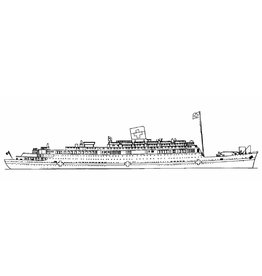
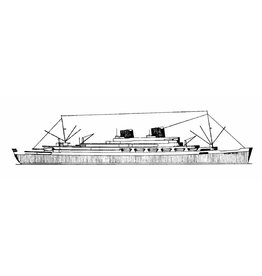
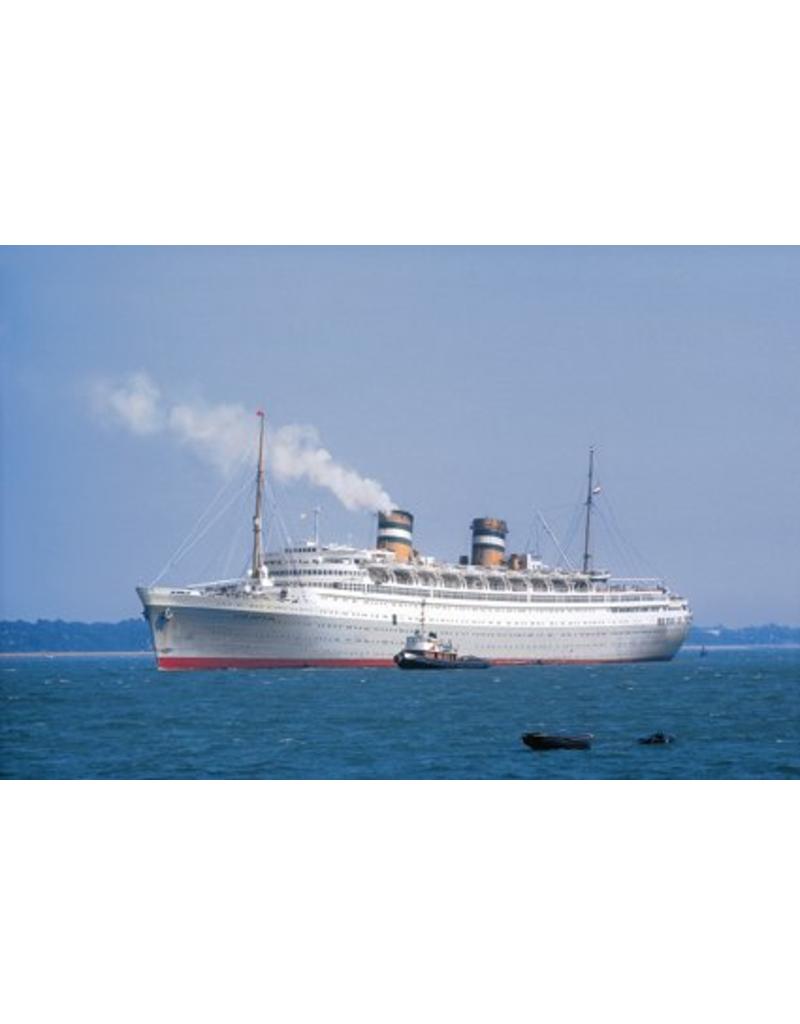
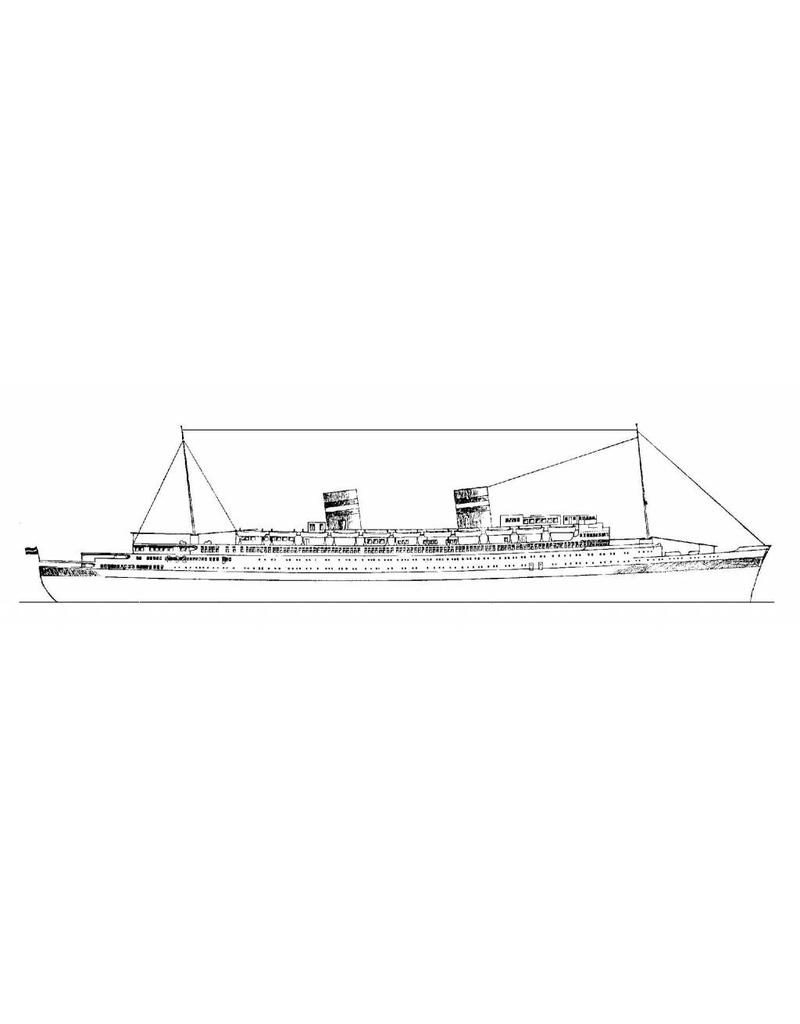
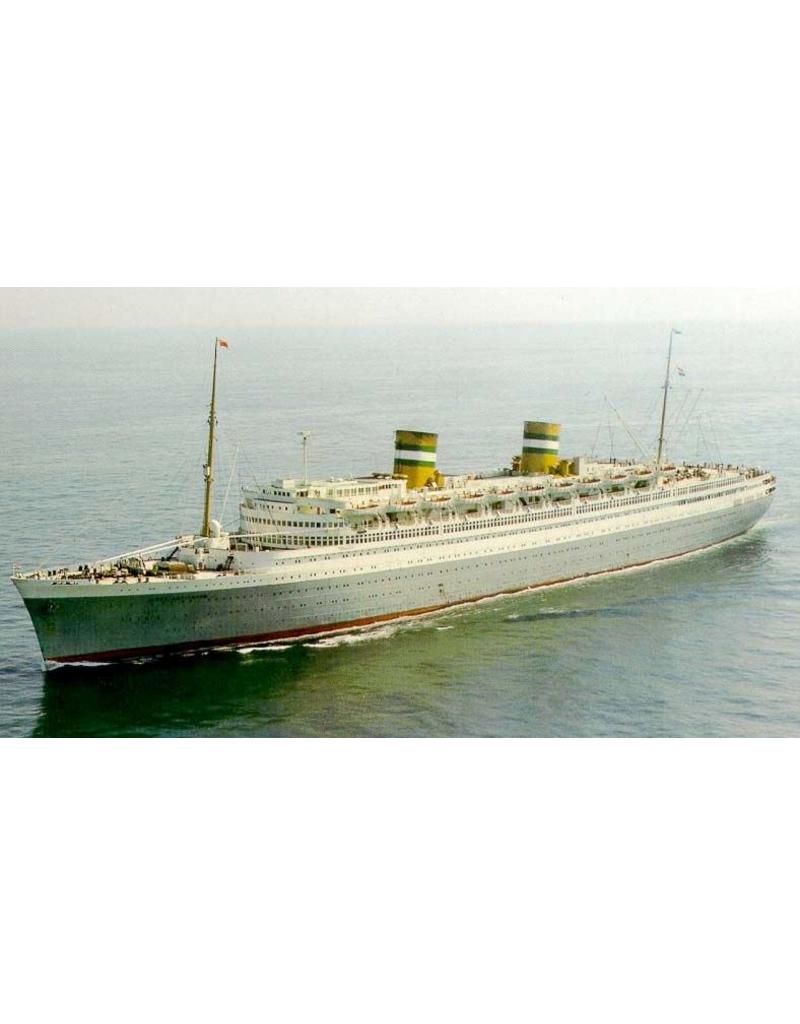
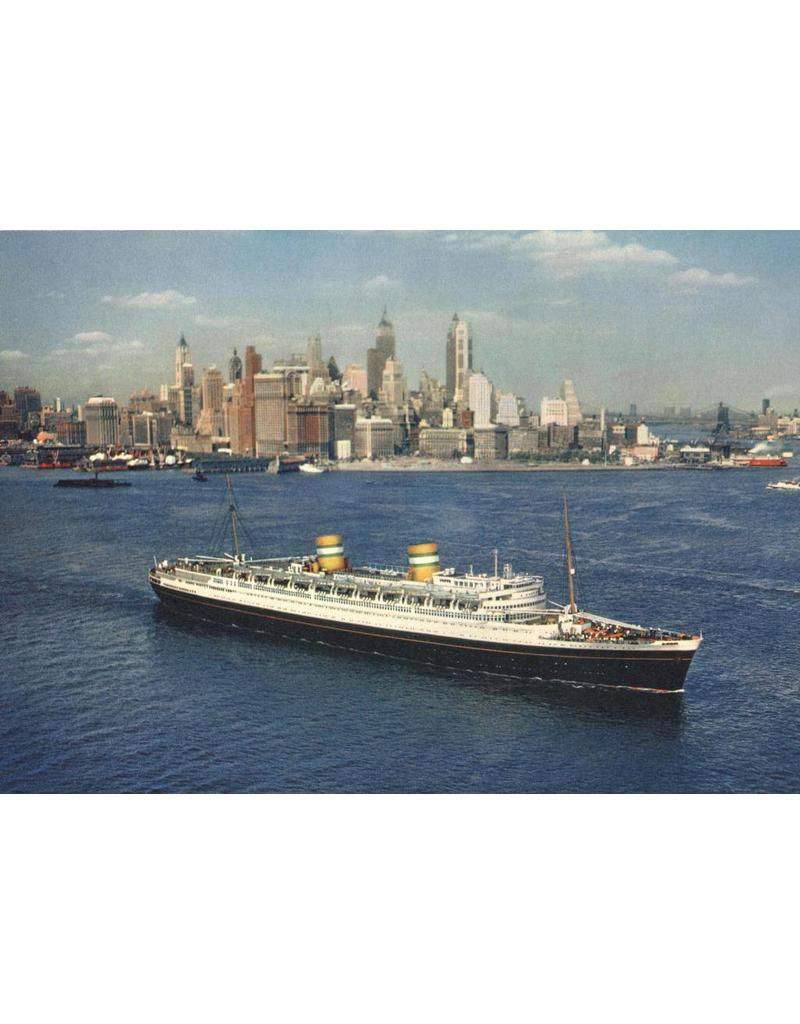
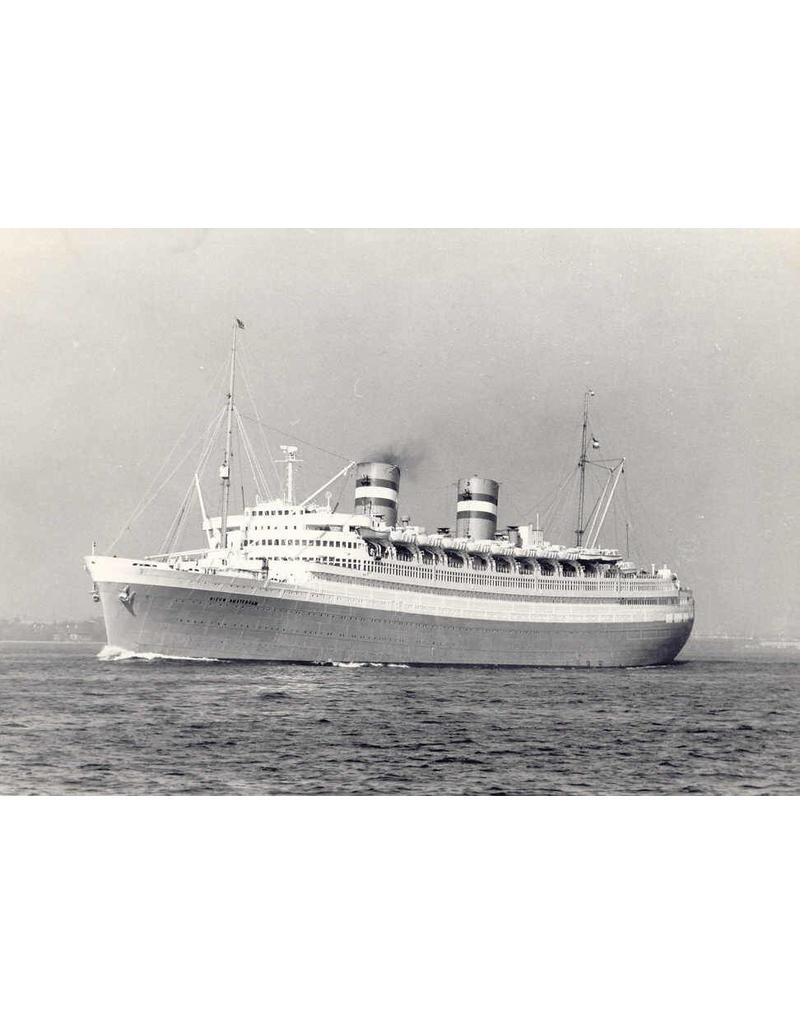
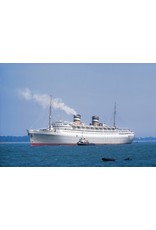
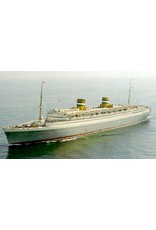
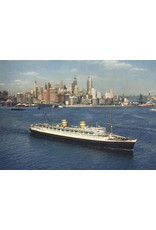
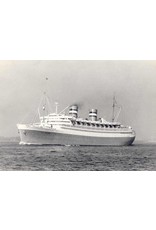
The Nieuw Amsterdam was a Dutch passenger ship built in Rotterdam for the Holland-America Line (HAL). This Nieuw Amsterdam, the second of four HAL ships to bear this name, is regarded by many as the finest Dutch passenger ship of its time.
Construction and launch
The first Nieuw Amsterdam of the Holland-America Line was laid down in 1930. Following a delay of several years, partly due to a reorganisation of the HAL, the keel was laid on 5 January 1936 for a new ship for the transatlantic route. With a gross tonnage of 35,000, this was to become the largest passenger ship in the Netherlands.
Originally, the new ship was to be named Prinsendam. However, this was changed to Nieuw Amsterdam, referring to the earlier ship on the route and to the original name of the city of New York. The ship was built by the Rotterdamsche Droogdok Maatschappij (RDM) and christened by Queen Wilhelmina in April 1937.
Unlike other ships of that era, the design of the Nieuw Amsterdam did not take into account any potential role in wartime, for example as a hospital ship. Instead, the ship was proudly touted as a ‘ship of peace’.
Interior
See also Artists who contributed to the interior design of the Nieuw Amsterdam
The Nieuw Amsterdam was regarded as the national flagship and a showcase for the Netherlands, just as the Normandie was for France, the Queen Mary for the United Kingdom and the United States later for the United States.
Dutch artists were therefore keen to contribute to the interior design of the new ship when asked. As a token of gratitude for the many commissions, the Holland-America Line was presented with a bronze sculpture, ‘Nude with Flower’, created by Hendrik Chabot, by the Dutch Artists’ Association. It was placed on the steps in the departure hall. It probably depicts the goddess Fortuna, bidding farewell to those setting off to seek their fortune elsewhere.
The unveiling took place on 8 March 1940. During the war, the statue disappeared from view. In 1998, a second copy of the statue was placed on the steps of the current Cruise Terminal on the Wilhelminakade in Rotterdam.
Departure from Hoek van Holland
The ship was fitted out in Art Deco style. Modern architects were involved, such as J.P.L. Hendriks, Hendrik Wijdeveld, J.J.P. Oud and Sybold van Ravesteyn.[1] The interior was further characterised by light, elegance and a modern look. The Nieuw Amsterdam was therefore nicknamed the ‘ship of tomorrow’.
A highlight of the ship’s interior was the first-class restaurant, with a ceiling clad in Moroccan leather and Murano glass and pillars covered in gold leaf. One of the two swimming pools on board was tiled in Delft blue.
The ship also had an air-conditioned theatre designed according to the latest acoustic principles. At the entrance to the theatre for the cabin class was a decorative lacquer panel in red, black, gold and chestnut brown by Reijer Stolk.
Until then, there had been only one other passenger ship with its own theatre, the French Normandie. Another unique feature for the time was that first-class passengers had their own en-suite bathrooms.
Pre-war years
On 23 April 1938, the Nieuw Amsterdam began trial voyages on the North Sea. It was subsequently handed over to the HAL and officially registered as a Dutch merchant ship. It made its maiden voyage to New York on 10 May 1938. Although smaller and slower than other ships of the time, the Nieuw Amsterdam became popular and profitable due to its unique design and layout.
War years
The ship had made only 17 voyages when the Second World War broke out. As a result, it was immediately laid up in Hoboken, New Jersey, where it remained for a year.
When the Netherlands was occupied by Hitler’s armies in 1940, the Nieuw Amsterdam was deployed by the British government as a troop transport ship. For this purpose, additional kitchens were built, spaces were fitted out with countless hammocks, and armaments were installed. 2,000 tonnes of original furniture and decorations were removed from the ship and stored in San Francisco.
The first voyage as a troop transport ship took place in January 1941, from Australia to Bombay. It was accompanied on this journey by other famous passenger ships carrying troops, such as the Queen Mary, Mauretania, Aquitania, Empress of Britain and Andes. The ship saw service during the Battle of Madagascar and Operation Pamflet.
In May 1944, whilst the Nieuw Amsterdam was anchored in New York, the then Princess Juliana, daughter of Queen Wilhelmina, visited the ship for lunch and a tour.
Arrival of the Nieuw Amsterdam in Rotterdam
In October and November 1945, 5,000 Dutch troops and civilians were transported from Southampton to Singapore en route to the Dutch East Indies. The Nieuw Amsterdam was subsequently deployed for the repatriation of Dutch nationals from the Dutch East Indies. On 8 December, the ship left Singapore with 3,800 Dutch nationals, including 1,200 children. The children were very weak after spending years in Japanese camps. A measles outbreak occurred on board the ship and many of the children died.
During the war years, the Nieuw Amsterdam transported more than 350,000 soldiers and covered 530,000 nautical miles.
In 1946, the ship was returned to HAL. When it made its triumphant return to Rotterdam on 10 April 1946, still entirely in grey wartime colours with only the HAL colours on the funnels, it was greeted by many thousands of people on the quays.
Post-war reconstruction
The six years of wartime service had left their mark on the Nieuw Amsterdam. It took eighteen months to convert the ship back into a passenger vessel. 3,000 seats and 500 tables were sent back to the original manufacturers for restoration. A quarter of all the furniture had to be completely replaced. The rubber flooring and almost all the carpeting were also renewed. Floors, ceilings, panelling, wiring: everything was overhauled, cleaned or replaced. Everything, right down to the wooden railings on the deck, bore the marks of the soldiers who had sailed on the Nieuw Amsterdam.
Post-war service
On 29 October 1947, the Nieuw Amsterdam returned to service. As a result of the extensive refit, the ship had increased in size by 400 GRT. Its gross tonnage was now 36,667 GRT.
During the first few years after the war, the ship sailed successfully on the transatlantic route. Together with the Willem Ruys of the Koninklijke Rotterdamsche Lloyd and the Oranje, the Nieuw Amsterdam was regarded as one of the ‘Big Three’ of Dutch passenger shipping.
Minor refits in the 1950s ensured that it remained as popular as ever despite the arrival of newer ships. Among other things, air conditioning was installed and stabilisers fitted. The old three-class system was also replaced by the more modern division into first class and tourist class.
End
In the 1960s, the ship began to show more significant signs of ageing. The steam boilers were replaced in 1967 by Wilton-Fijenoord in Schiedam.
Due to fierce competition from the emerging aviation industry, the Nieuw Amsterdam was withdrawn from the transatlantic route and deployed for cruises to the Caribbean. On 8 November 1971, it made its final transatlantic voyage. In 1972, it was registered under the Antillean flag.
However, the old ship soon proved far too expensive to operate and the cruises were no longer profitable. This was the final blow for the once-admired ship. On 17 December 1973, it was taken out of active service and laid up. On 9 January 1974, it made a final farewell cruise to Los Angeles. It then sailed to Taiwan, where it arrived on 25 February 1974 to be scrapped by Nan Fong Steel Enterprises Ltd.
Specifications:
|
Drawing number |
10.20.005 |
|
Author |
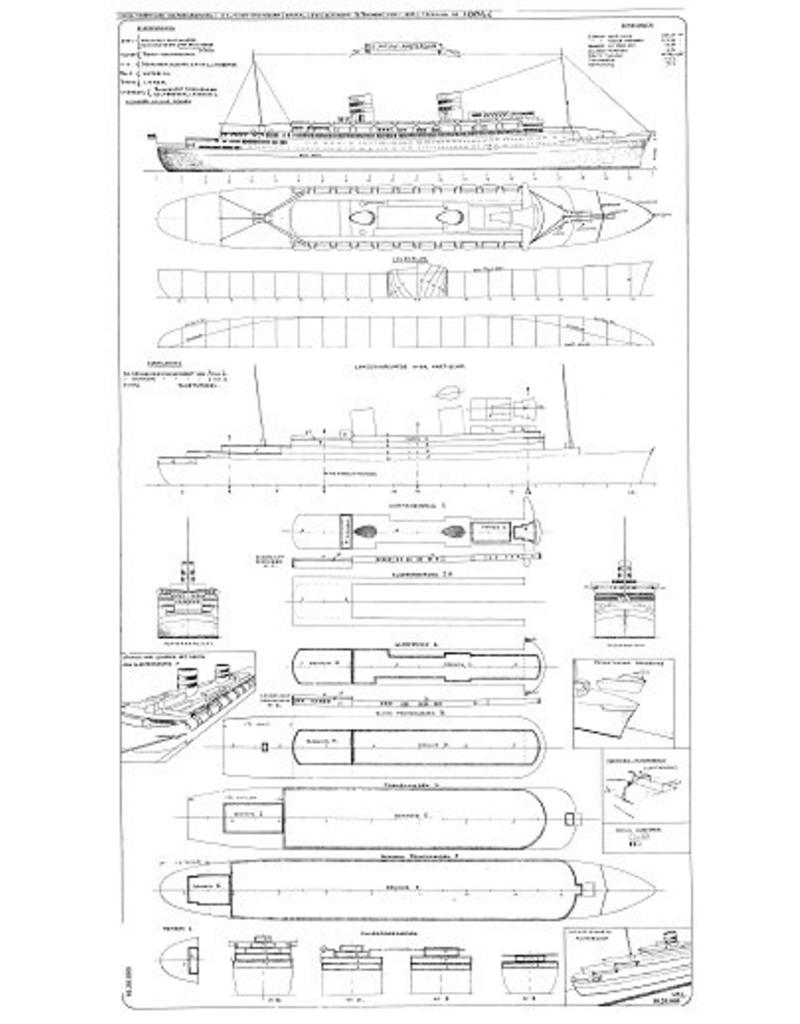
B. Bouman |
|
Description |
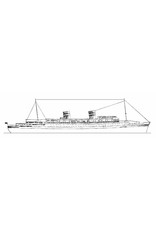
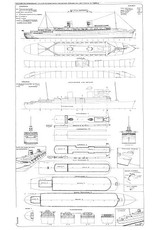
Passenger ship SS "Nieuw Amsterdam" (1938) - HAL |
|
Quality |
frames to the waterline; side view; deck plans; number of cross-sections |
|
Scale |
1 : 500 |
|
Number of sheets A00 |
0 |
|
Number of A0 sheets |
1 |
|
Number of A1 sheets |
0 |
|
Number of A2 sheets |
0 |
|
Number of A3 sheets |
0 |
|
Number of A4 sheets |
0 |
|
Total number of drawing sheets |
1 |
|
Number of A4 text sheets |
0 |
|
Weight in grams |
105 |
|
Details |
L.O.A. 45 cm |
|
Remarks |