| Article number: | 50.02.017 |
Wright Flyer III (1905)
Source: www.wikipedia.org/wiki/Wright_Flyer_III
(Editor’s note: the accompanying text is in English; a Dutch version was not available.)
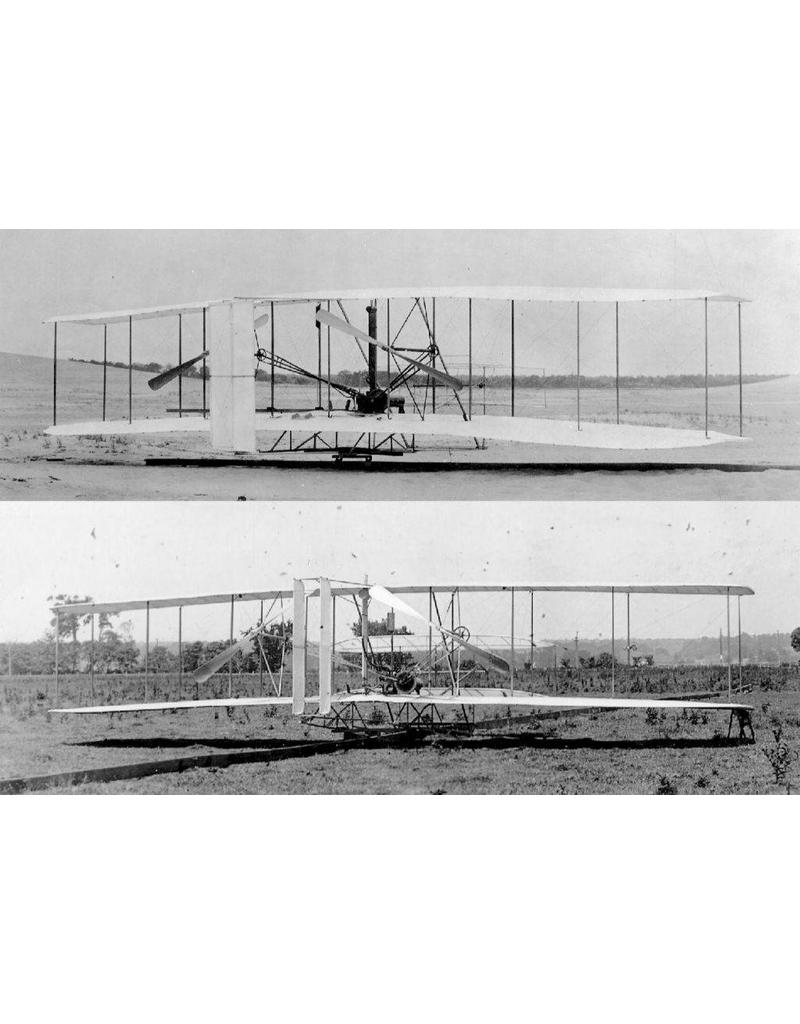
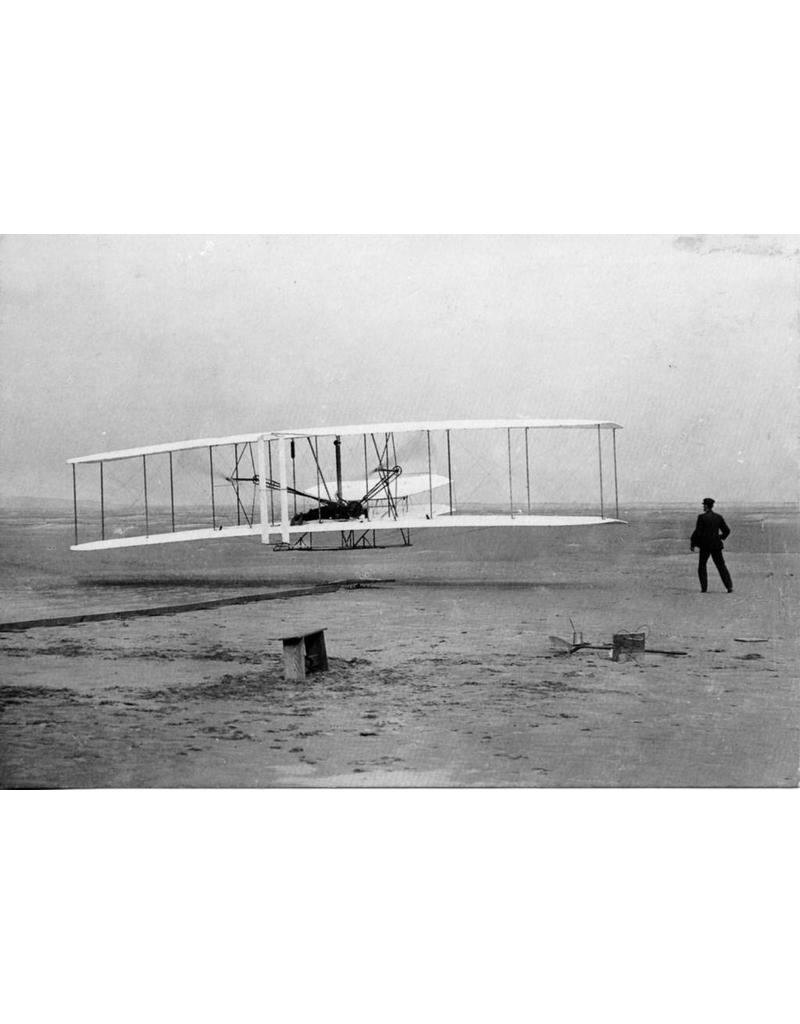
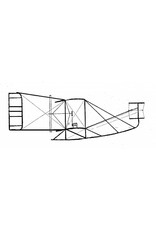
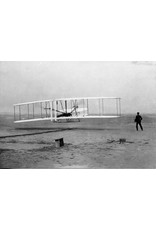
The Wright Flyer III was the third powered aircraft built by the Wright Brothers, constructed during the winter of 1904–05. Orville Wright made the first flight with it on 23 June 1905. The Flyer III had a spruce airframe with a wing camber of 1-in-20, as used in 1903, rather than the less effective 1-in-25 used in 1904. The new machine was equipped with the engine and other components from the scrapped Flyer II and, following major modifications, achieved much greater performance than Flyers I and II.
Ì´Ì_
Design and development.
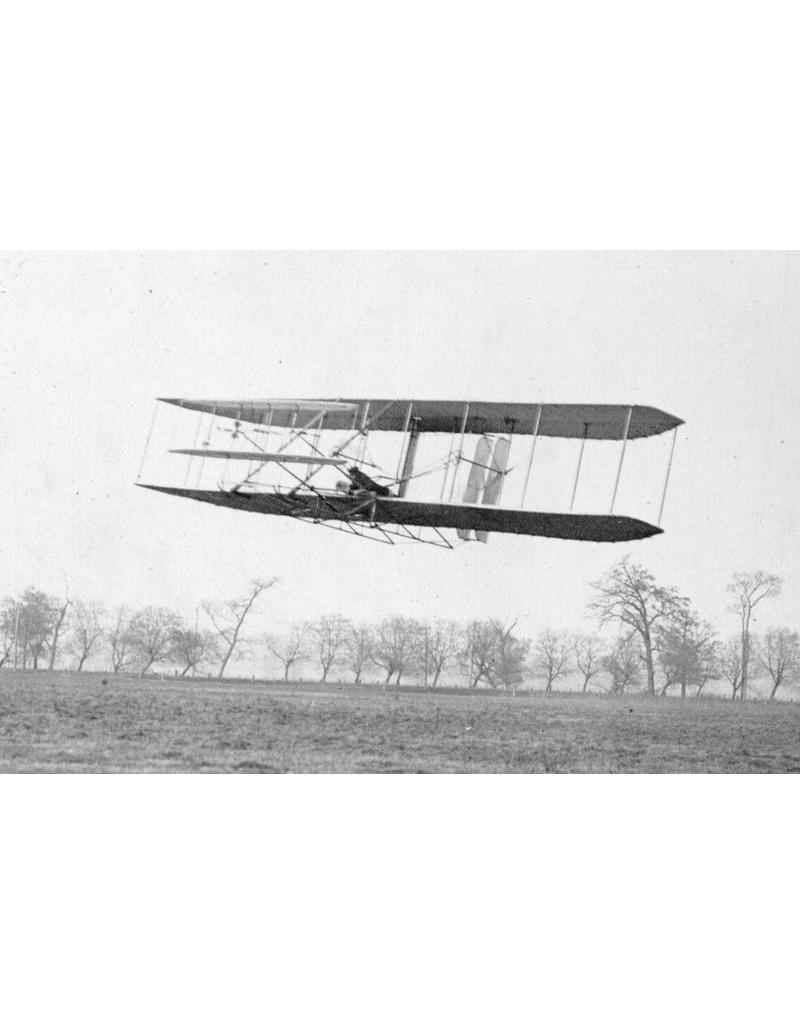
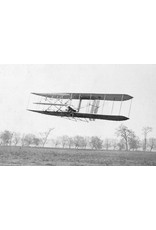
As initially built, the Flyer III looked almost the same as its predecessors and offered equally marginal performance. Orville suffered minor injuries in a serious nose-dive crash in the machine on 14 July 1905. When rebuilding the aeroplane, the Wrights made important design changes that solved the stability problems of the earlier models. They almost doubled the size of the elevator and rudder and moved them about twice the distance from the wings. They added two fixed half-moon shaped vertical vanes (called "blinkers") between the elevators (but later removed) and widened the skid-undercarriage, which helped give the wings a very slight dihedral. They disconnected the rudder of the rebuilt Flyer III from the wing-warping control, and, as in most future aircraft, placed it on a separate control handle. They also installed a larger fuel tank and mounted two radiators on the front and rear struts to provide extra coolant to the engine for the anticipated long-duration flights. When testing of the Flyer III resumed in September, the improvement was obvious. The pitch instability that had hampered Flyers I and II was brought under control. Crashes, some of which had been severe, no longer occurred. Flights with the redesigned aircraft began lasting over 20 minutes. The Flyer III became practical and dependable, flying reliably for significant durations and bringing its pilot back to the starting point safely and landing without damage.
Ì´Ì_
On 5 October 1905, Wilbur made a circular flight of 24 miles (38.9 km) in 39 minutes 23 seconds,[2] over Huffman Prairie, longer than the total duration of all the flights of 1903 and 1904. Four days later, they wrote to the United States Secretary of War, William Howard Taft, offering to sell the world’s first practical fixed-wing aircraft.
Ì´Ì_
Flying at Kill Devil Hills
To prevent their knowledge from falling into the hands of competitors, the Wrights stopped flying and dismantled the aeroplane on 7 November 1905. Two and a half years later, having secured American and French contracts to sell their aeroplane, they refurbished the Flyer with seats for a pilot and passenger, fitted it with upright control levers and installed one of their new 35-horsepower in-line vertical engines. They shipped it to North Carolina and carried out practice flights near Kill Devil Hills from 6 to 14 May 1908 to test the new controls and the Flyer’s ability to carry a passenger.
On 14 May 1908, Wilbur flew mechanic Charles Furnas (1880–1941) 1,968 feet (600 m) in 29 seconds, making him the first aeroplane passenger. On the same day, Orville also flew with Furnas, this time covering 2,125 feet (648 m) in 4 minutes and 2 seconds. Orville’s flight with Furnas was witnessed by newspaper reporters hiding amongst the sand dunes; they mistakenly believed that Wilbur and Orville were flying together. He is one of the few people to have flown with both Wright brothers (their sister Katharine being another).
Later that day, Wilbur was flying solo when he moved one of the new control levers the wrong way and crashed into the sand, sustaining bruises. The Flyer’s front elevator was wrecked and the practice flights came to an end. Due to deadlines for their upcoming public demonstration flights in France and Virginia, the Wrights did not repair the aeroplane and it never flew again.
A historic missing part of the Flyer III, thought to be a part of the Flyer I, turned up in 2010 in the possession of Palmer Wood, whose uncle, Thomas, had given him the part in the 1960s. Wood took the part to Brian Coughlin, an aircraft collector, who, not knowing what the part was, took it to Peter Jakab of the Smithsonian Institution. The missing piece is the actuator, which connects the moment chain or arm (the Wrights were still using chain link in 1905) to the front elevator. In the 1940s, Orville gathered all the stray pieces of the Flyer that were not in Massachusetts from locals in Kitty Hawk who, as children, had raided the Wrights’ 1908 hangar for souvenirs. The actuator piece, which most likely broke away during Wilbur’s sand dune crash on 14 May 1908, somehow escaped Orville’s collection efforts and was replaced with a solid or flanged piece which the Wrights did not begin using until 1908. According to Peter Jakab, the flanged piece is not accurate to the 1905 configuration of the Flyer III. In 1905, the Wrights used a wooden assembly joined together by small flat plates and screws. The solid flat piece now on the Flyer was substituted during the 1947–50 restoration for the missing actuator.[6]
Ì´Ì_
General characteristics
Crew: one pilot
Length: 28 ft 0 in (8.54 m)
Wingspan: 40 ft 4 in (12.29 m)
Height: 8 ft 0 in (2.44 m)
Wing area: 503 ft² (46.8 m²)
Loaded weight: 710 lb (323 kg)
Max. take-off weight: 710 lb (323 kg)
Powerplant: 1 × Wright water-cooled, 4-cylinder, inline engine, 20 hp (15 kW)
Propellers: Wright elliptical propellers, later changed to Wright ‘bent-end’ propellers, 2 per engine
Ì´Ì_
Performance
Maximum speed: 35 mph (56 km/h)
Range: 25 miles (40 km) as of October 1905
Service ceiling: 50 to 100 ft (15 to 30 m)
Wing loading: 1.4 lb/ft² (7 kg/m²)
Power-to-weight ratio: 0.03 hp/lb (0.05 kW/kg)
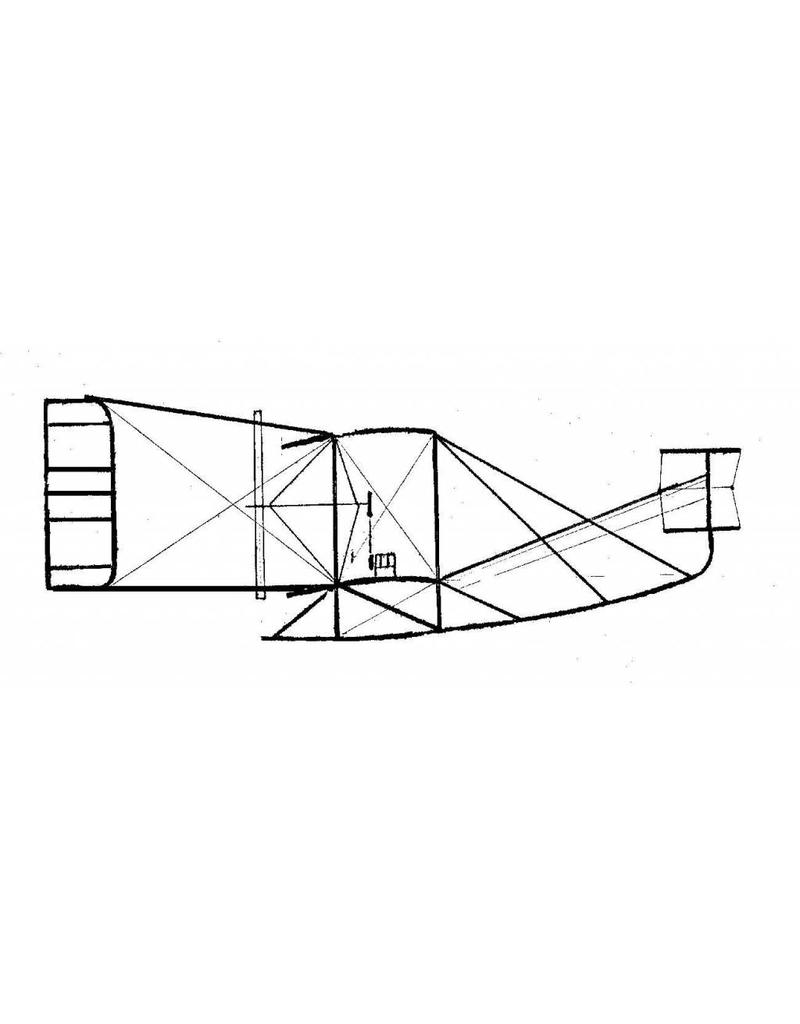
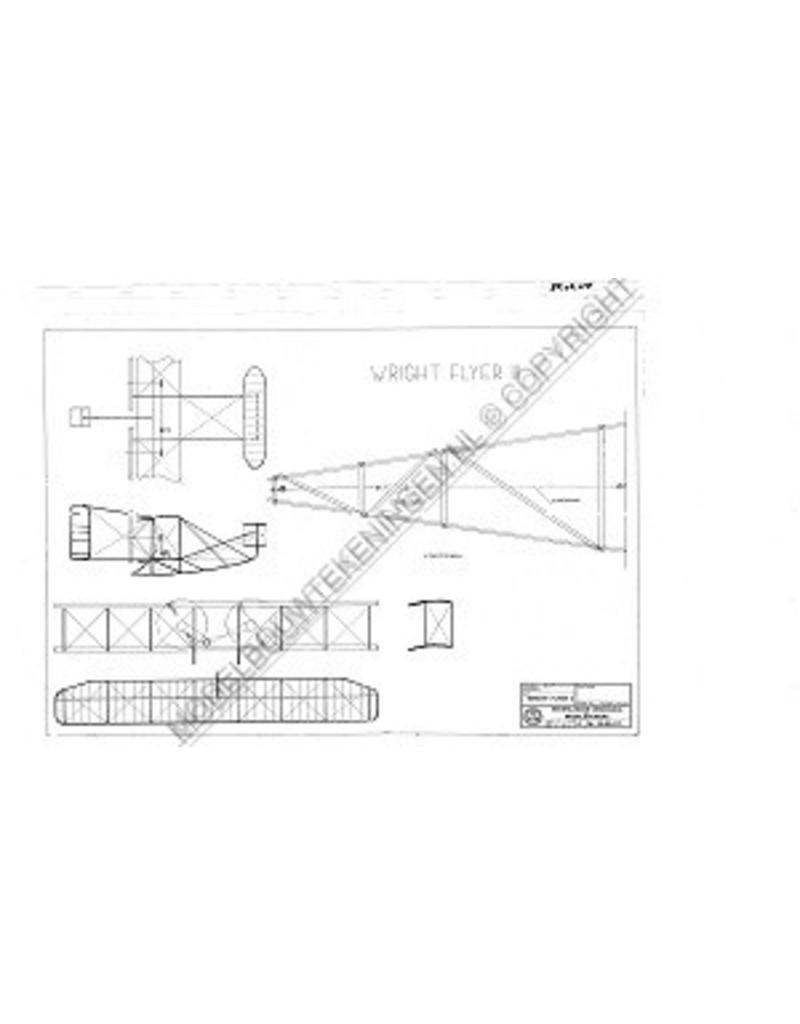
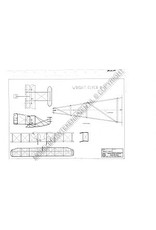
Specifications Model construction drawing:
|
Drawing number |
50.02.017 |
|
Author |
C. van Kooten |
|
Description |
Wright Flyer III (1905) |
|
Quality |
views from all angles; view of launch tower |
|
Difficulty |
C |
|
Scale |
N/A |
|
Number of A00 sheets |
0 |
|
Number of A0 sheets |
0 |
|
Number of A1 sheets |
1 |
|
Number of A2 sheets |
0 |
|
Number of A3 sheets |
0 |
|
Number of A4 sheets |
0 |
|
Total number of drawing sheets |
1 |
|
Number of A4 text pages |
0 |
|
Weight in grams |
65 |
|
Special features |
a simple dimensional sketch |
|
Comments |
Ì´Ì_ |