| Article number: | 10.00.009P |
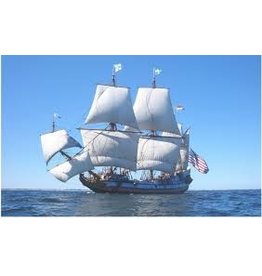
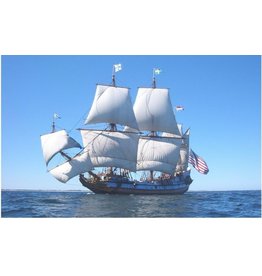
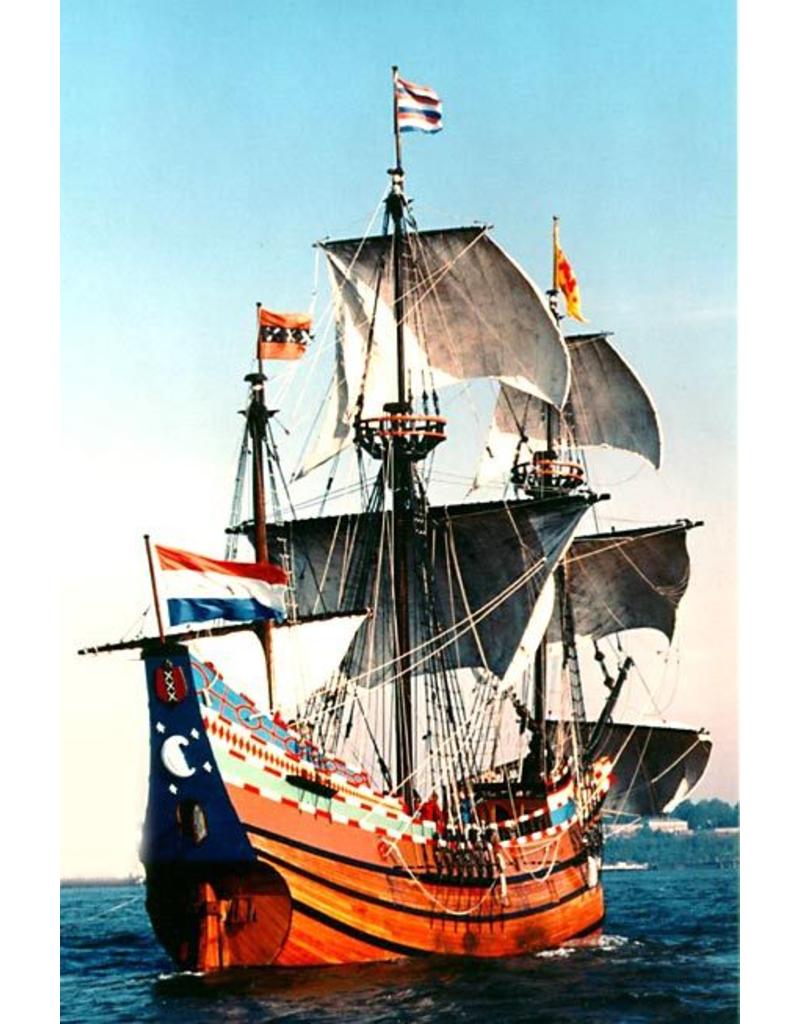
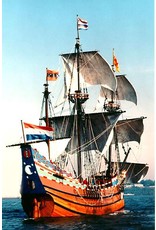
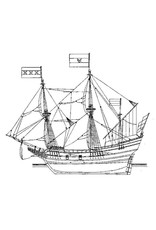
The Halve Maen (also written as Halve Maen) was a famous Dutch merchant ship that became particularly known for its voyage to North America under the command of the Dutch explorer Henry Hudson in 1609. The ship played a crucial role in the exploration of the region that would later become New York, and is today an important symbol of Dutch influence in early American history.
Type of ship: The Halve Maen was a merchant ship, specifically a fluyt. This type of ship was common in the 17th century for trade, especially in the Dutch fleet. Fluyts were relatively simple, but efficient ships, designed for transporting goods over long distances. They had a wide, but short and low design, which made them very suitable for carrying large cargoes.
Dimensions: The Halve Maen was approximately 16 metres long and 5 metres wide. It was a relatively small ship, but it was well-equipped for the voyage it was to undertake.
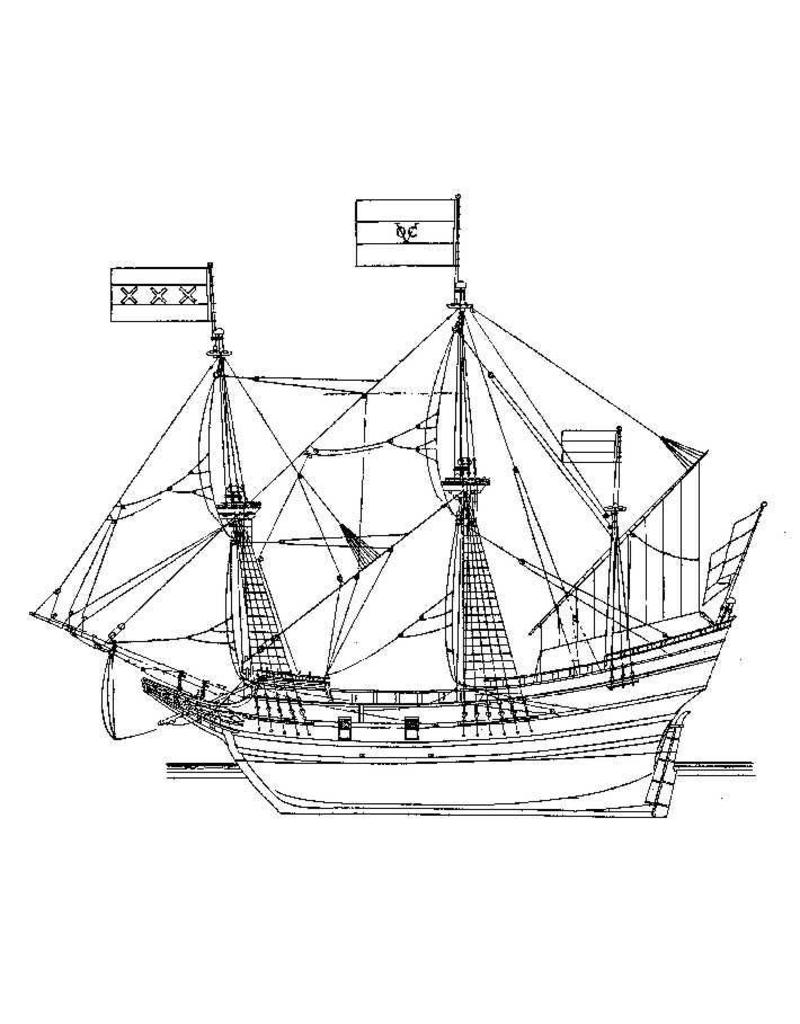
Sail configuration: The ship had three masts and was propelled by sails, which was typical for merchant ships of that era. It was a fast ship, especially for its size, and capable of making ocean voyages.
In 1609, the Halve Maen was deployed for an expedition led by Henry Hudson, an English explorer who worked for the Dutch East India Company (VOC). The purpose of the voyage was to find a northern passage to Asia, but Hudson changed course when he determined that the Northern Passage was not feasible.
Discovery of the Hudson River: Hudson sailed west and discovered the Hudson River, which he navigated to the area that is now present-day New York. This was an important discovery, as it laid the foundation for the later establishment of the Dutch colony of New Netherland (which later became New York).
Exploration of the region: Hudson and his crew explored the area around the Hudson River, where they came into contact with the indigenous population. Hudson's discoveries would lay the foundation for the establishment of the first European trading posts in the region, which would eventually lead to the founding of the city of New Amsterdam, the precursor to present-day New York.
After the successful expedition, the Halve Maen was sent back to the Netherlands. However, the ship had a short life, and there are few details about what exactly happened to it after the 1609 expedition. It was probably sold or decommissioned, as there are no further mentions of the Halve Maen in the historical records of the time.
Specifications :
|
Drawing number |
10.00.009 |
|
|
Description |
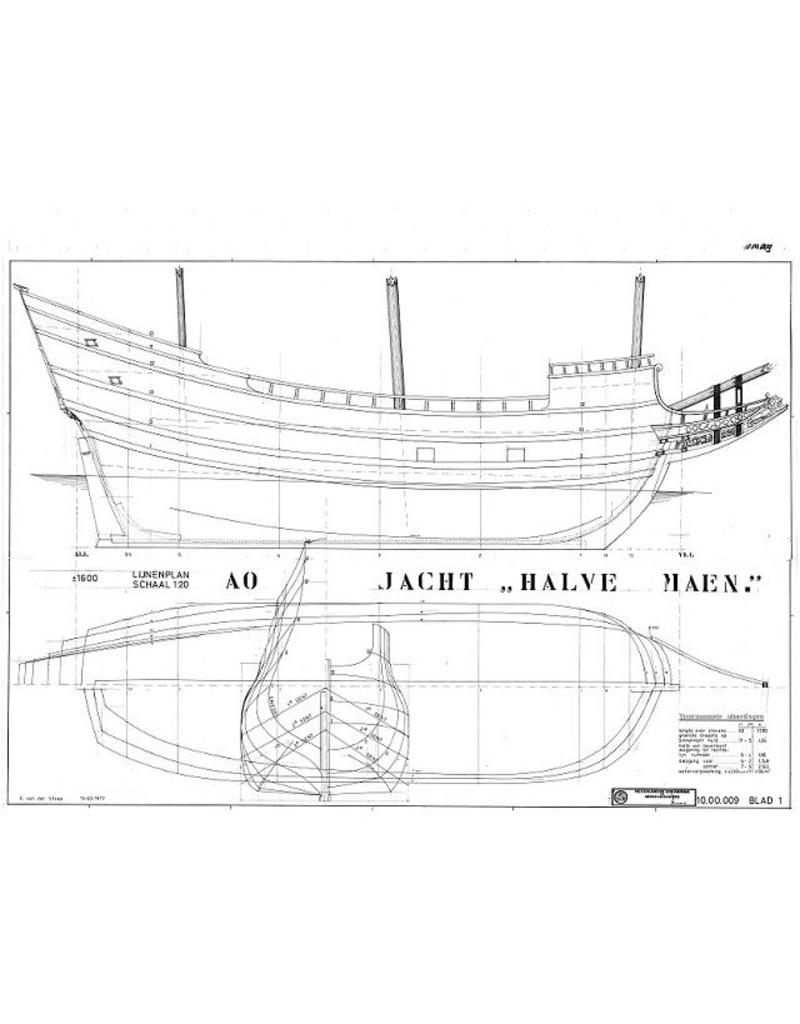
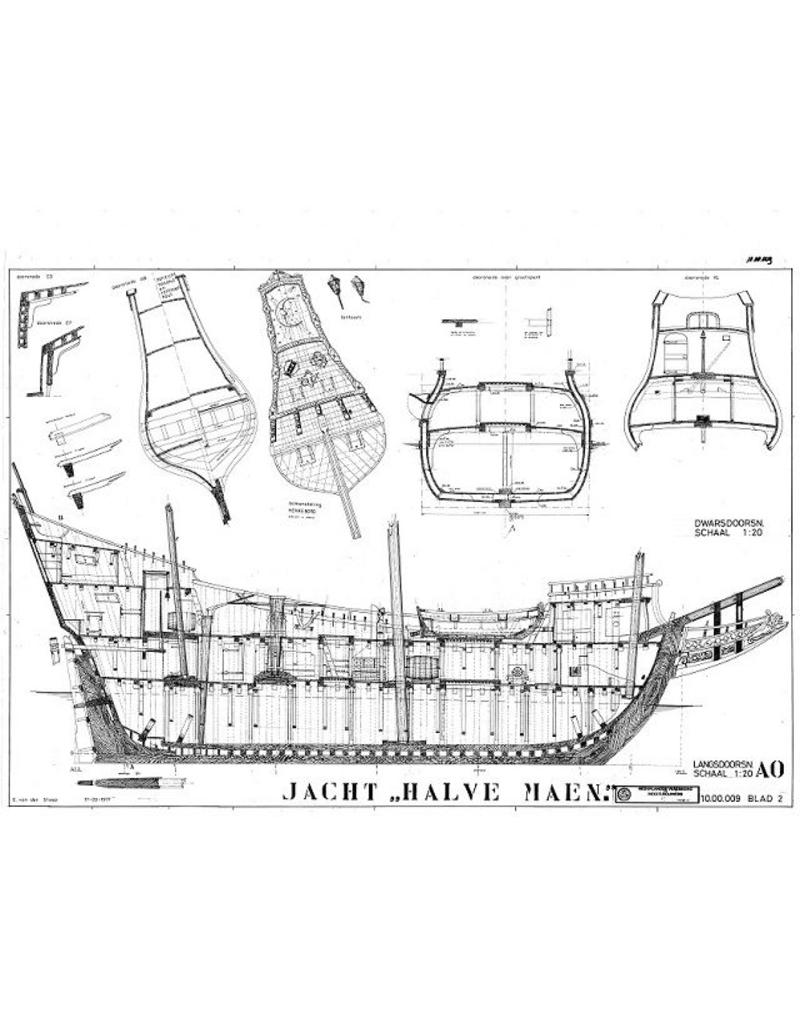
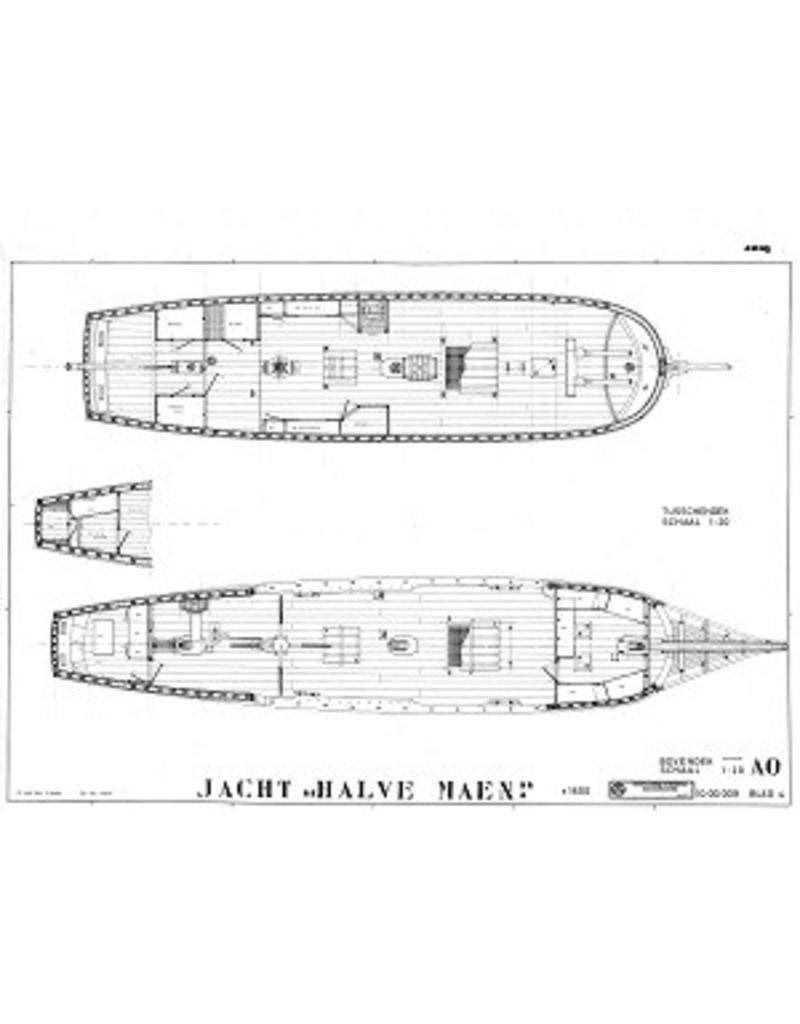
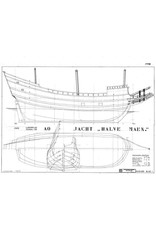
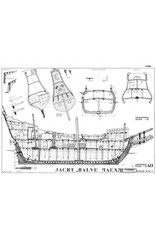
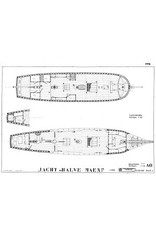
merchant ship "d’Halve Maen" (c. 1609) |
|
|
Quality |
frames/lines; general plan; sections; rigging plan |
|
|
Scale |
1 : 20 |
|
|
Number of sheets A00 |
0 |
|
|
Number of sheets A0 |
5 |
|
|
Number of sheets A1 |
0 |
|
|
Number of sheets A2 |
0 |
|
|
Number of sheets A3 |
0 |
|
|
Number of sheets A4 |
0 |
|
|
Number of A4 text sheets |
0 |
|
|
Weight in grams |
425 |
|
|
Details |
l.o.a. 115 cm |
|
|
Remarks |
||