| Article number: | 10.02.002 |
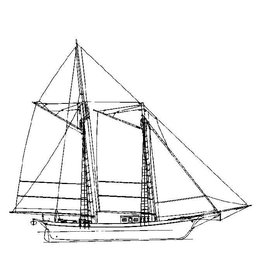
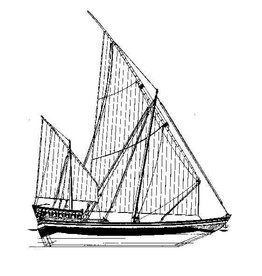
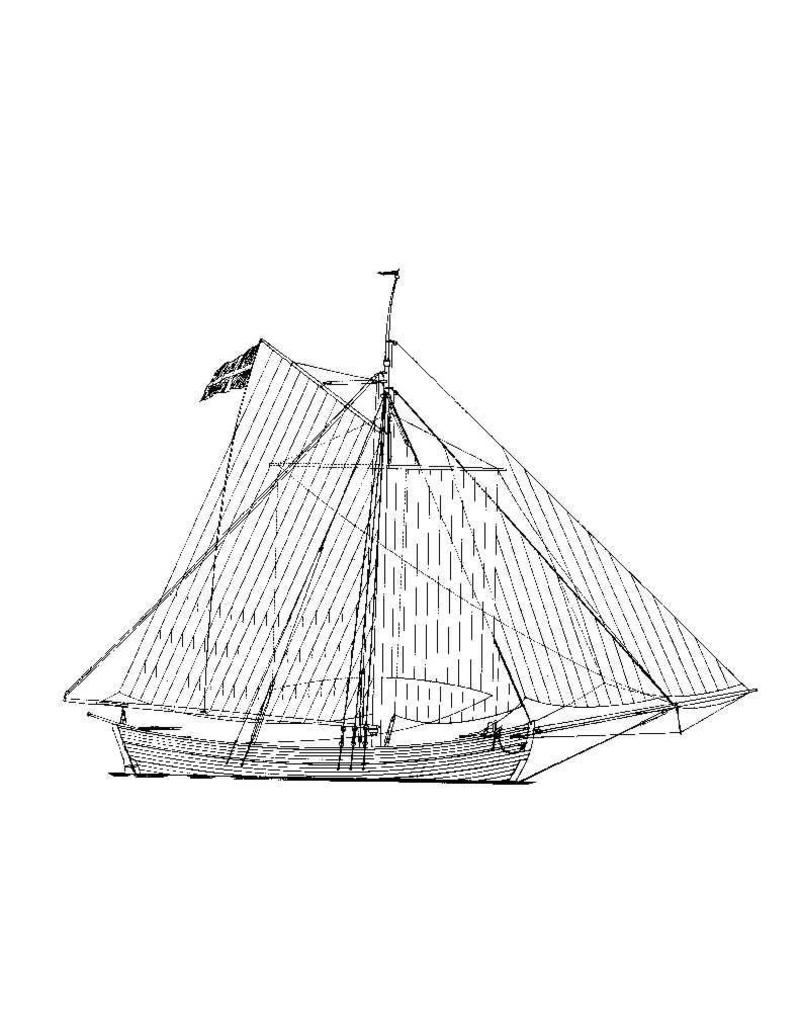
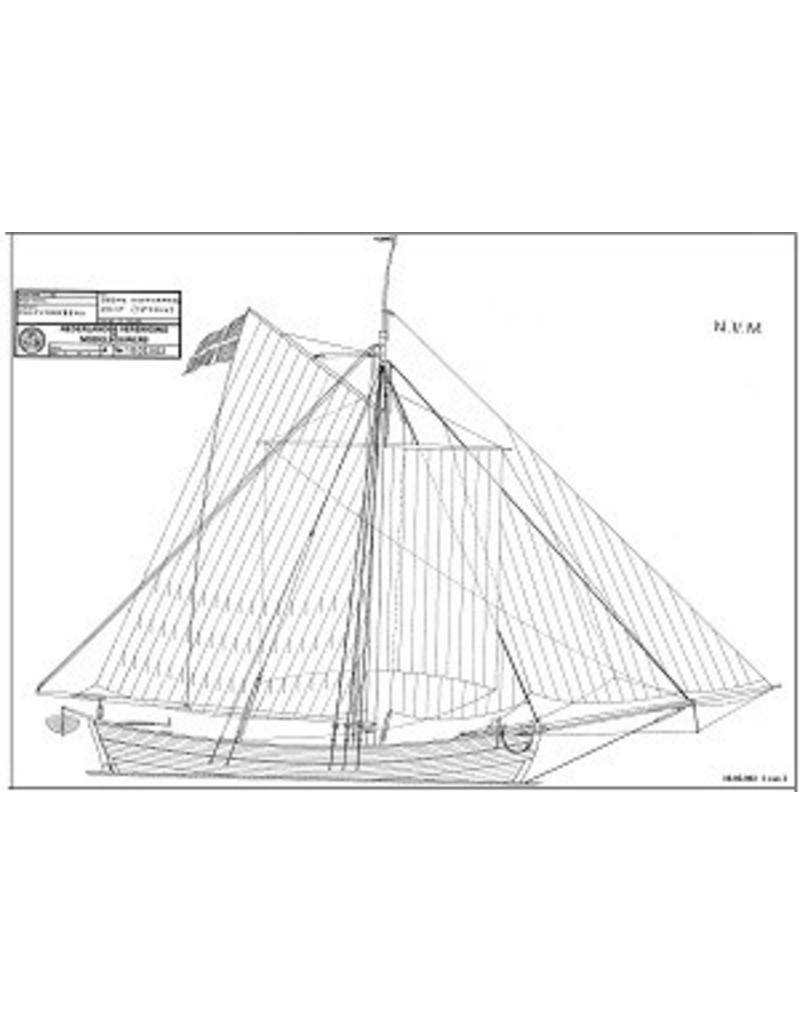
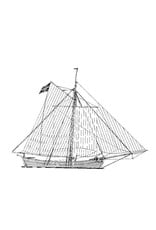
The Danish merchant yacht from the 19th century was a type of sailing ship used for commercial shipping, often for transporting goods, but also for passenger transport. In the 19th century, Denmark was an important maritime nation, and the Danish merchant yacht is an example of the ships the country used to compete in international trade.
Characteristics of the Danish merchant yacht:
Construction and design:
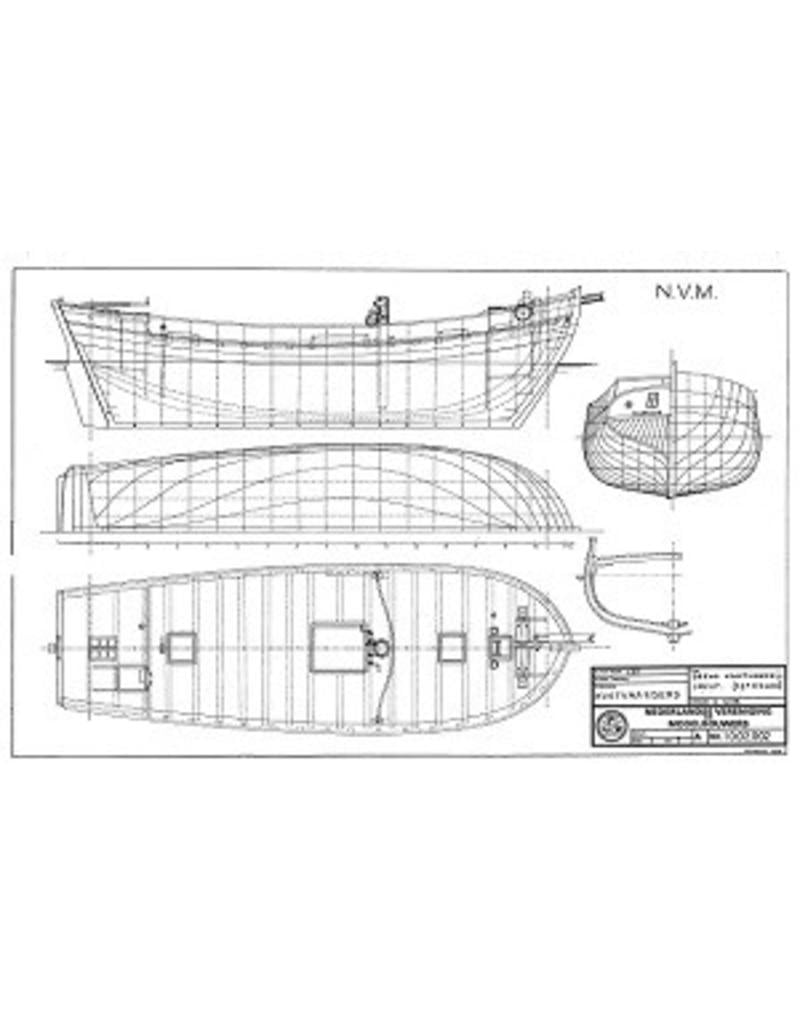
These ships often had elongated, slender lines, which gave them good speed, essential for making long ocean voyages.
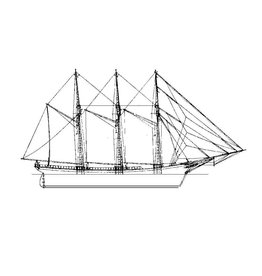
They were usually multi-masted sailing ships, with three or four masts. The foremost mast often had a foremast (a mast that leaned forward), a design that made them more manoeuvrable.
They had a pointed bow and a high stern, which was typical for ships of this period.
Sails:
The Danish merchant yachts used mainsails, jibs, and staysails, but could also have topsails or other special sails to generate extra speed.
The topsails gave these ships extra power to sail faster against the wind, an important feature for commercial vessels that relied on efficient wind energy.
Usage:
The ships were used for long-distance trade, often between Europe, America, and the Baltic Sea. They transported a wide range of goods, from agricultural products to textiles, and sometimes passengers too.
They were considered fast and reliable ships suitable for both intercontinental trade and more local voyages.
Danish maritime tradition:
In the 19th century, Denmark was an important maritime power and had a flourishing merchant fleet.
The Danish merchant yachts were the precursor to other important sailing ships, such as barks and clipper ships, which became increasingly popular in the second half of the 19th century.
Aesthetics and finish:
The ships were often beautifully finished, with a focus on both functionality and aesthetics. This was an era when the maritime industry was very much driven by aesthetic considerations, especially for ships involved in trade.
The Danish merchant yachts of the 19th century were thus a symbol of Danish maritime power, with a strong emphasis on speed and efficiency. Although they were eventually superseded by faster and more powerful ships, such as the clipper, they played a crucial role in international trade and Denmark's economic development during that period.
Specifications:
|
Drawing number |
10.02.002 |
|
Description |
Danish merchant yacht (19th century) |
|
Quality |
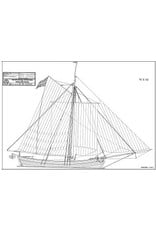
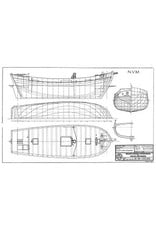
sp/lines; deck plan; elevation/sail plan |
|
Scale |
1 : 50 |
|
Number of sheets A00 |
0 |
|
Number of sheets A0 |
0 |
|
Number of sheets A1 |
0 |
|
Number of sheets A2 |
2 |
|
Number of sheets A3 |
0 |
|
Number of sheets A4 |
0 |
|
Total number of drawing sheets |
2 |
|
Number of A4 text sheets |
0 |
|
Weight in grams |
65 |
|
Particulars |
l.o.a. 55 cm |
|
Remarks |