| Article number: | 10.02.003 |
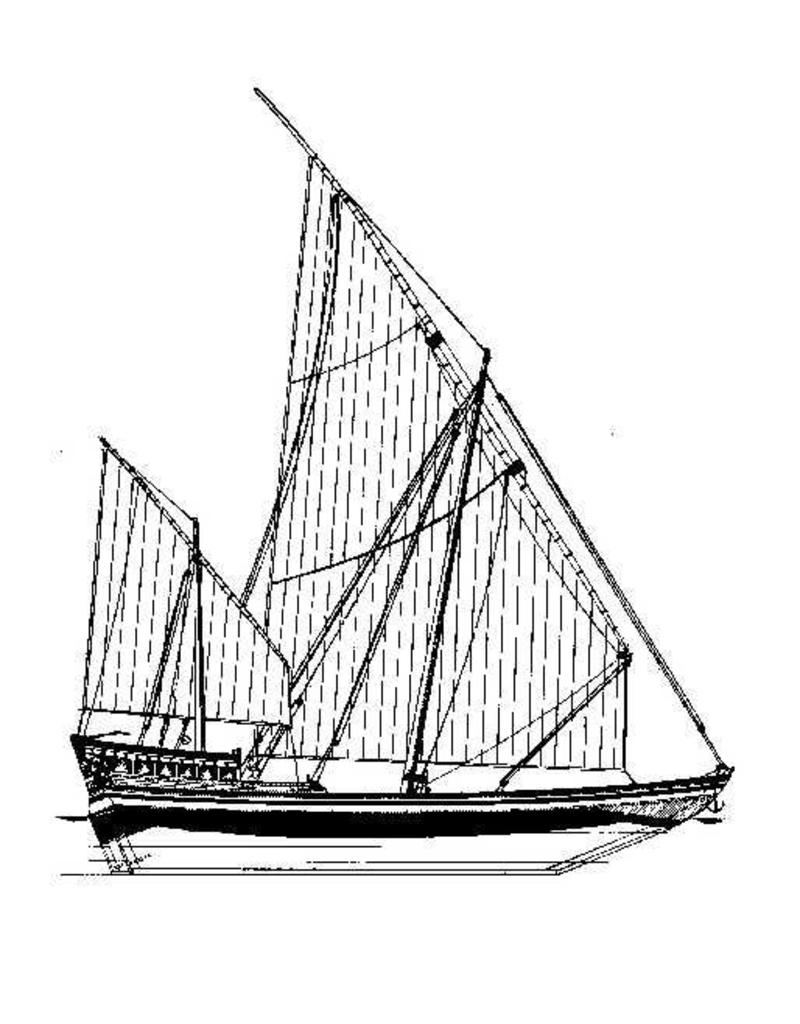
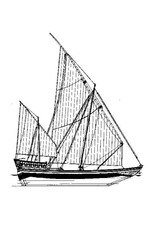
The Arabic sambuco is a type of sailing ship that was used in the Arab world, mainly in the Mediterranean Sea and the Red Sea, especially from the 17th century onwards. The sambuco (or sambuq) is a term used to describe various types of wooden, often single-masted sailing ships, and it was an important vessel in the maritime tradition of Arab and Islamic countries.
Ship Design:
The sambuco usually had a single mast with a lateen sail (a diagonally hung sail), which made the ship well-suited for navigating along the coasts of the Arab world, where wind conditions are often unpredictable.
The ship had a narrow hull and was relatively lightly built, making it fast and agile. This made it suitable for both trade and military purposes.
The bow of the sambuco was often curved upwards, which contributed to its stability, especially when sailing in shallow waters, such as in the Red Sea or the Persian Gulf.
Usage:
The Arabic sambuco was primarily used for trade and fishing, but also for piracy and military operations. It was often deployed in battles against enemy ships or to defend coastal areas.
The sambuco was an important vessel in the Arab merchant fleet, especially for overseas trade between Arab countries, India, and Africa. The ships transported goods such as spices, silk, and other valuable commodities.
Sails:
The lateen sail was the main type of sail used on the sambuco, a sail that was diagonally attached to the mast. This type of sail is particularly well-suited for sailing against the wind, which allowed the sambuco to manoeuvre efficiently in the often unfavourable wind conditions of the region.
By using lateen sails, the sambuco was flexible in adapting to different wind directions and was relatively fast, despite the modest size of the ship.
Dimensions:
The sambuco was usually a small to medium-sized ship, typically between 15 and 30 metres in length, although larger versions were also possible.
The ships were suitable for coastal navigation, but could also undertake longer voyages between ports in the Arab world and beyond, depending on the specific task.
Cultural and historical significance:
The sambuco played a significant role in the maritime tradition of the Arab world and was one of the ship types used by Arab seafarers to traverse the maritime route from the Mediterranean Sea to the Indian subcontinent and Africa.
In later times, especially in the 19th century, sambucos were replaced by more modern ships, but they remained an important symbol of Arab seafaring and were often depicted in art and literature of that era.
The Arabic sambuco is therefore an important maritime heritage of the Arab world, which supported the region's maritime capabilities and trade networks and ultimately contributed to the global spread of Arab culture and trade.
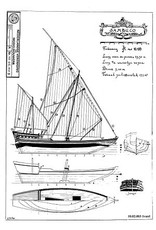
Specifications :
|
Drawing number |
10.02.003 |
|
Description |
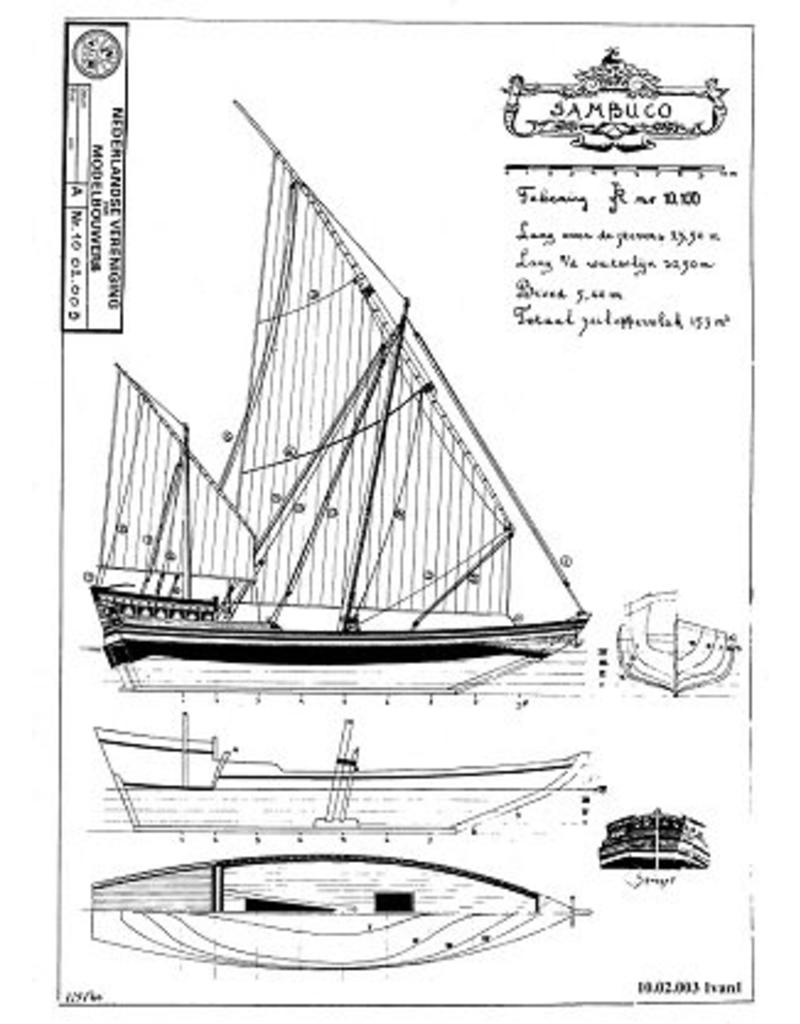
Arabic sambuco |
|
Quality |
frames/lines; deck plan; elevation/rigging plan |
|
Scale |
1 : 110 |
|
Number of A00 sheets |
0 |
|
Number of A0 sheets |
0 |
|
Number of A1 sheets |
0 |
|
Number of A2 sheets |
0 |
|
Number of A3 sheets |
1 |
|
Number of A4 sheets |
0 |
|
Total number of drawing sheets |
1 |
|
Number of A4 text sheets |
0 |
|
Weight in grams |
45 |
|
Details |
l.o.a. 20 cm |
|
Remarks |