| Article number: |
10.02.008 |
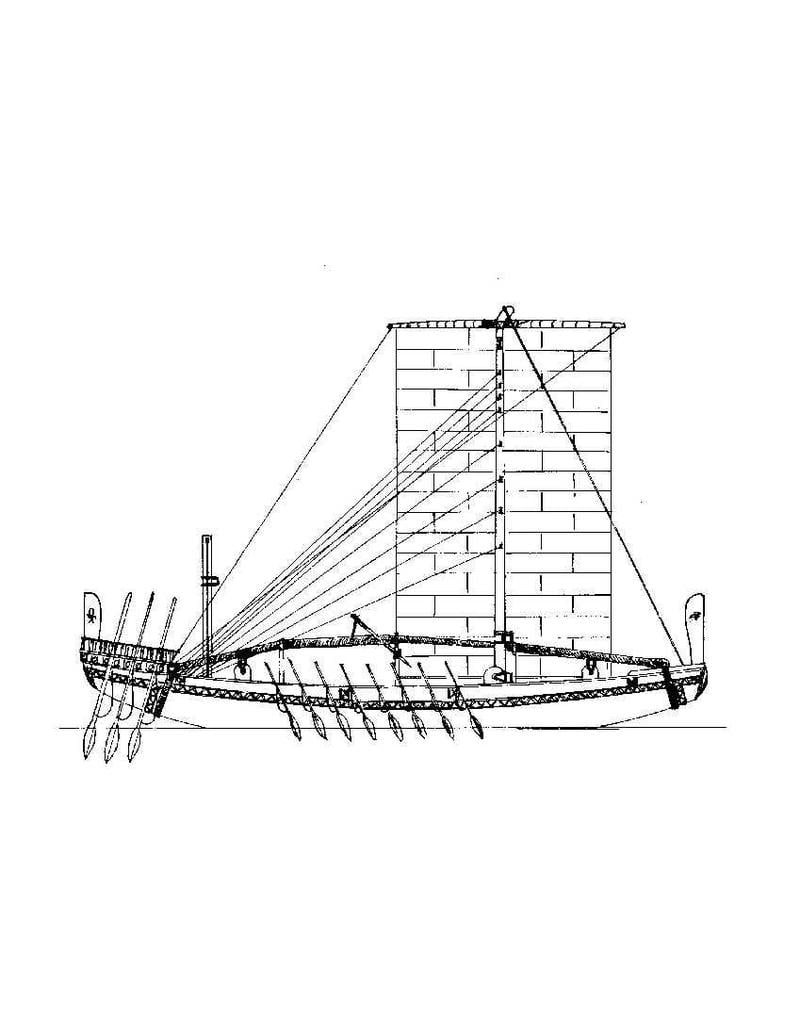
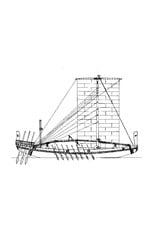
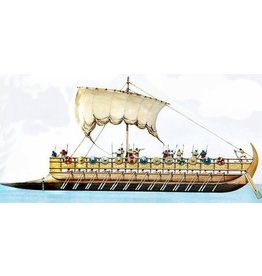
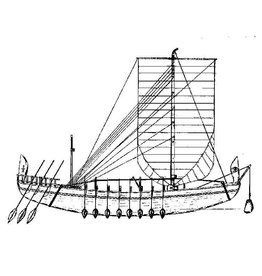
An Egyptian barque was a type of ship widely used in ancient Egypt, primarily for ritual purposes, but also for transport and trade. The word ‘barque’ refers to a type of ship with a relatively narrow hull and a deep, often bulbous bow and stern. The Egyptian barque served an important symbolic and practical function.
Characteristics of an Egyptian Barque
-
Ritual and Religious Significance:
- Barkes were often ritual vessels used for religious ceremonies, particularly in connection with the gods and pharaohs. In Egyptian religion, barkes were seen as symbols of the journey of the sun god Ra through the heavens and the underworld.
- The sacred barque of Amun, for example, was used during the annual Opet Festival in Thebes, during which the god Amun was ‘moved’ from his temple to another temple. This was a symbolic journey representing the renewal of the pharaoh’s power and life in the realm.
-
-
Construction and Form:
- Barques were usually made of wood, often with a curved hull that was conducive to navigating rivers such as the Nile.
- They had a low, open deck, allowing priests and other officials to use the vessel for ritual ceremonies.
- The bow and stern of the barque were often raised, which improved stability in the water and made the vessel suitable for both rough and calm waters.
-
-
Size:
- Barques varied greatly in size. Small barques were intended for ritual processions and were often used in temples. These vessels were generally no larger than 10–15 metres.
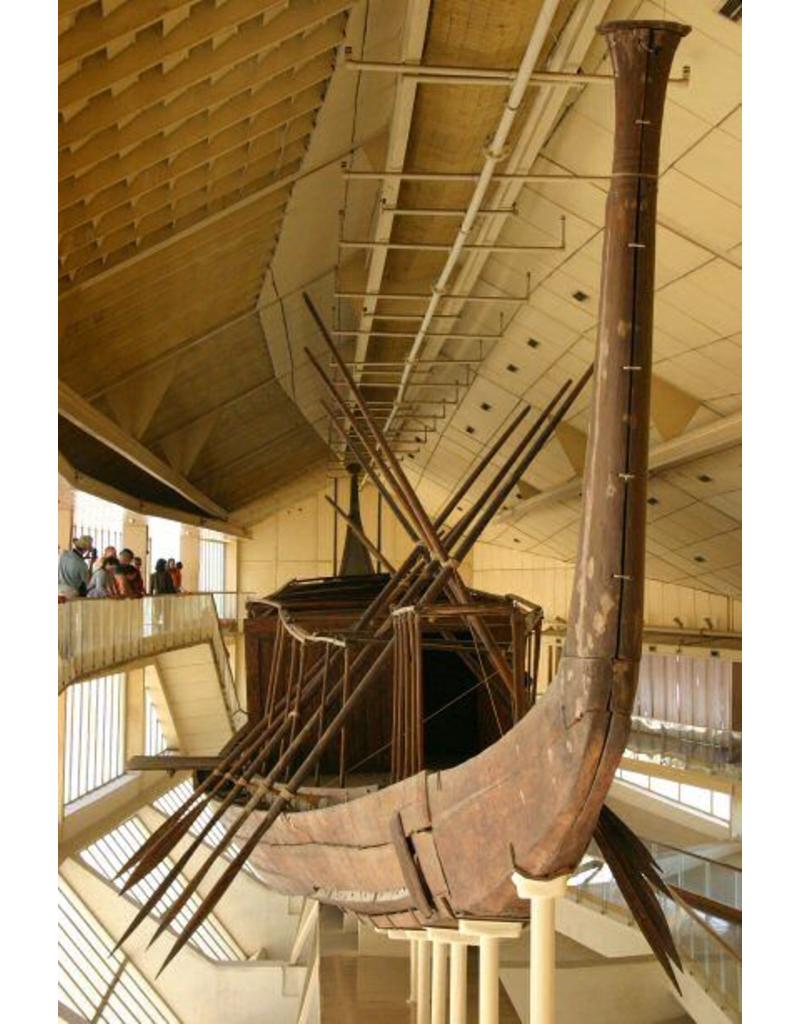
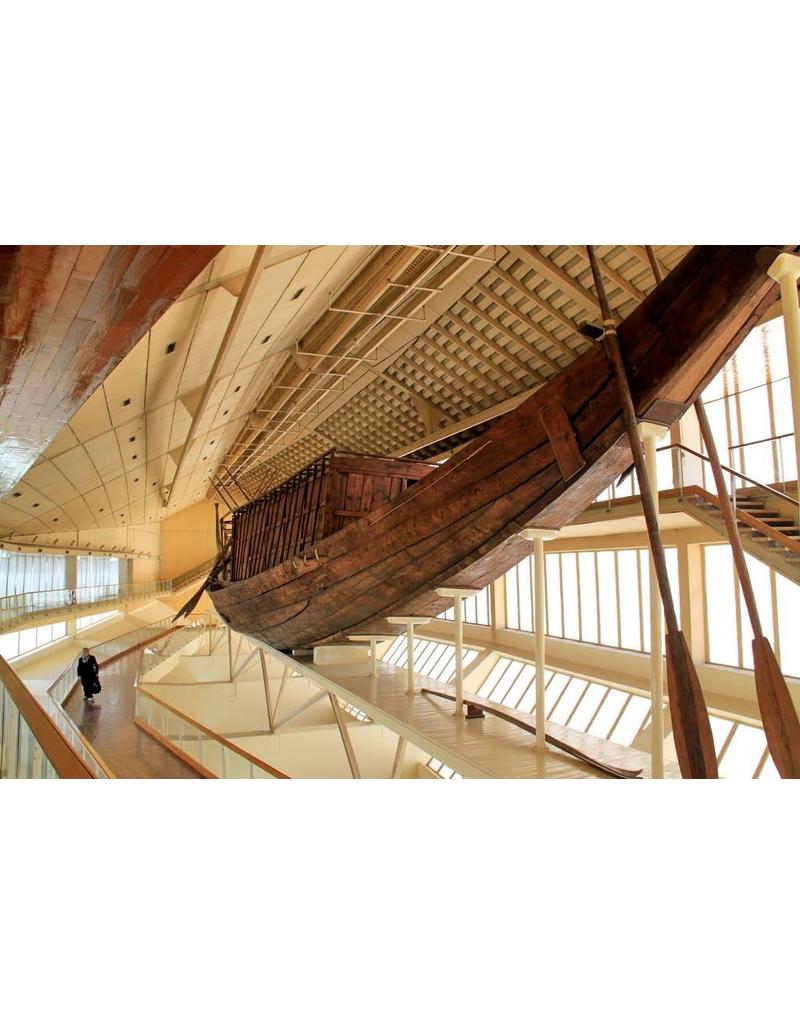
- Larger barques, such as the so-called solar barques, could be much larger, even up to 60 metres in length, such as the famous solar boat found near the Pyramid of Cheops. This vessel was intended to symbolise the journey of the sun god Ra.
-
-
Use:
- Ritual use: Barques were often used during religious festivals, funeral rites, and processions of the pharaoh and the gods. It was customary for these vessels to form part of the funerals of important pharaohs, where they were buried to accompany the pharaoh on his journey to the afterlife.
- Transport: In addition to their religious function, barques were also used for the transport of goods across the Nile, particularly during ceremonies or important state visits.
-
-
Sailing and Rowing:
- Barques often had sails that harnessed the wind on the Nile, but they were also frequently propelled by rowers working at the sides of the vessel. The use of oars was essential for manoeuvring in the narrow, winding waters of the river.
- On larger barques, the rowers were often an essential part of the crew, whilst smaller vessels could be propelled more easily by the river’s current.
-
Examples of Egyptian Barques
- The Solar Boat of Cheops:
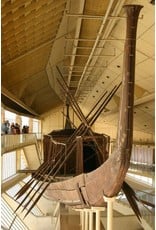
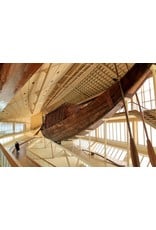
- The Solar Boat of Cheops (Khufu), discovered in 1954 near the Great Pyramid of Giza, is one of the most famous barques from ancient Egypt. It was understood to be a ritual vessel used to transport the pharaoh to the afterlife.
- The vessel was approximately 43 metres long and was constructed from wooden planks that had been carefully joined together. It was intended to represent the sun god Ra on his journey across the sky.
-
- The Sacred Barques of the Gods:
- In Egyptian religion, various gods were often depicted in the form of barques. These sacred vessels were used to carry the gods during ritual processions. For example, there was the barque of Amun in the Opet Festival, or the barque of Hathor, which represented the goddess of love and motherhood.
Symbolism
The barque had a profound symbolic meaning for the ancient Egyptians:
- It was not merely a means of transport, but a symbol of the life cycle of the sun and death. Barques were associated with the pharaoh’s soul’s journey to the afterlife, and also with the sun god Ra, who traversed the heavens on his barque each day and journeyed through the underworld at night.
Conclusion
The Egyptian barque was much more than a simple vessel; it was a powerful symbol of the journey between life and death, and played a crucial role in the rituals and religion of ancient Egypt. Whether used in religious processions or as a means of transport, these vessels reflected the sophistication of ancient Egyptian shipbuilding and their deep belief in the afterlife and the gods.
Specifications:
|
Drawing number
|
10.02.008
|
|
Description
|
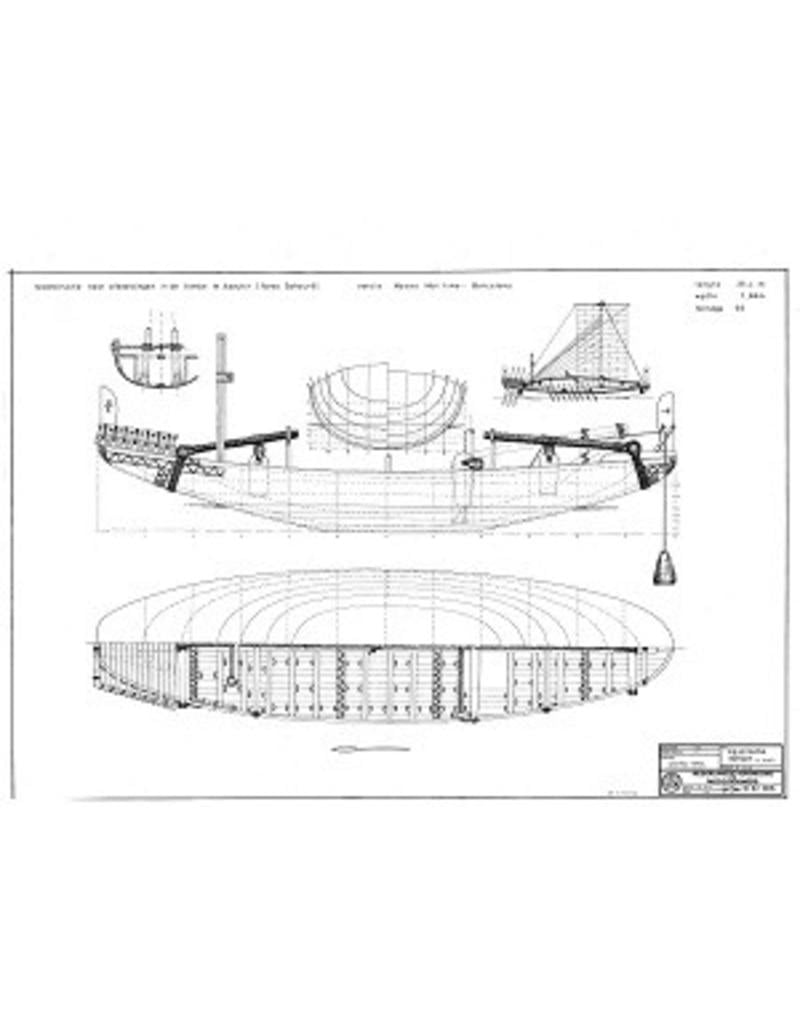
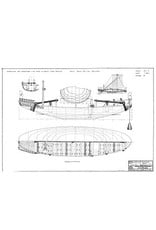
Egyptian barque (c. 2500 BC)
|
|
Quality
|
scale/lines; deck plan; view on a smaller scale
|
|
Scale
|
1 : 50
|
|
Number of sheets A00
|
0
|
|
Number of A0 sheets
|
0
|
|
Number of A1 sheets
|
1
|
|
Number of A2 sheets
|
0
|
|
Number of A3 sheets
|
0
|
|
Number of A4 sheets
|
0
|
|
Total number of drawing sheets
|
1
|
|
Number of A4 text pages
|
0
|
|
Weight in grams
|
65
|
|
Details
|
L.O.A. 58 cm
dM 1976/8
Copy of article: 12.02.008 (3 pages) (= 12.02.007)
Reconstruction based on images in the tomb at Aboukir.
|
|
Remarks
|
|