| Article number: | 10.05.023 |
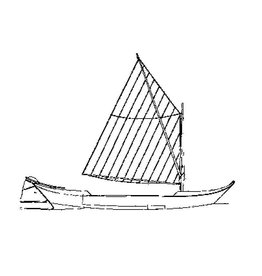
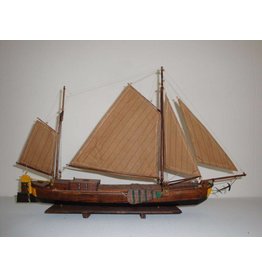
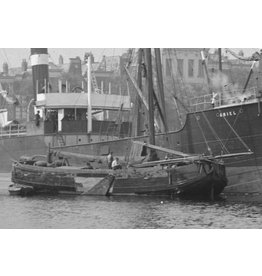
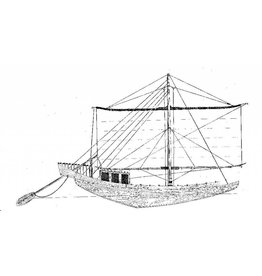
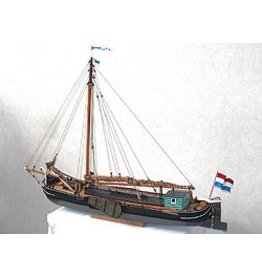
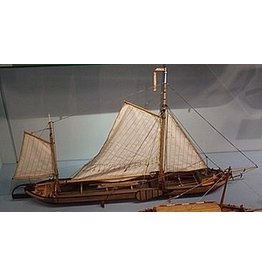
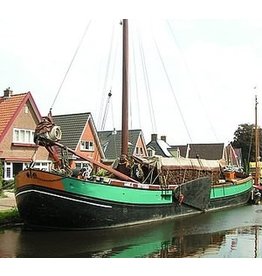
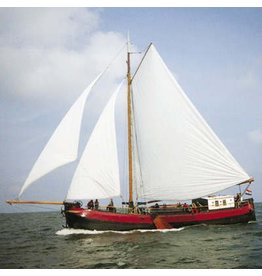
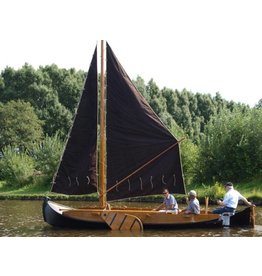
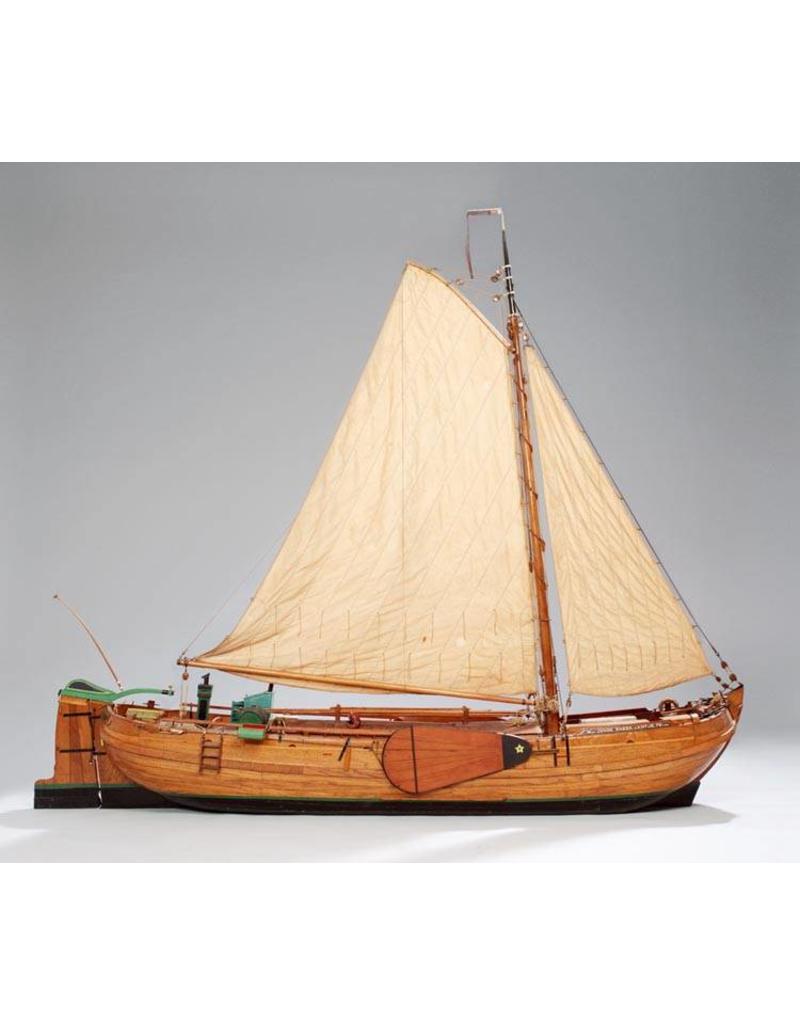
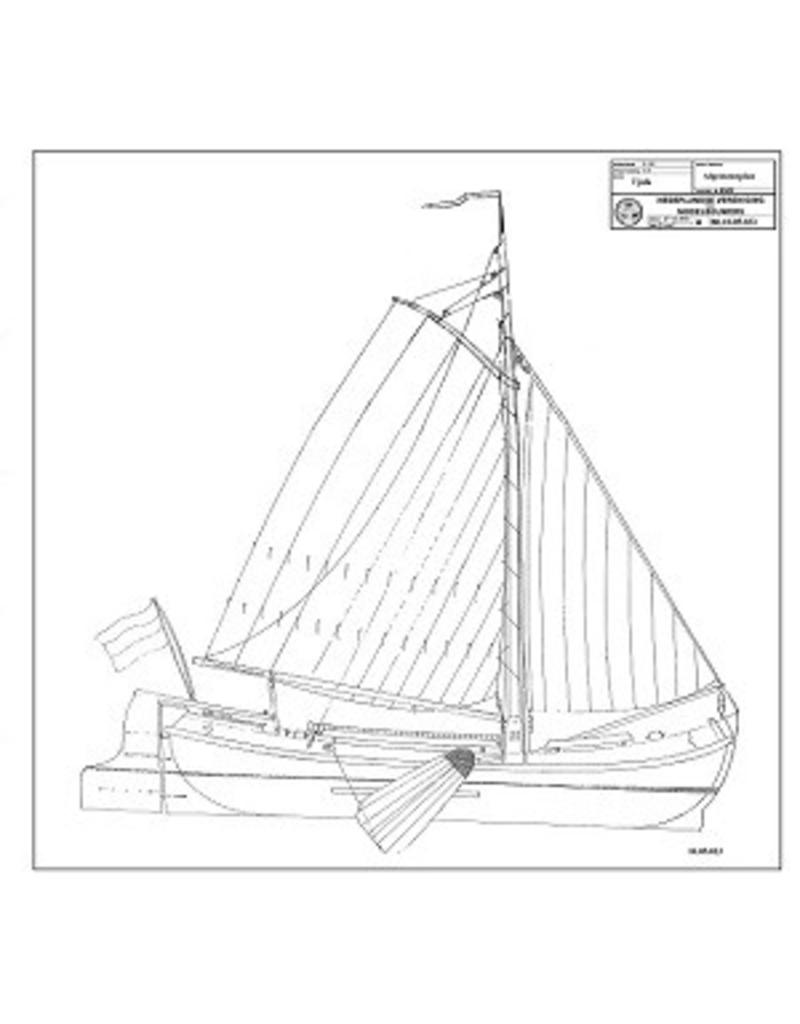
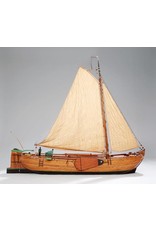
A tjalk is a traditional Dutch vessel, originally designed for inland waterway transport. It was one of the most important types of vessel in the 18th and 19th centuries, and is often associated with the transport of goods across the rivers, canals and lakes of the Netherlands. The tjalk is distinctive for its flat bottom, which allows it to navigate shallow waters effectively, and its typically low bow and stern.
Type: Flat-bottomed, meaning that the bottom of the vessel is relatively flat.
Length: Usually varied from 15 to 25 metres, but there were also larger and smaller versions.
Width: The width was usually between 4 and 5 metres, depending on the size of the vessel.
Draught: Approximately 1 metre, making the ship ideal for shallow waters such as rivers and lakes.
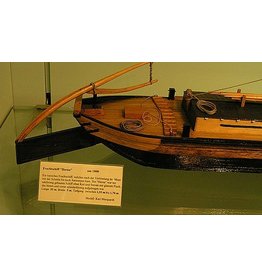
Hull: The tjalk has a fairly wide and robust hull, which made it suitable for heavy transport.
Rigging: Originally, a tjalk was often fitted with a sprit sail (a mainsail on an angled mast), although some tjalks were later fitted with engines as well.
Shape: The tjalk often has a sharp bow and an upturned stern, making it manoeuvrable.
The tjalk became popular in the 17th century and was primarily intended for transporting goods such as salt, grain, peat and sand. It was a widely used inland vessel, particularly on the Frisian lakes, the IJsselmeer, the Zaan, and the rivers and canals of the Netherlands.
The tjalken were ideal for the shallow waters of the Netherlands. As their draught was relatively shallow, they could also navigate shallow canals and rivers, making them extremely practical for inland shipping.
In the era before the Industrial Revolution and the advent of engines in ships, the tjalk was the backbone of inland shipping. They were not only important for the transport of goods, but also for communication between towns and villages along the waterways. This made them essential to Dutch trade and the economy.
Frisian tjalk: This variant of the tjalk often has a shorter and wider hull and was widely used on the lakes of Friesland. It had a flat bottom and was ideal for sailing on inland waterways.
Zaan tjalk: This was slightly larger and was mainly used for transporting sand, peat and other heavy goods along the Zaan and other rivers in the region.
Kooiker tjalk: This type of tjalk was used specifically by Kooiker fishermen and had modifications that enabled them to transport their catch.
From the 19th century onwards, with the advent of steam and diesel engines, the traditional tjalk became increasingly less popular for commercial use. The emergence of faster and more efficient vessels such as the coastal freighter and the motorboat meant that the tjalk was largely replaced in the 20th century.
Nowadays, there are still a few restored tjalk boats that are used for tourist cruises or to preserve maritime heritage. Many people restore old tjalk boats to return them to their original condition. They are also still used for recreational sailing, bringing the charm of traditional inland shipping back to life.
The tjalk remains an important symbol of the Netherlands’ maritime history and a testament to the innovative shipbuilding techniques used for centuries for transport by water.
Specifications:
|
Drawing number |
10.05.023 |
|
Description |
Tjalk |
|
Quality |
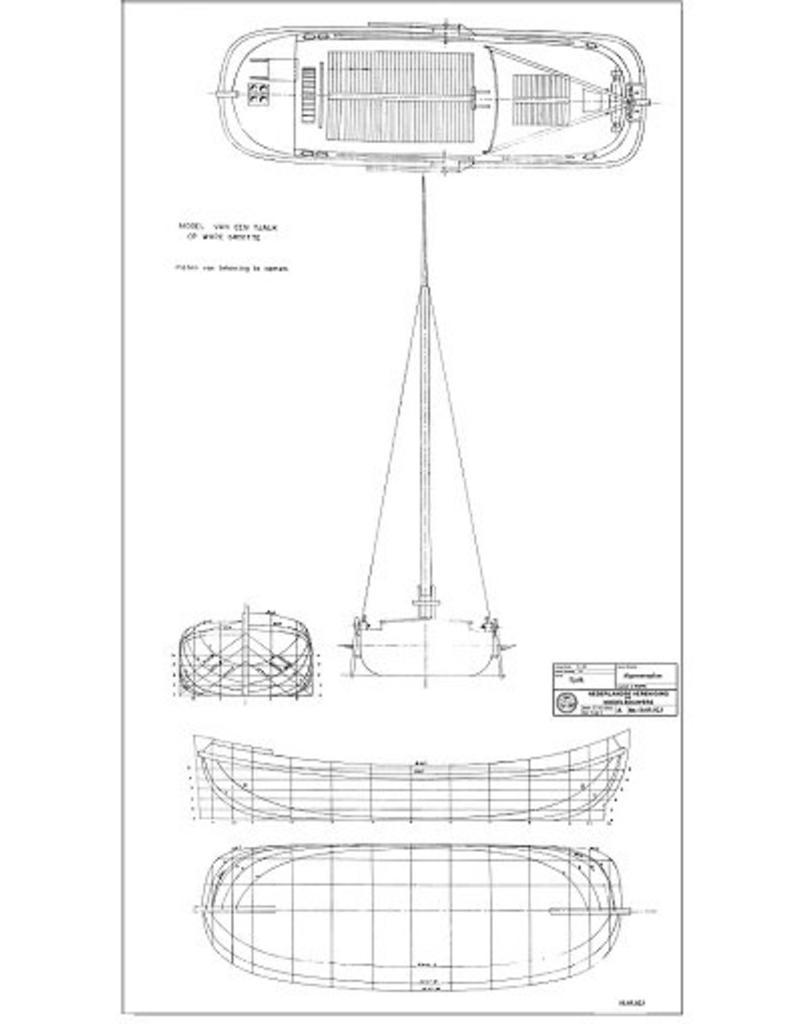
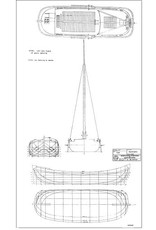
general plan; section/line plan |
|
Scale |
1 : 33 |
|
Number of A0 sheets |
0 |
|
Number of A0 sheets |
1 |
|
Number of A1 sheets |
1 |
|
Number of A2 sheets |
0 |
|
Number of A3 sheets |
0 |
|
Number of A4 sheets |
0 |
|
Total number of drawing sheets |
2 |
|
Number of A4 text sheets |
0 |
|
Weight in grams |
145 |
|
Details |
Overall length 48 cm |