| Article number: | 10.20.035 |
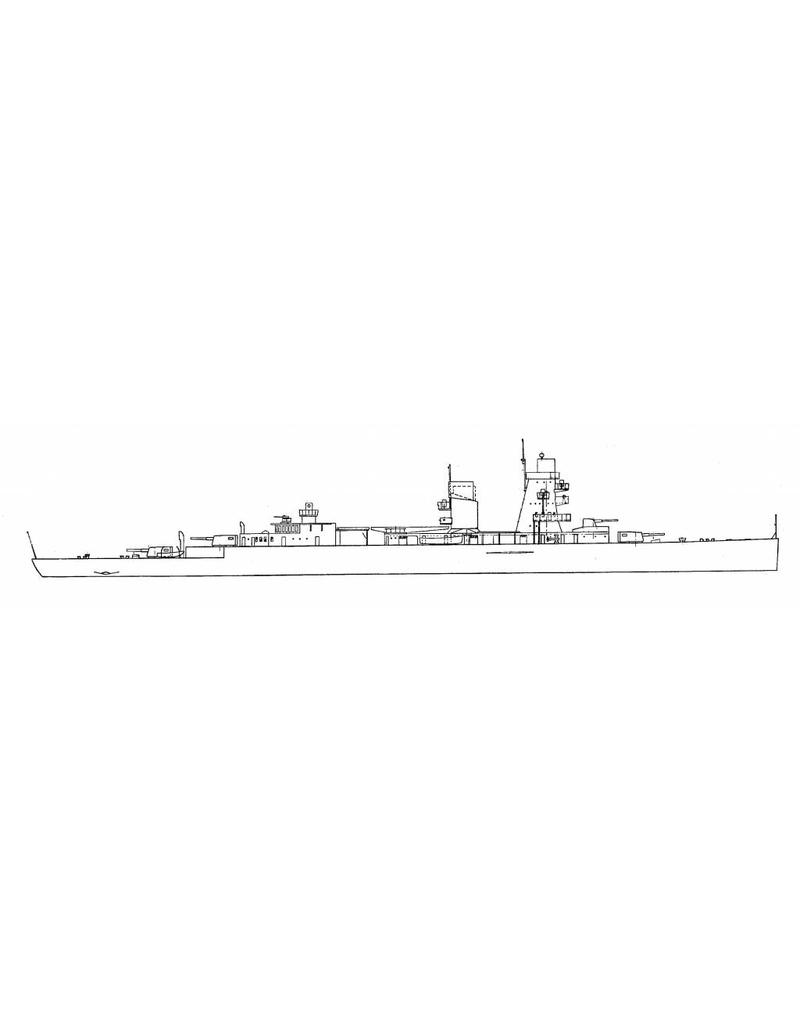
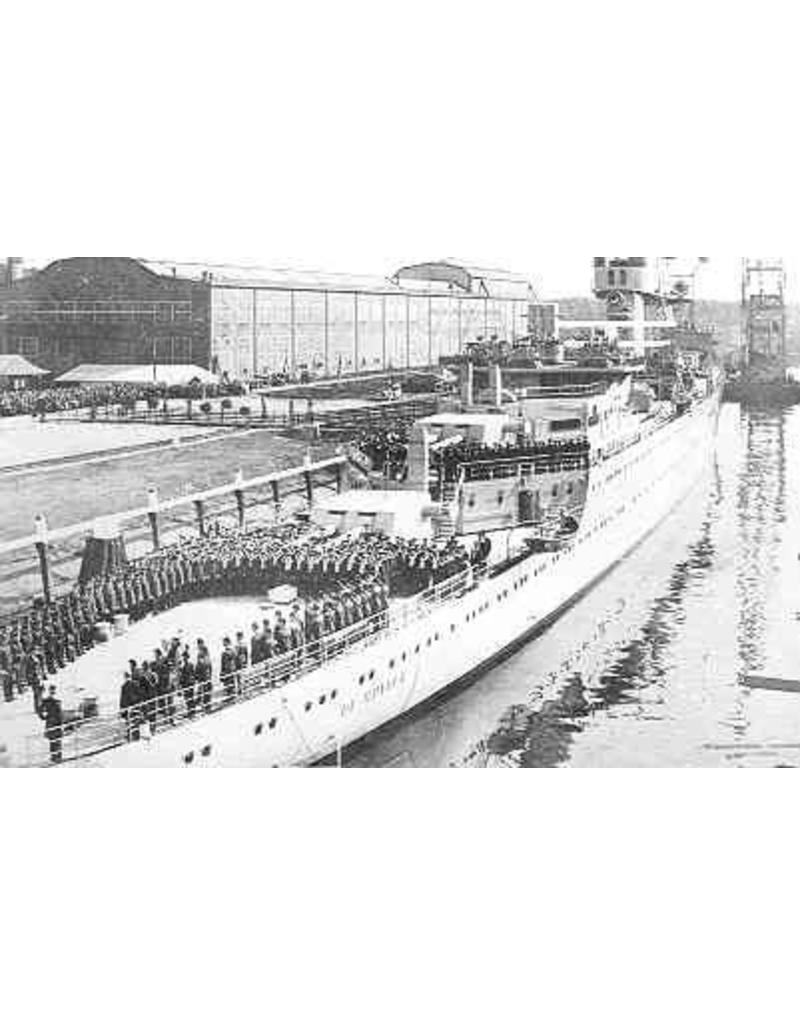
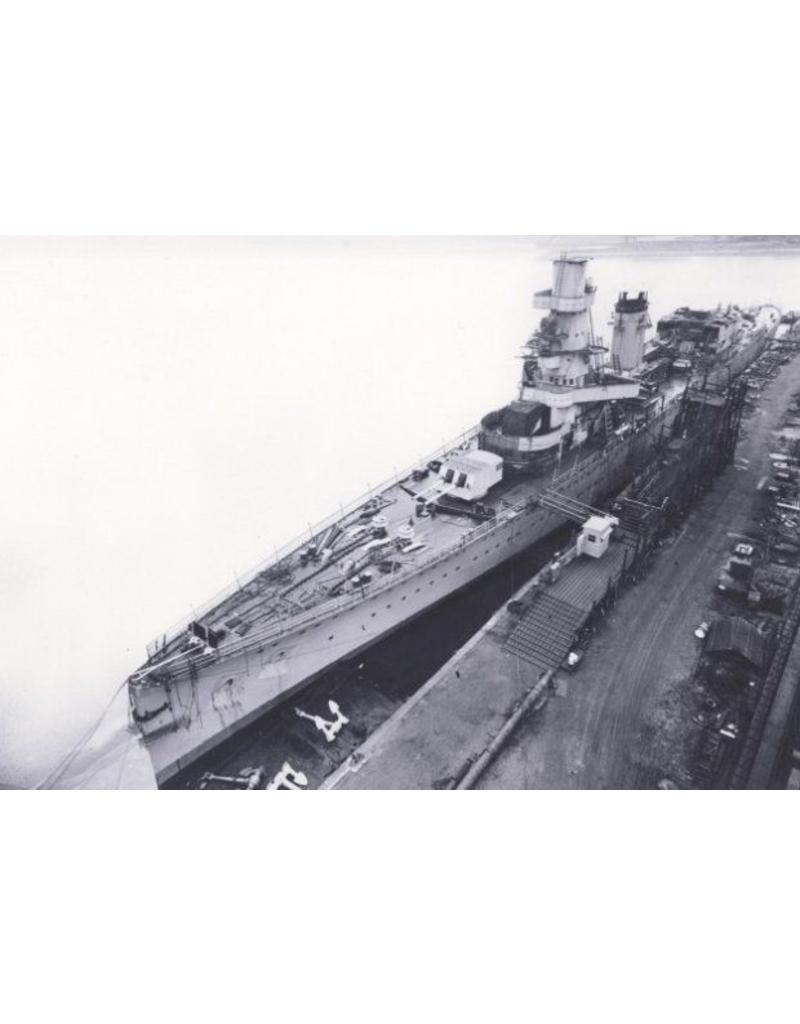
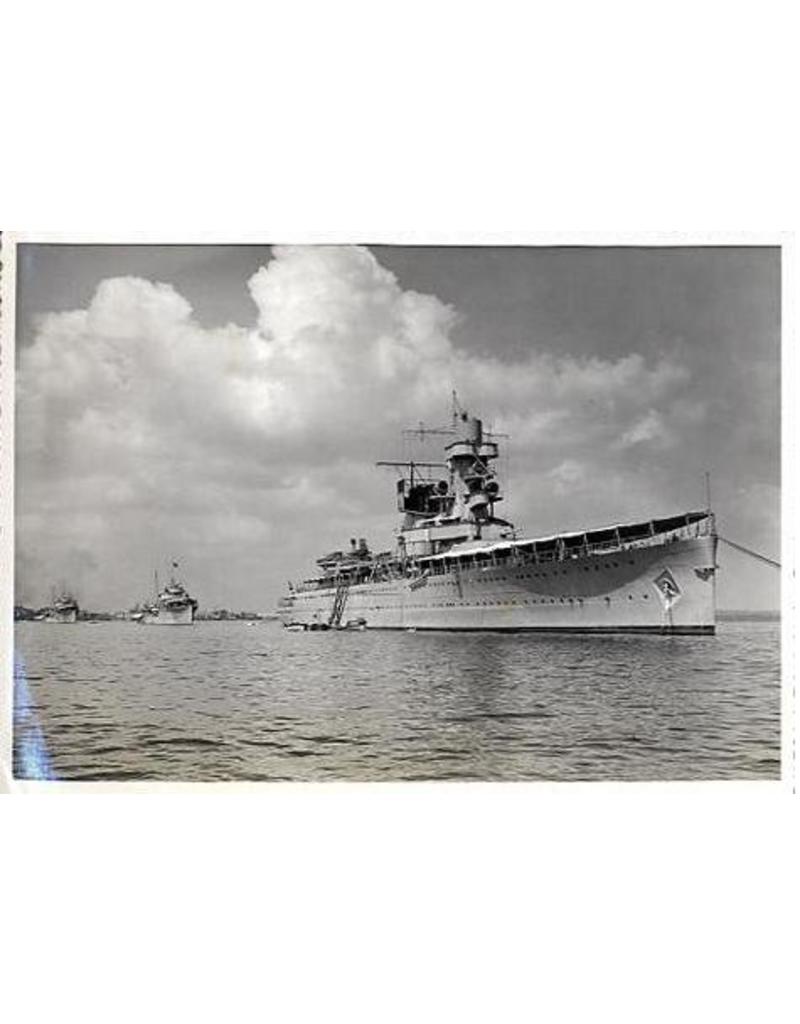
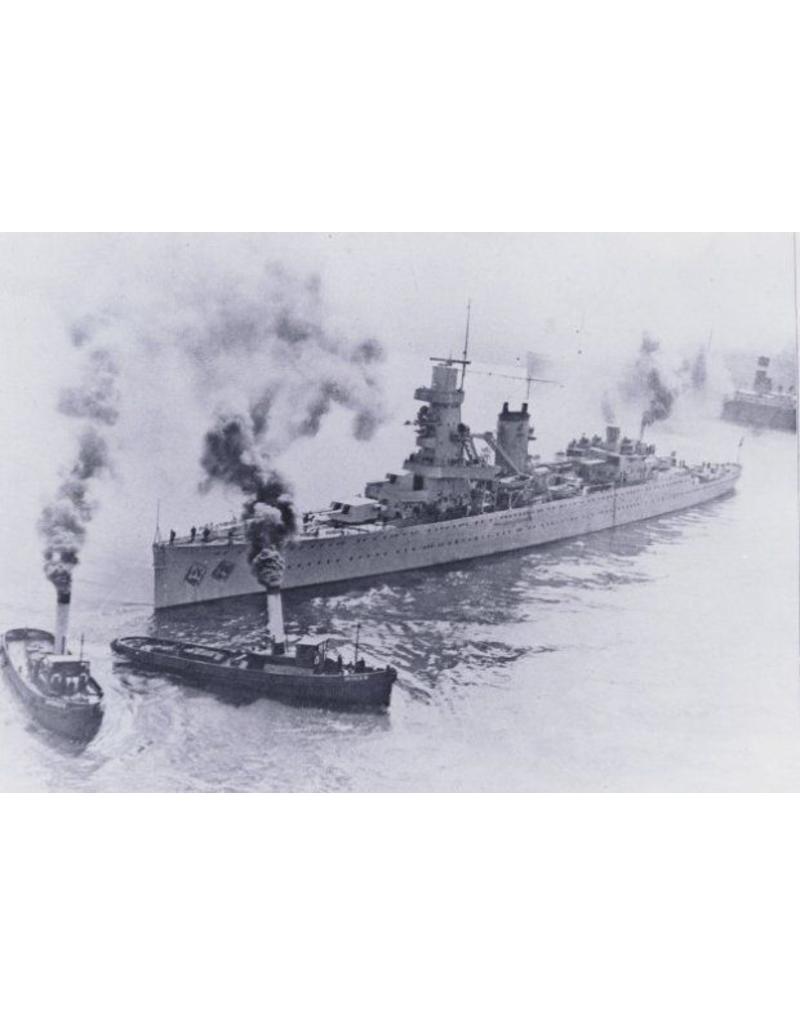
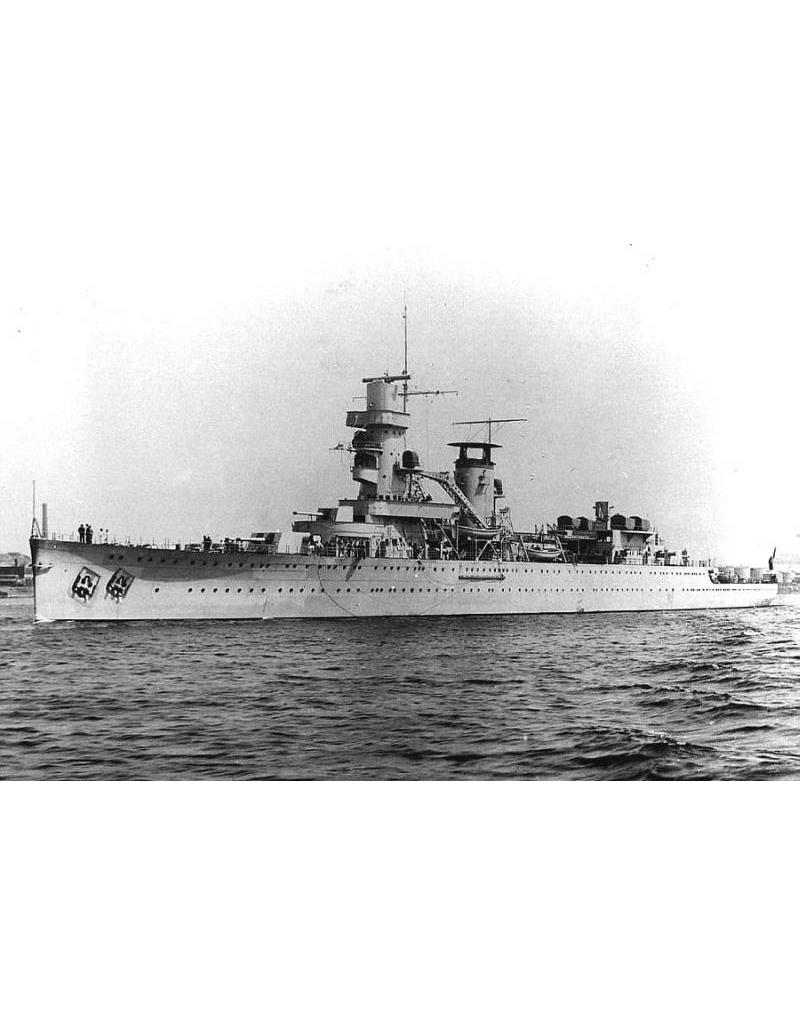
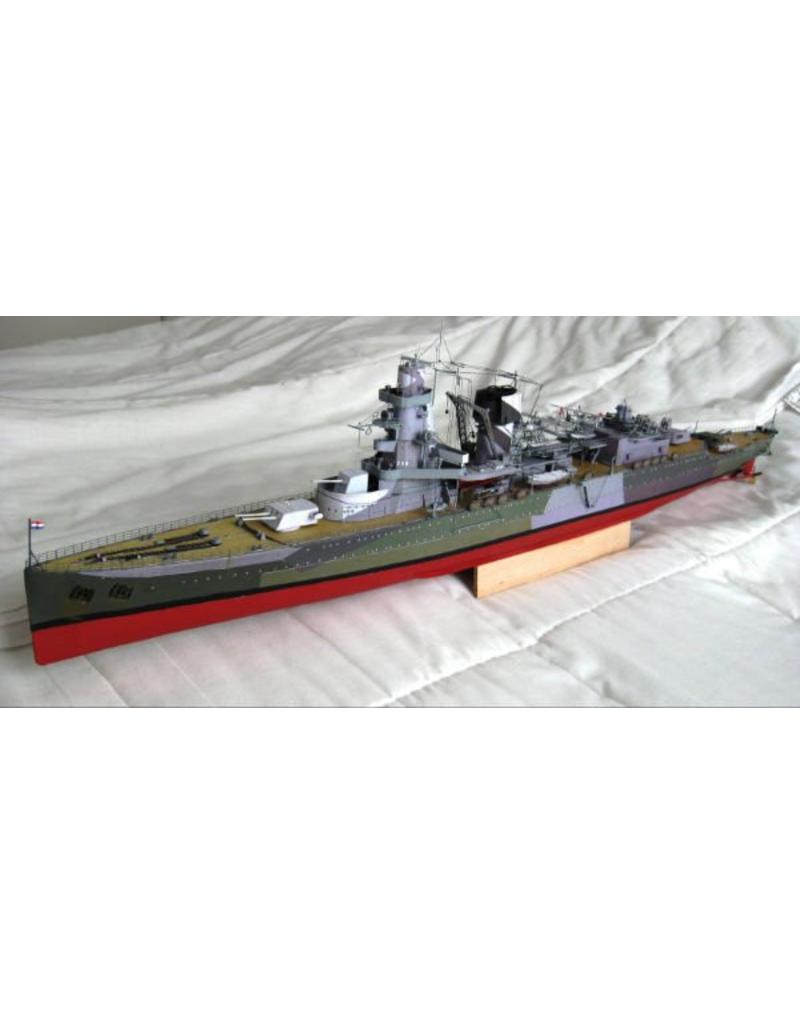
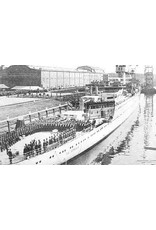
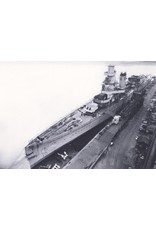
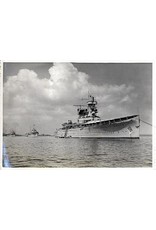
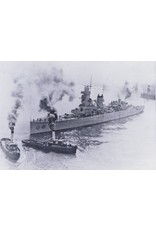
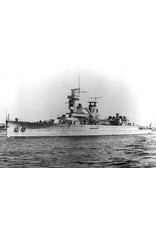
The lack of a flagship for the East Indian waters – the third ship of the Java class had been cancelled in the 1920s – led to the decision to build the De Ruyter around 1930. The keel was laid on 16 September 1933 atthe Wilton-Fijenoord shipyard in Rotterdam. The launch took place on 11 March 1935. On 3 October 1936, the ship was completed. H.M.S. De Ruyter was commissioned in the East Indian waters.
Design[edit]
The ship was 170.92 metres long, 15.7 metres wide and had a draught of 5 metres. The displacement was 6,442 standard tonnesand 7,822 tonnes fully loaded. The ship’s engines produced 66,000 hp, enabling a speed of 32 knots. The ship was manned by 437 crew members.[1]
The main armament of the De Ruyter consisted of the remarkable number of seven 150 mm guns, arranged in three twin turrets and a single turret. The original design had included six guns (three twin turrets). After it was realised that the ship had to accommodate a squadron commander and his staff, the design was slightly enlarged. This created space for one extra gun. The extra gun is in the B-position, on the forecastle, behind and slightly higher than the forward twin turret. They did not wish to spend any more money to make room for a twin turret. If the guns of the forward twin turret were raised so that all three guns on the forecastle were clearly visible, the ship bore a resemblance from a distance to the German armoured ships of the Deutschland class, which carried a triple turret on the forecastle.
De Ruyter’s design, in turn, served as a blueprint for that of the Eendracht-class cruisers, which were much larger and were to carry 10 150mm guns (2x3 and 2x2).
The secondary armament was relatively light, consisting of 10 40mm guns (or machine guns) in 5 twin mounts. The arrangement at the stern, however, was well chosen: all gun ports had an optimal field of fire and the fire control wasparticularly good.
Partly with a view to long patrols in the vast Indian waters, the cruiser could carry two aircraft on board. Curiously enough, however, Doorman decided not to carry any aircraft on the eve of the Battle of the Java Sea.
The design of the De Ruyter had a number of strengths. Nevertheless, for its size, the ship was relatively lightly armed and lightly armoured. Had a little more money been allocated, the ship would have been much better equipped
Specifications:
|
Drawing number |
10.20.035 |
|
Author |
H. Groen |
|
Description |
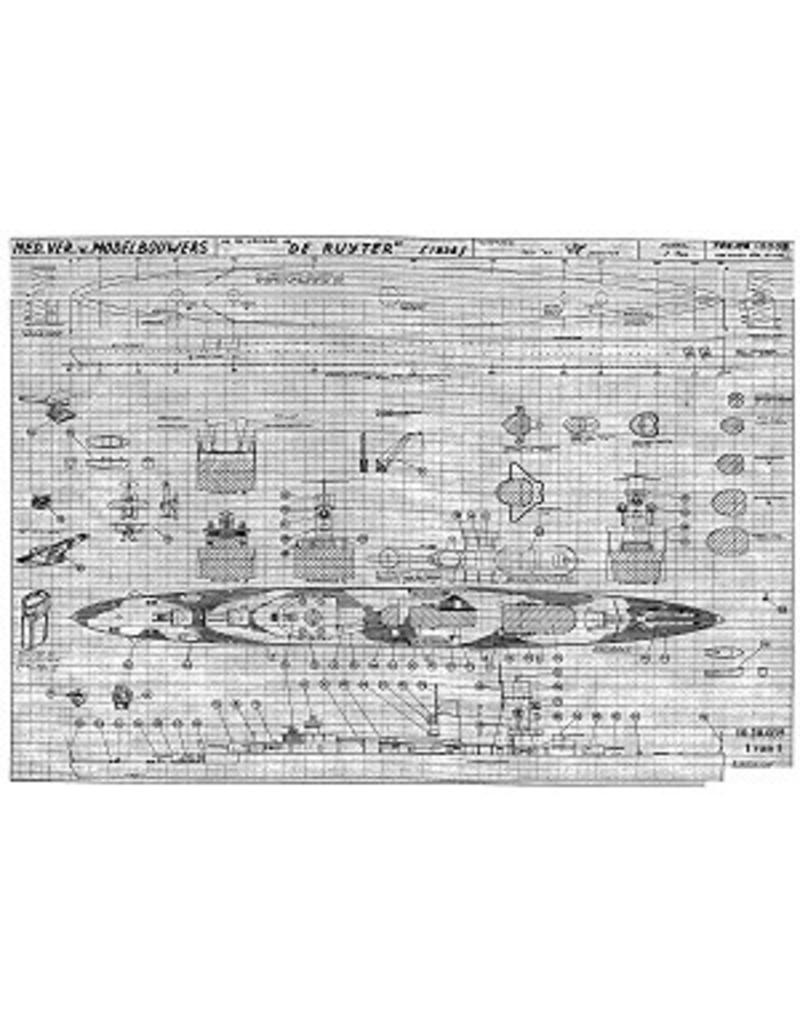
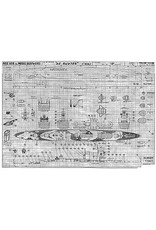
Royal Netherlands Navy cruiser "De Ruyter" (1936) |
|
Quality |
frames; side view; top view; some details |
|
Scale |
1 : 500 |
|
Number of sheets A00 |
0 |
|
Number of A0 sheets |
0 |
|
Number of A1 sheets |
0 |
|
Number of A2 sheets |
0 |
|
Number of A3 sheets |
1 |
|
Number of A4 sheets |
0 |
|
Total number of drawing sheets |
1 |
|
Number of A4 text pages |
0 |
|
Weight in grams |
35 |
|
Details |
total length 34 cm |
|
Remarks |