| Article number: | 50.02.003 |
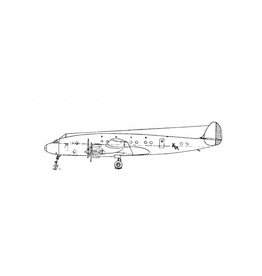
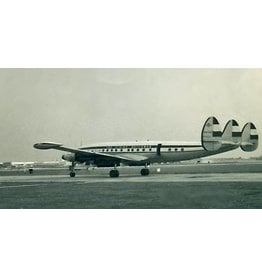
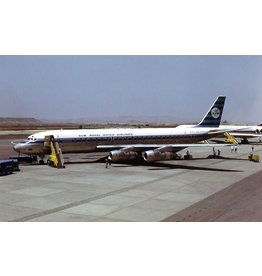
Douglas DC-6
Ì´Ì_
Source: www.wikipedia.org/wiki/Douglas_DC-6
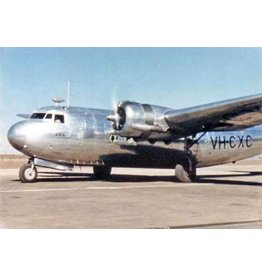
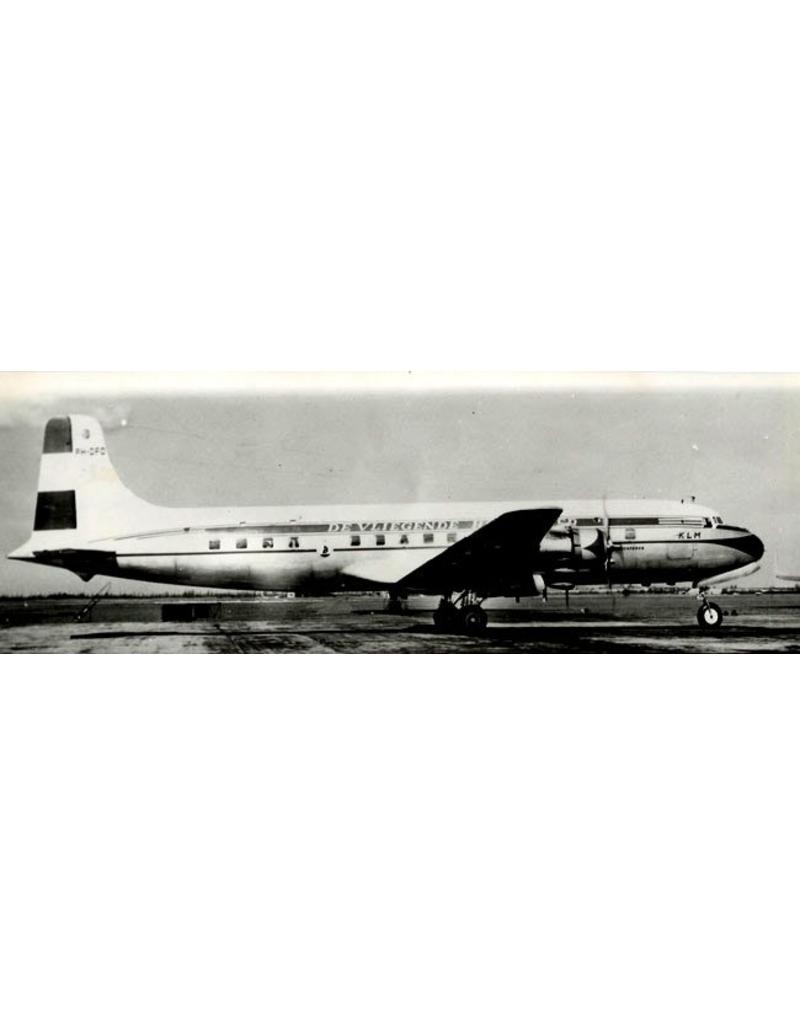
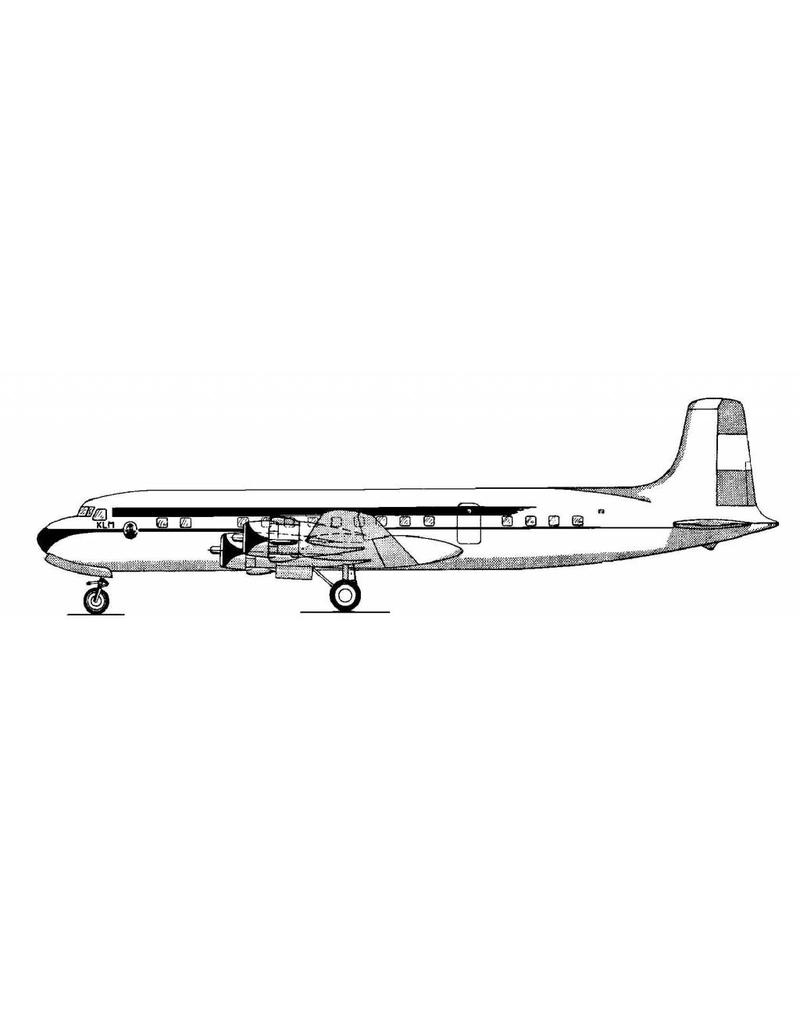
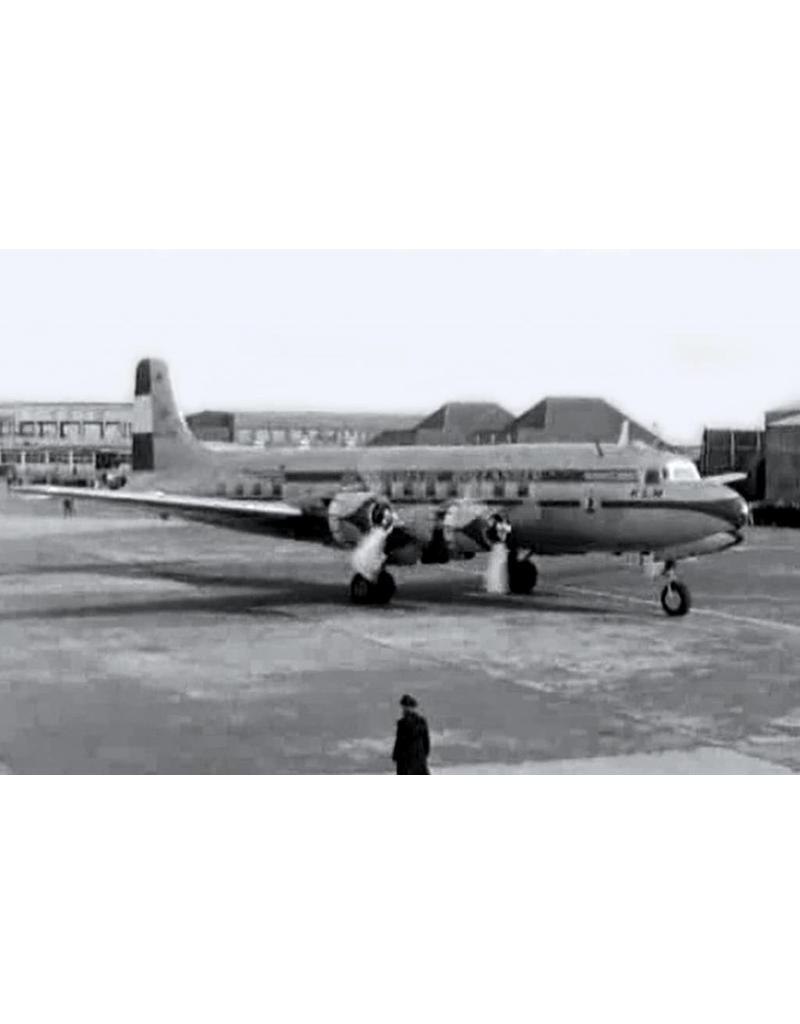
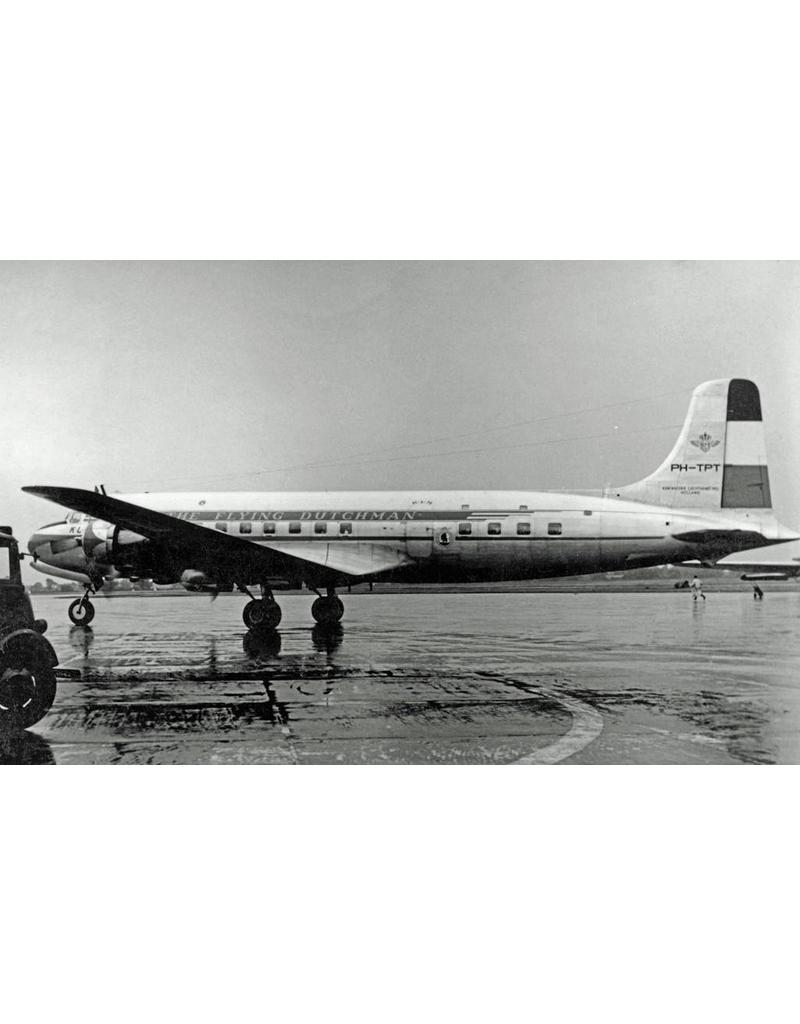
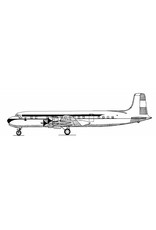
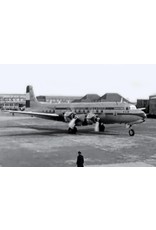
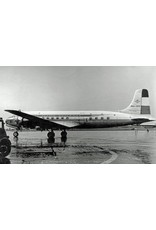
The DC-6 is a four-engine commercial aircraft developed and built by the Douglas Aircraft Company. It was produced from 1946 to 1959.
Development of the DC-6 began during the Second World War; the aircraft was therefore initially intended as a military transport aircraft. After the end of the war, however, the design was modified so that the DC-6 could compete with the Lockheed Constellation. More than 700 DC-6s were built, a significant number of which are still in service today, although mostly not as passenger aircraft.
In the US Air Force, the aircraft was known as the C-118 Liftmaster, and in the US Navy as the R6D.
Ì´Ì_
History.
The US Air Force initiated the development of the DC-6 under the designation XC-112 in 1944. The aim was to create an enlarged version of the popular C-54 with improved engines. By the time the aircraft was developed, the war was over and with it the need for the XC-112 disappeared.
Douglas adapted the design for civilian use (passenger and cargo transport) and delivered the first DC-6 in March 1947. In the first few months of its service, a number of DC-6s caught fire in a manner that was initially unexplained, which in one instance even led to a fatal crash. The entire fleet of DC-6s was grounded until the fault had been identified. The cause turned out to be a fuel line running close to the cabin heating system. Once the design had been modified to address this, the DC-6s were able to return to the skies after four months on the ground.
Douglas had developed three basic variants of the DC-6: the DC-6A was intended as a cargo aircraft; the DC-6B was a passenger aircraft; and the DC-6C was a so-called convertible: an aircraft that could be quickly converted from one type to another, or a combination of both types (for example, half cargo, half passenger).
Pan Am’s first transatlantic flight in economy class, in 1952, was operated using a DC-6.
From 1957 to 1975, the US Air Force operated C-118 Liftmasters.
Ì´Ì_
Airlines.
Airlines that have flown the DC-6 include: Aerolíneas Argentinas, Air Vietnam, Alaska Airlines, American Airlines, Aviateca, Canadian Pacific Air Lines, Great Lakes Airlines, JAT Jugoslovenski Aero Transport (now Jat Airways), KLM, LAN Chile, Mackey, Mexicana, National Airlines, Northeast Airlines, Northwest Orient, Olympic Airways, Pan American World Airways, Mexicana, Panair do Brasil, Philippine Airlines, Sabena, SAS, TEAL, Transavia, Trans American Airlines, Transocean, United Airlines, Western Airlines, and Yemen Airlines.
Nowadays, most DC-6s still in service are based in Alaska. The airlines Air Cargo Express, Everts Air Fuel, and Northern Air Cargo still operate this aircraft. Small airlines in South America also still fly the DC-6.
Ì´Ì_
Military users.
Colombia, Cuba, France, West Germany, Guatemala, Honduras, Yugoslavia, Mexico, New Zealand, Portugal, El Salvador, Taiwan, United States, South Korea.
Ì´Ì_
Today.
In 2006, the aircraft celebrated its 60th anniversary since its introduction.
There are still around 100 aircraft worldwide that are airworthy or potentially capable of flying.
In 2002, 49 were still fully operational.
Two DC-6s are in service with Atlantic Airlines in Coventry, United Kingdom.
One is in use by Red Bull in Salzburg, Austria, for promotional purposes.
One is used by Namibia Commercial Aviation.
An unknown number are in service as cargo or firefighting aircraft in Canada and Alaska.
Ì´Ì_
Various DC-6s are on display in museums worldwide. The best known is President Harry S. Truman’s ‘Independence’, which is stationed at Wright-Patterson Air Force Base in Ohio.
Ì´Ì_
Technical data:
| Ì´Ì_ | |
|
Manufacturer |
|
|
Type(s) |
DC-6, DC-6A (cargo) and DC-6B |
|
Length |
32.2 m |
|
Wingspan |
35.8 m |
|
Height (from the ground) |
8.66 m |
|
Passenger seats |
102 and |
|
Empty weight |
25,110 kg |
|
Wing area |
76.6m² |
|
Max. take- off weight |
49,000 kg |
|
Engines |
4x Pratt & Whitney R-2800 CB17 radial engines, each producing 2,500 hp (1,700 kW) |
|
Cruising speed |
507 km/h |
|
Max. range |
4,830 km |
|
First flight |
DC-6: 15 February 1946 |
|
Status |
Historical |
|
Main users |
civil and military |
|
Number built |
704, of which 167 were military versions |
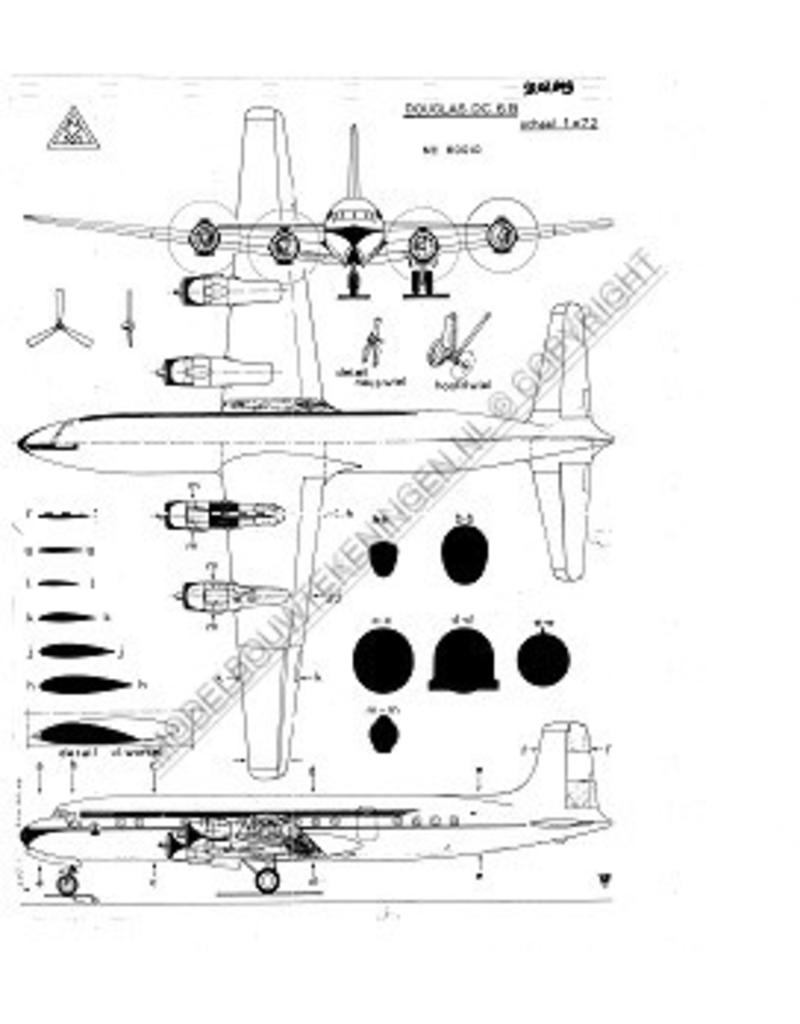
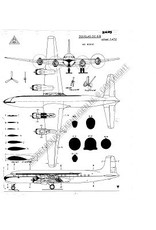
Specifications Model drawing:
|
Drawing number |
50.02.003 |
|
Author |
J.J. van Tol |
|
Description |
Douglas DC 6b Liftmaster |
|
Quality |
Ì´Ì_ |
|
Difficulty |
C |
|
Scale |
1 : 72 |
|
Number of sheets A00 |
0 |
|
Number of A0 sheets |
0 |
|
Number of A1 sheets |
1 |
|
Number of A2 sheets |
0 |
|
Number of A3 sheets |
0 |
|
Number of A4 sheets |
0 |
|
Total number of drawing sheets |
1 |
|
Number of A4 text pages |
0 |
|
Weight in grams |
65 |
|
Specifications |
span 50 cm |
|
Comments |
Fill in publication Ì´Ì_
|