| Article number: | 10.17.011 |
Specifications :
|
Drawing number |
10.17.011 |
|
Description |
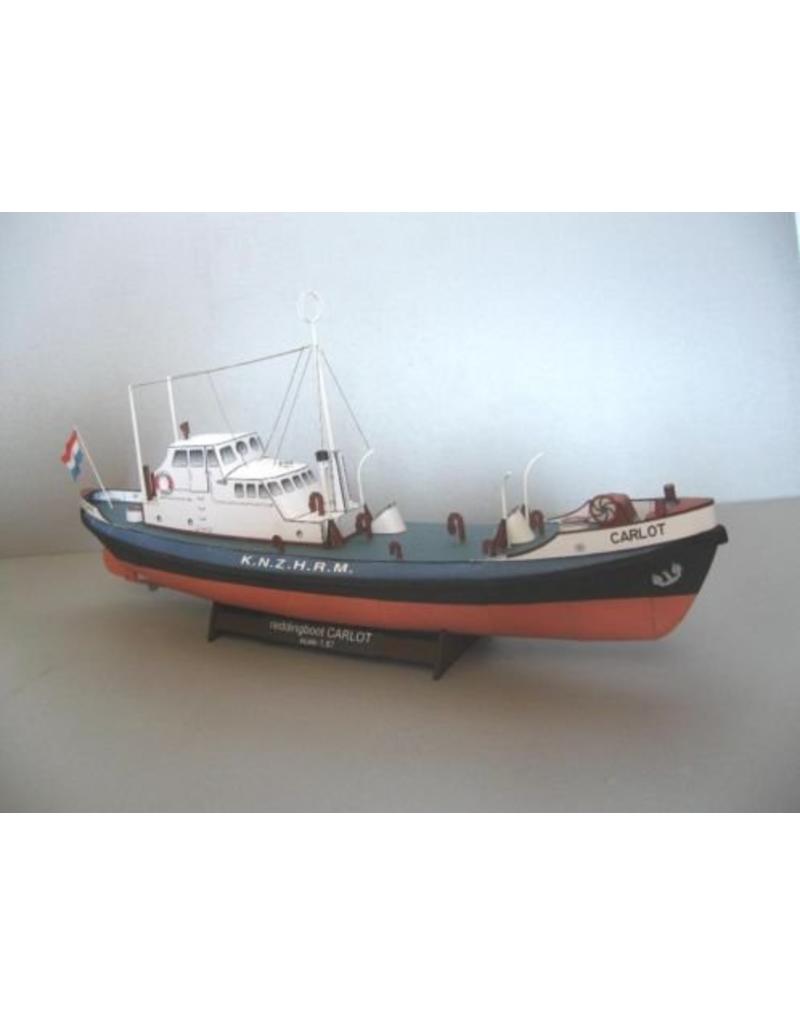
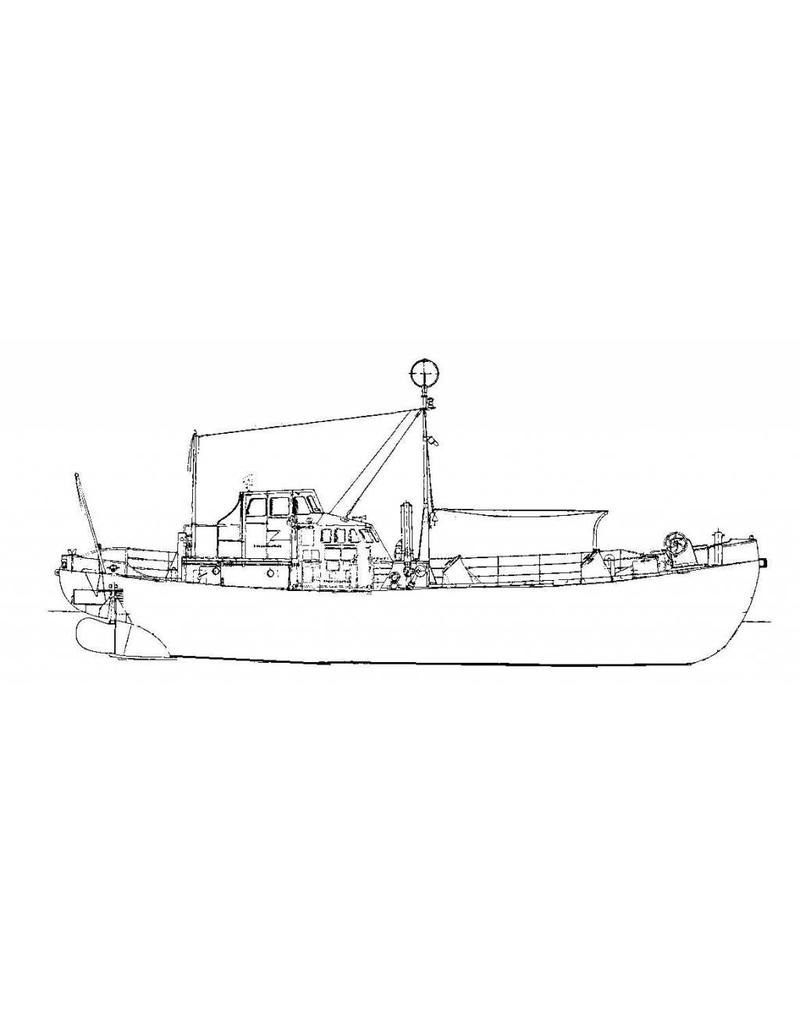
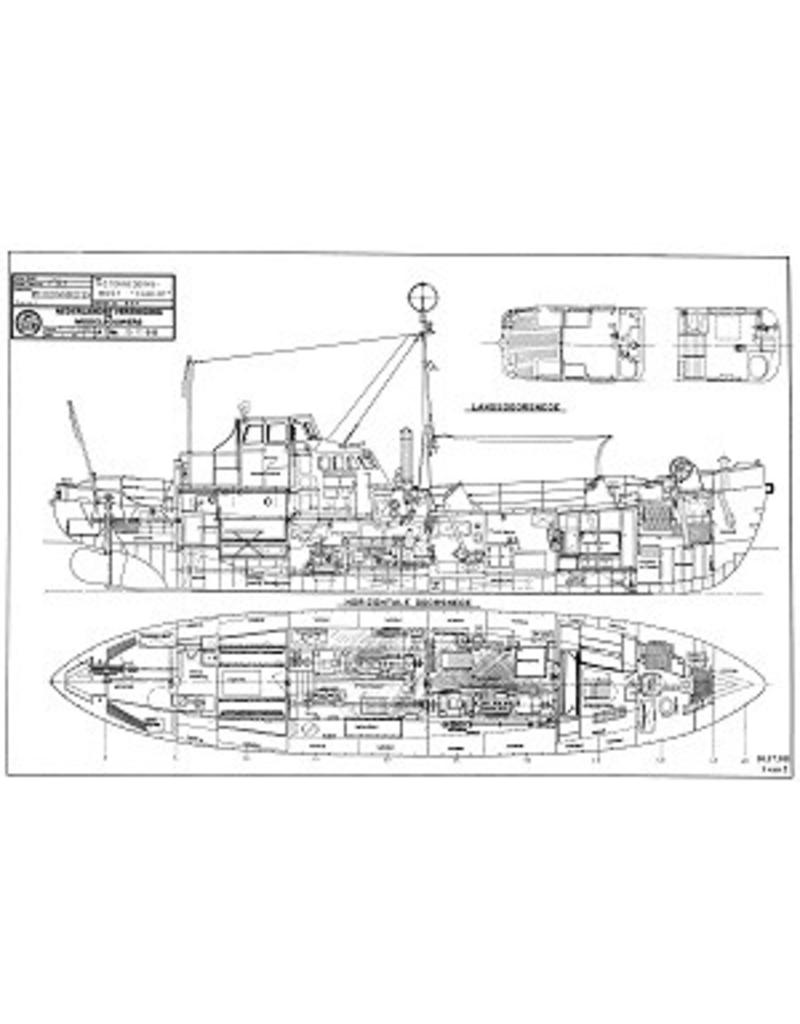
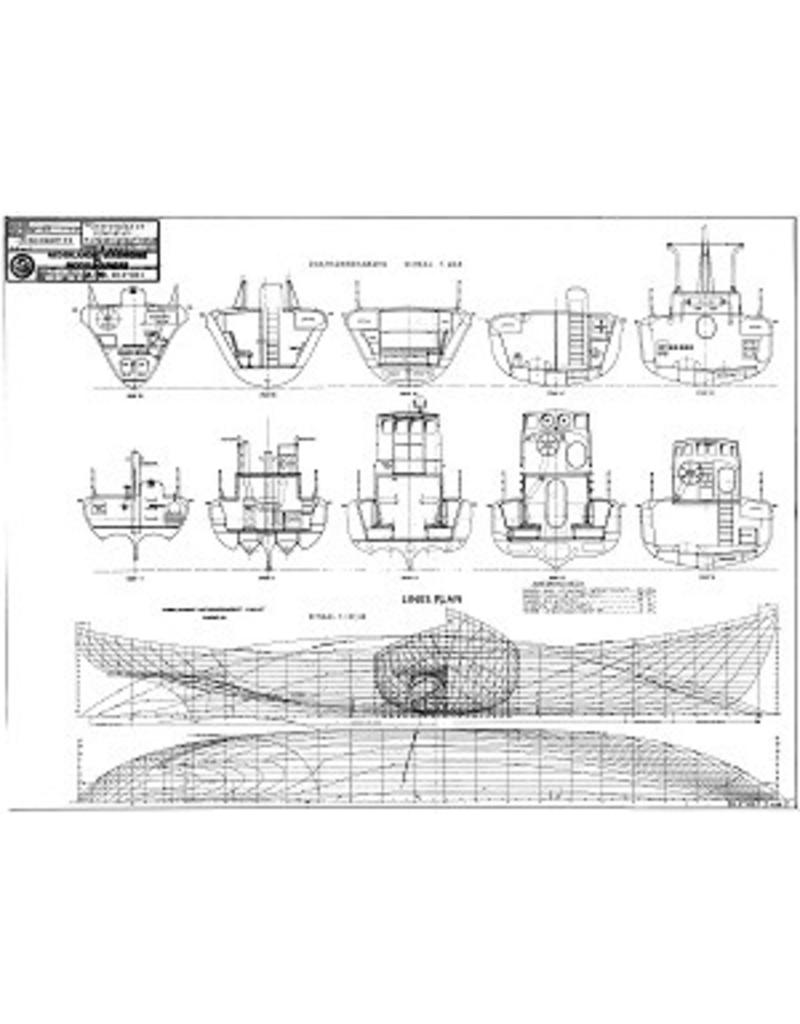
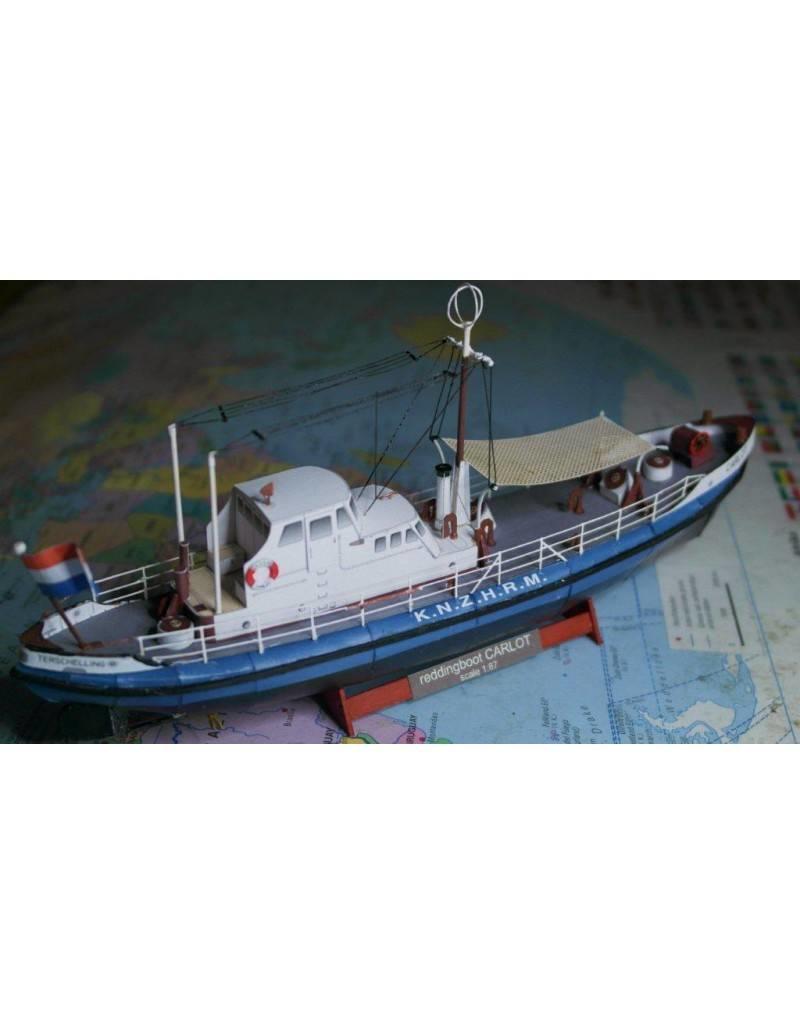
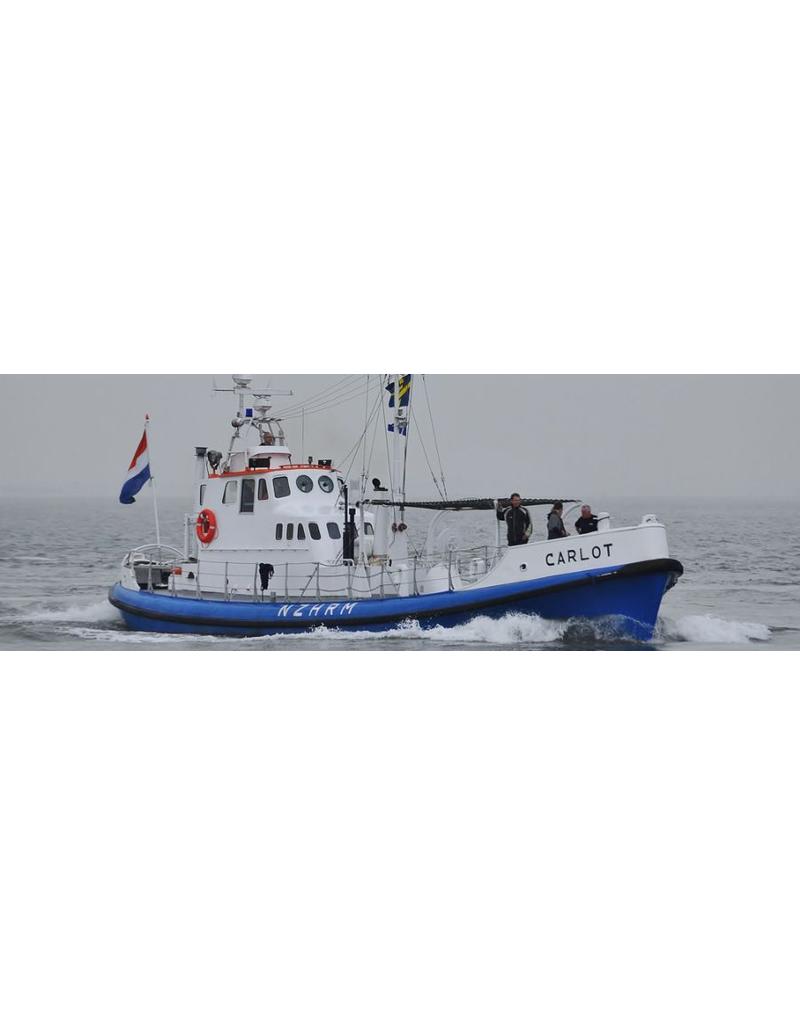
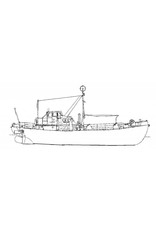
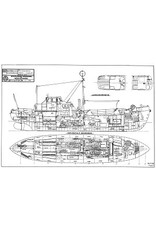
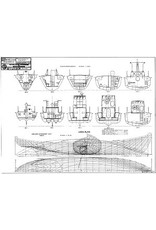
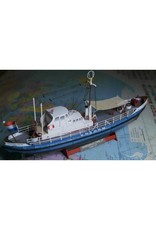
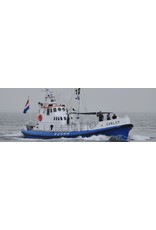
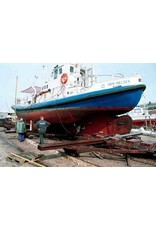
motor lifeboat "Carlot" (1960) - KNZHRM |
|
Quality |
sp/lines 1:37.65; longitudinal sections; cross-sections |
|
Scale |
1 : 40.2 |
|
Number of A00 sheets |
0 |
|
Number of A0 sheets |
0 |
|
Number of A1 sheets |
1 |
|
Number of A2 sheets |
1 |
|
Number of A3 sheets |
0 |
|
Number of A4 sheets |
0 |
|
Total number of drawing sheets |
2 |
|
Number of A4 text sheets |
0 |
|
Weight in grams |
85 |
|
Particulars |
l.o.a. 52 cm |
|
Remarks |
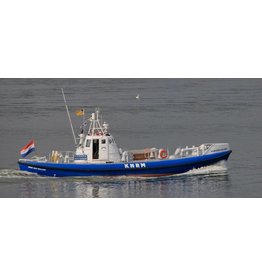
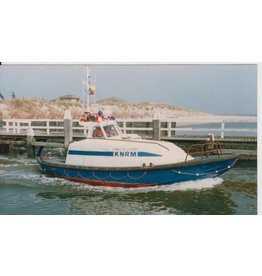
The motor lifeboat Carlot was built at the shipyard of the former H. Schouten N.V. in Muiden. It was funded from the estate of Miss C. M. J. Meyer, who had stipulated in her will that the boat should be named Carlot.
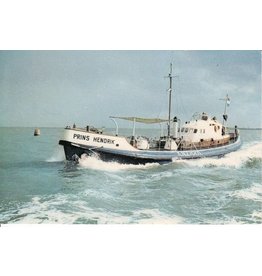
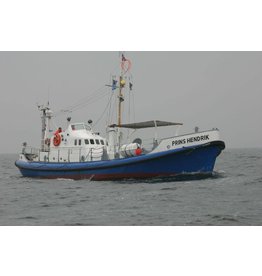
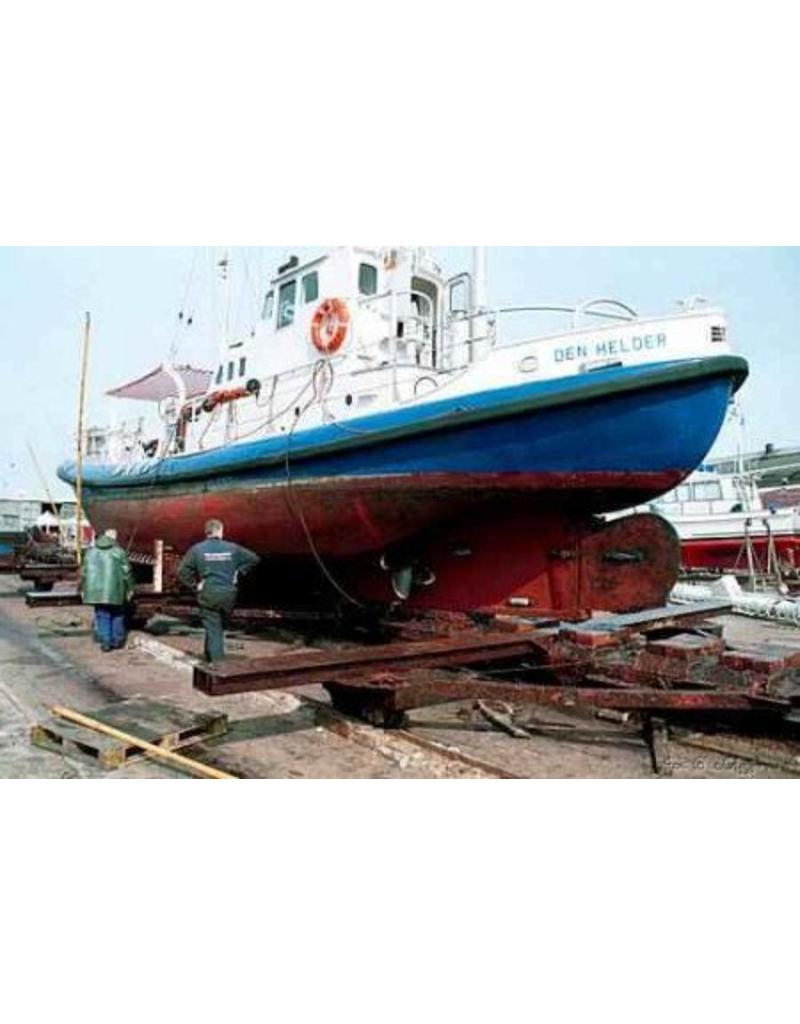
The Carlot, and her sister ships the Bernard van Leer (1965), the Gebroeders Luden (1965), the Johanna Louisa (1968) and the Suzanna (1968) are of the Prins Hendrik (1951) type, but 4.15 m wide instead of 4.05 m.
They are equipped with two Kromhout diesel engines type 8 TS 117, each 140 hp. The engines are fitted with a hydraulic reverse gear with a 3:1 reduction, and the maximum speed is 10.6 knots.
Crew 5 persons; survivor capacity: 120 persons.
These boats were originally only equipped with enclosed wheelhouses. All motor lifeboats built before the Carlot had at least one open helm station. While these have the advantage that the skipper has an unobstructed view, the disadvantage is that the crew is only partially sheltered, which demands a great deal from their endurance on long voyages. Thanks to the enclosed wheelhouse, the self-righting capability is further enhanced. If all doors in this wheelhouse are closed, the "air bubble" in the wheelhouse creates such a large buoyant force that the boat essentially cannot capsize. During the capsizing test with closed doors, the boat righted itself immediately and was back in its normal position after 6 seconds. With open doors, it took approximately 50 seconds before the boat had righted itself. The Carlot-type boats are divided into 28 watertight compartments by means of 6 watertight bulkheads, 16 air tanks, and 5 bottom tanks. The steering system consists of an electrically-hydraulic steering gear operated by a telemotor, with the possibility of manual steering. In the upper wheelhouse, specially designed clear-view screens are installed, as well as an echo sounder, the remote control for the radiotelephony equipment, the intercom to the lower wheelhouse, and a magnetic compass. In the lower wheelhouse are the radiotelephony equipment, an automatic radio direction finder with a fixed cross-frame in the mast, and the radar installation, the antenna of which is located on the roof of the upper wheelhouse. From 1976, the Carlot-type boats were fitted with a 'flying bridge', a small open helm station to provide better all-round visibility. During her 39 years of service, the Carlot made 579 rescue missions. In doing so, 799 people, nine cats, one dog, and one pigeon were rescued.