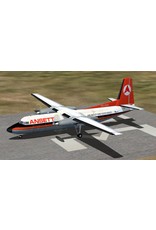
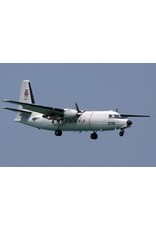
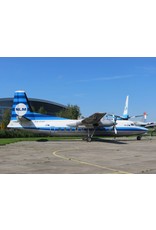
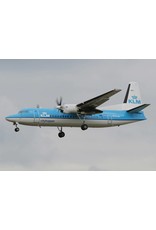
| Article number: | 50.00.001 |
Fokker F27
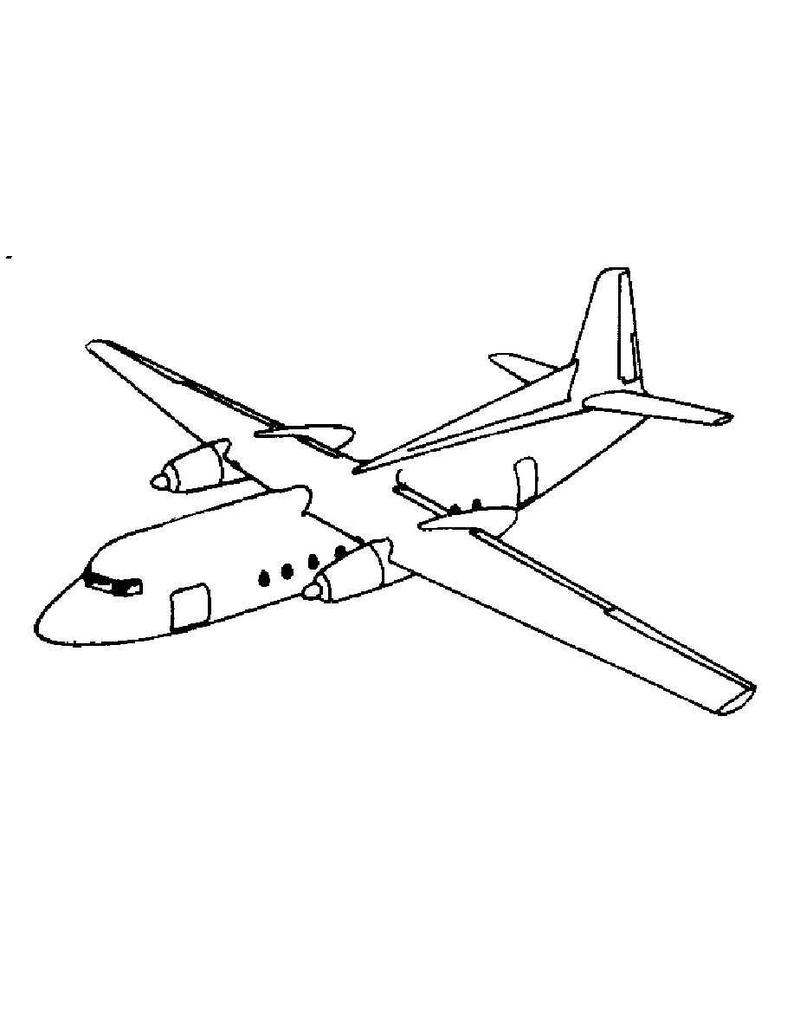
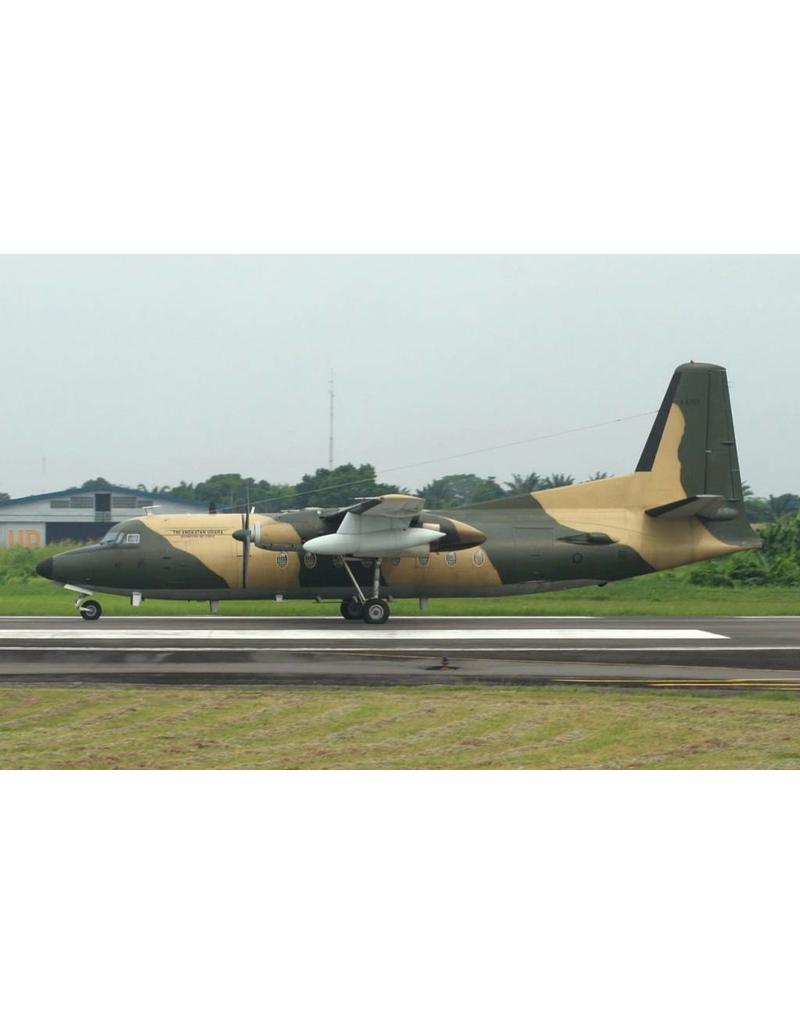
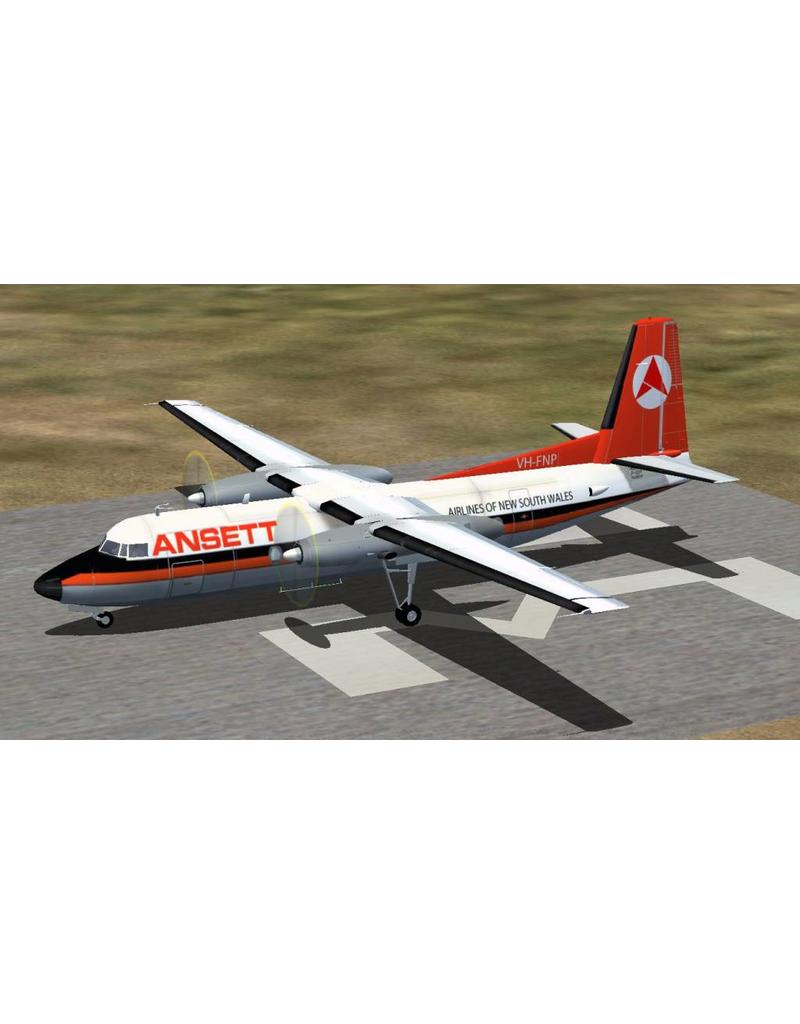
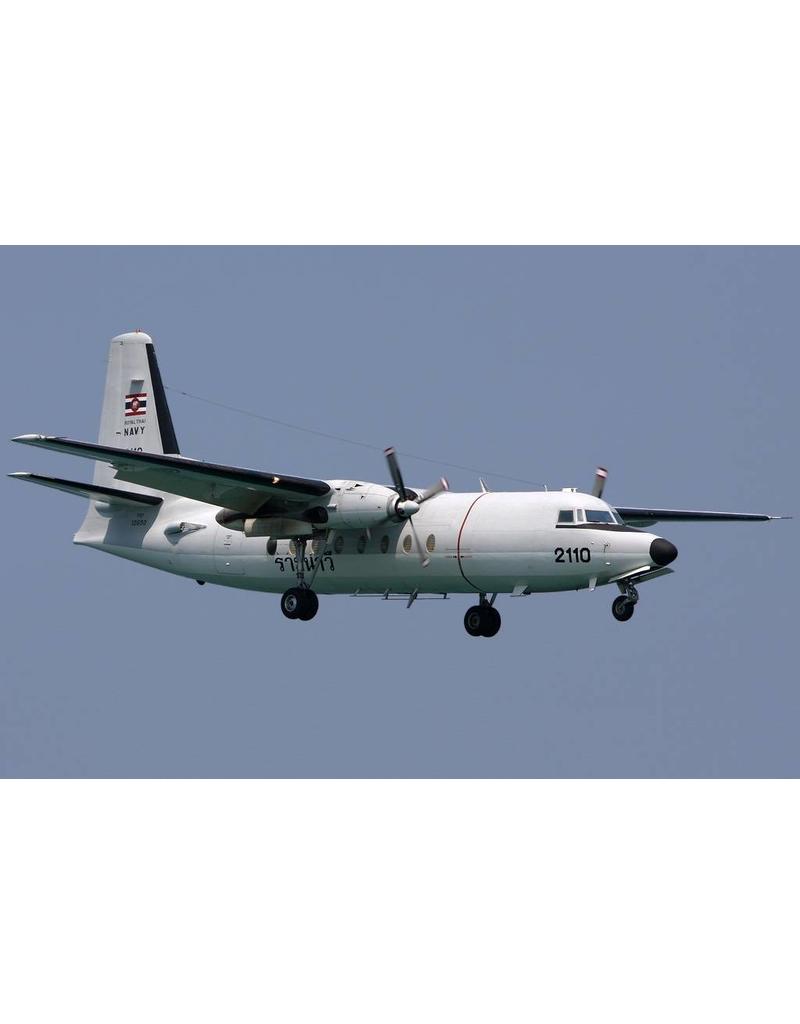
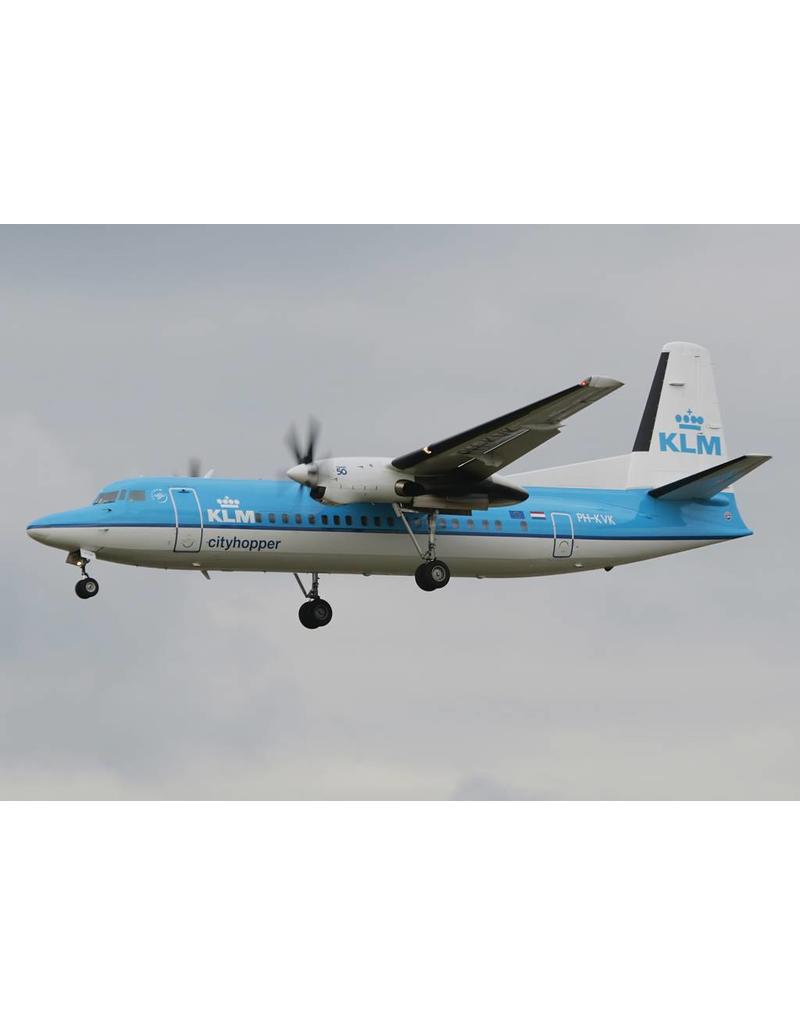
The Fokker F27 "Friendship" is a passenger aircraft built by the Dutch aircraft manufacturer Fokker. It is the best-selling (793) Western European turboprop passenger aircraft of all time. It was built under licence by the American aircraft manufacturer Fairchild.
Source: www.wikipedia.org/wiki/Fokker_F27
History
The Fokker Friendship was designed in 1954 by Fokker’s chief designer Cees van Meerten as a replacement for the Douglas DC-3. After a number of options had been considered, the choice fell on a high-wing aircraft with two Rolls-Royce Dart engines and a pressurised cabin for 28 passengers. The first prototype, PH-NIV, made its maiden flight on 24 November 1955. The second prototype, which was also the first production model, was almost a metre longer, as the first prototype had proved to be tail-heavy. The longer aircraft could also carry more (32) passengers. Furthermore, Dart Mk 528 engines were selected.
The F27’s propeller was manufactured by Dowty Rotol. It was a four-bladed propeller. The first versions had a rounded tip. Later, to achieve higher power, a version with a truncated tip was used. The disadvantage of this was increased noise production. In particular, the higher harmonics, the 8P and 12P frequencies, became more pronounced. The propeller rotated at a pitch frequency of 88 Hz. To reduce propeller noise in the cabin, Fokker fitted tuned and virtually undamped resonators, which were mounted on the aircraft’s spars.
Many of the Friendship’s fuselage and wing sections were constructed from bonded aluminium sandwich structures; a revolutionary construction method at the time that helped to reduce weight. No rivets were used. The development of the aircraft cost 30 million guilders at the time, part of which was lent to Fokker by the Dutch State in the form of development loans. An interior design by Gerrit Rietveld, which used colour to suggest a sense of space, was ultimately not used, although the Fokker management were very enthusiastic about it. The airlines that purchased Friendships preferred to have their own colour schemes applied instead.
The first version of the Friendship, the F27-100, could carry 44 passengers and was first delivered to Aer Lingus in September 1958. A version with Dart Mk 532 engines, the F27-200, soon followed. The best-known type of Friendship is the F27-500. The fuselage had been lengthened again, meaning the aircraft could now carry 52 passengers. Dart Mk 528 engines were once again chosen. This version of the F27 entered service in November 1967.
In 1956, Fokker granted the American aircraft manufacturer Fairchild a licence to build the aircraft in the United States. On 12 April 1958, the first Fairchild F-27 made its maiden flight. Fairchild later developed an extended version of its own, the Fairchild F-227.
A total of 786 Friendship aircraft were built (206 of which by Fairchild). This makes the F27 the most successful Western European turboprop passenger aircraft. It became very popular in the Third World, as the aircraft was suitable for small unpaved runways. In the early 1980s, a successor to the Friendship was designed, the Fokker 50.
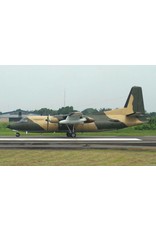
F27-300 at the Military Aviation Museum in Soesterberg
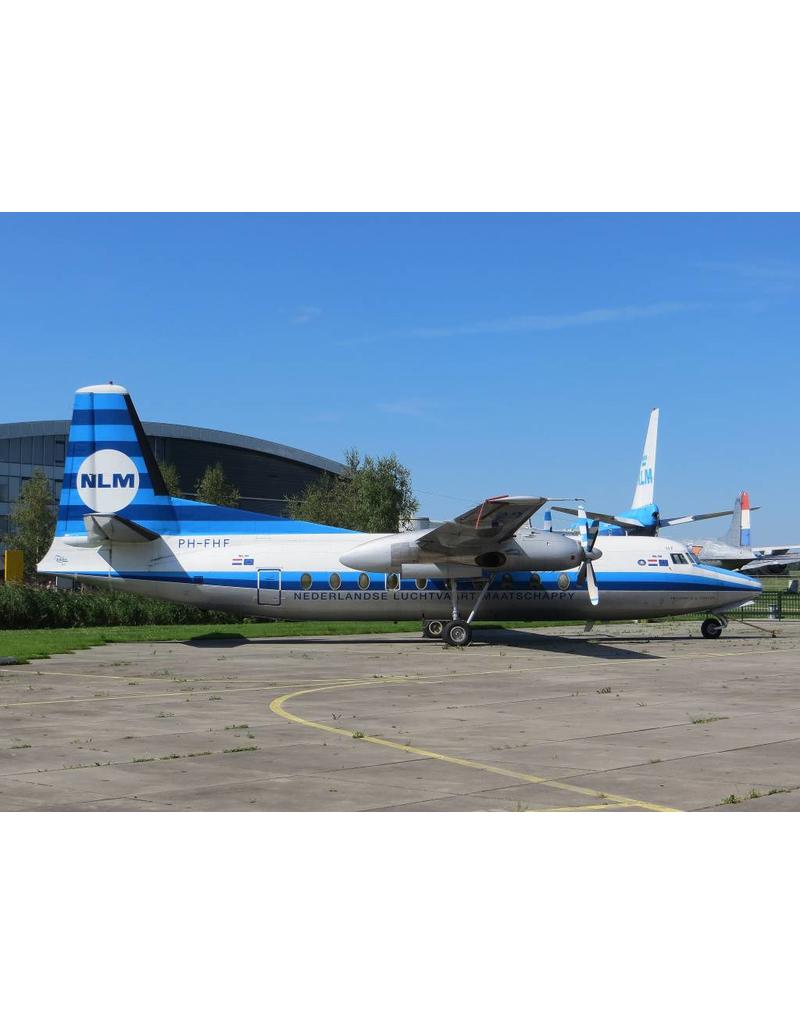
The Aviodrome in Lelystad has the third aircraft to be built, and also possesses parts of the prototype. The Military Aviation Museum in Soesterberg houses an F27-300M Troopship. In 1995, the Dutch F27 Friendship Association purchased the ‘F-3’, a prototype that had been converted for passenger transport and began flying with the German airline LTU on 1 January 1958. This aircraft is on display at the Aviodrome, has been repainted in its original factory colours and is not currently flying. Another Friendship, the F-5, was purchased in Australia in 2004 and has been operating sightseeing flights from the Aviodrome since 2005. The aircraft has been restored to the old colours of the NLM, which began operating this type on domestic flights in 1966. It is the oldest Fokker F27 still in flight.
On 5 May 2006, it was announced that the Friendship had been chosen as the Best Dutch Design. In an online poll organised by the Premsela Foundation and NRC Handelsblad, the aircraft received 1,844 of the 5,649 votes cast.
On 24 November 2011 (exactly 56 years after the test flight of the first F27), an F27 Friendship landed at Schiphol for the first time in years. For this special occasion, the aircraft was brought in from the North Sea and escorted to Schiphol by the Fokker Four. Prior to this day, the aircraft (c/n: 10449) with registration N19XE was restored to airworthiness by Chevron Technical Services at Kemble in the Cotswolds. On 3 July 2012, this Friendship was delivered in the original PH-NIV prototype colours. In early 2013, the aircraft was placed as a gatekeeper on the former Fokker factory site at the entrance to the Fokker Logistics Park, Fokkerweg 300 in Oude Meer.
Technical data:
|
Manufacturer |
|
|
Author |
H. Groen |
|
Length |
23.8 m (F27-100) |
|
Wingspan |
29.0 m |
|
Height (from the ground) |
8.5 m |
|
Passenger seats |
44 |
|
Max. take-off weight |
19,050 kg |
|
Engines |
2x Rolls-Royce Dart Mk.507 (1st prototype) |
|
Cruising speed |
Mach 0.39 (483 km/h) |
|
Cruising altitude |
8,475 m (F27-100) |
|
Max. range |
1,715 km (F27-100) |
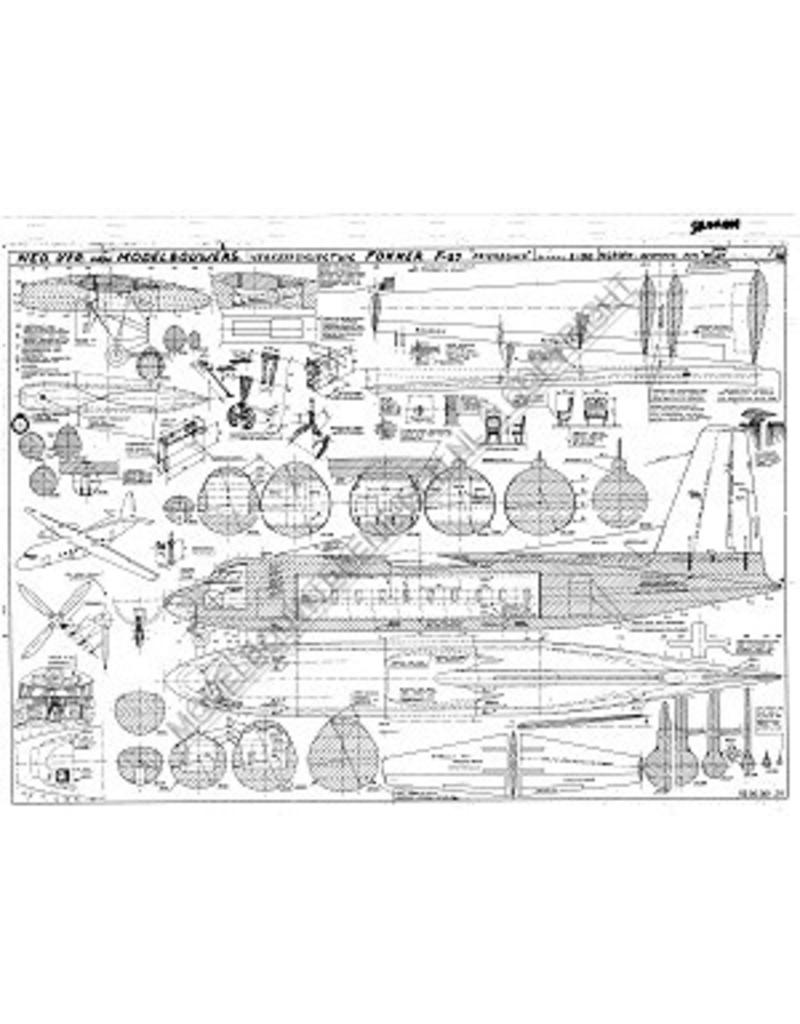
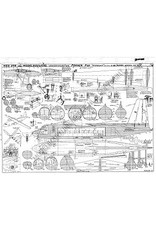
Specifications Model construction drawing:
|
Drawing number |
50.00.001 |
|
Description |
Fokker F27 Friendship |
|
Quality |
|
|
Difficulty level |
C |
|
Scale |
1 : 50 |
|
Number of sheets A00 |
0 |
|
Number of A0 sheets |
0 |
|
Number of A1 sheets |
0 |
|
Number of A2 sheets |
1 |
|
Number of A3 sheets |
0 |
|
Number of A4 sheets |
0 |
|
Total number of drawing sheets |
1 |
|
Number of A4 text sheets |
0 |
|
Weight in grams |
45 |
|
Specifications |
span 58 cm |
|
Comments |