| Article number: | 50.00.008 |
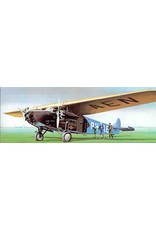
Fokker F.VII
Source: www.wikipedia.org/wiki/Fokker_F.VII
Ì´Ì_
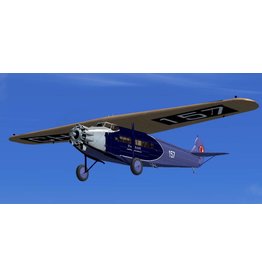
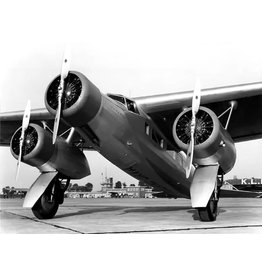
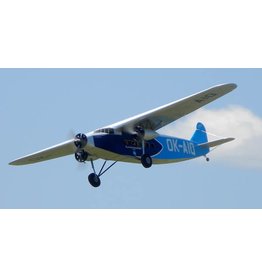
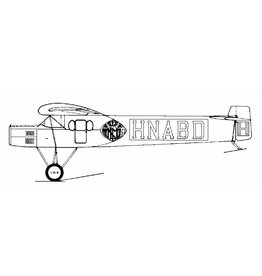
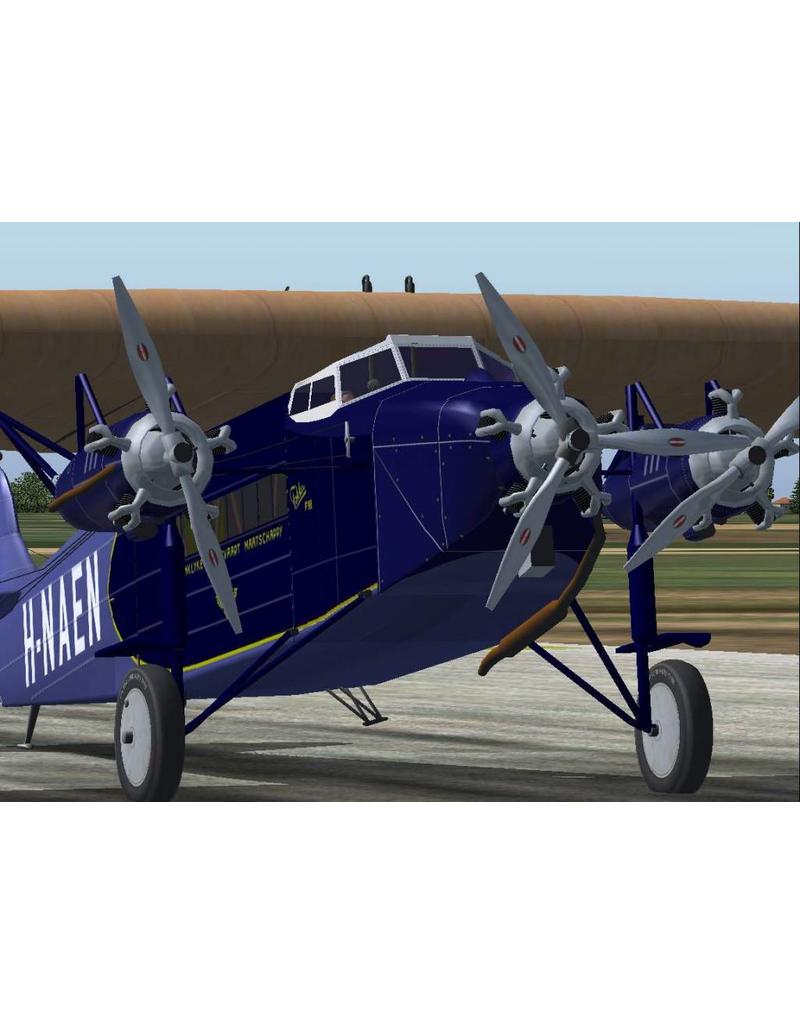
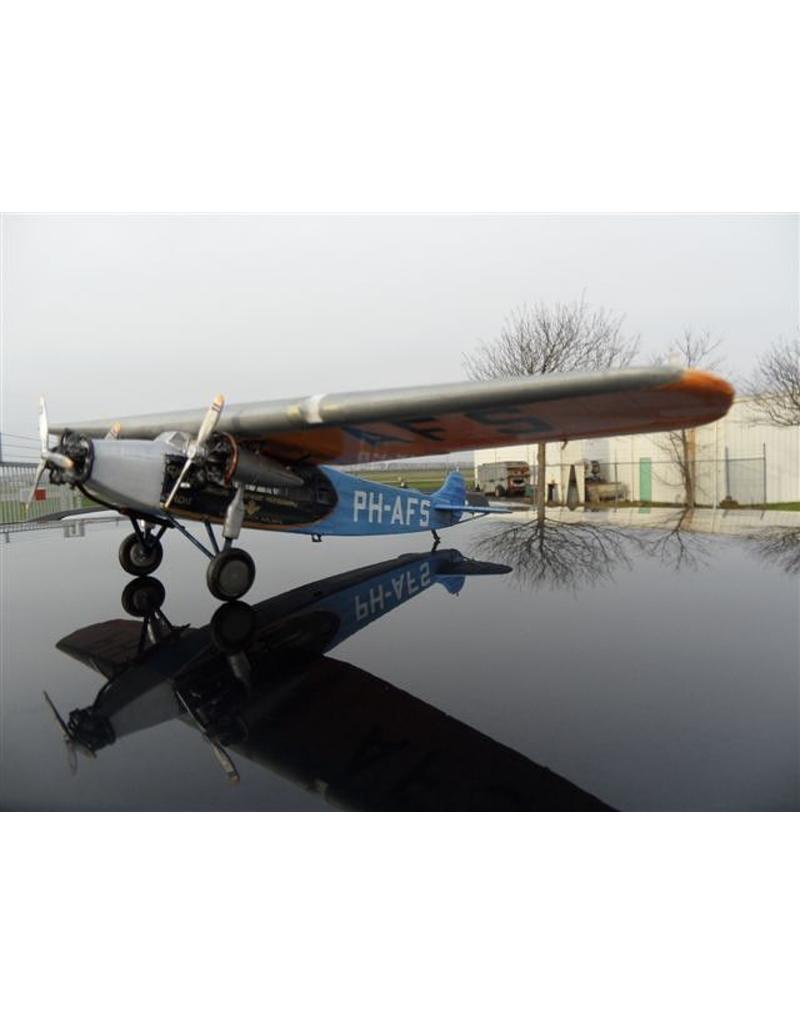
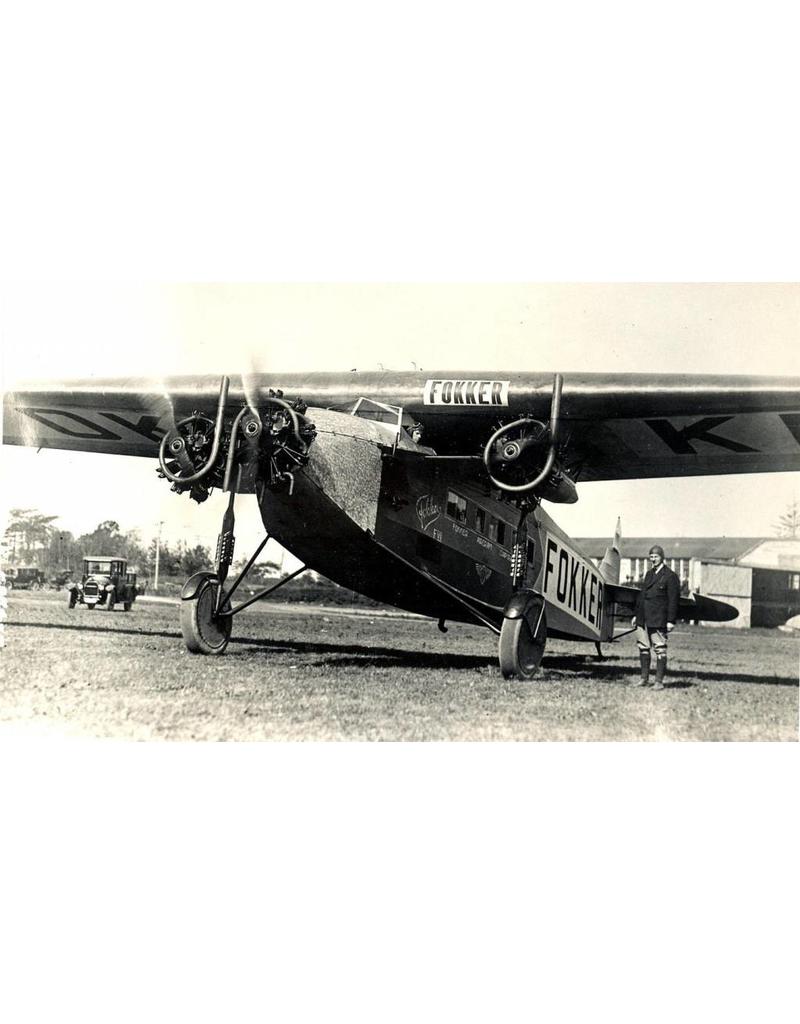
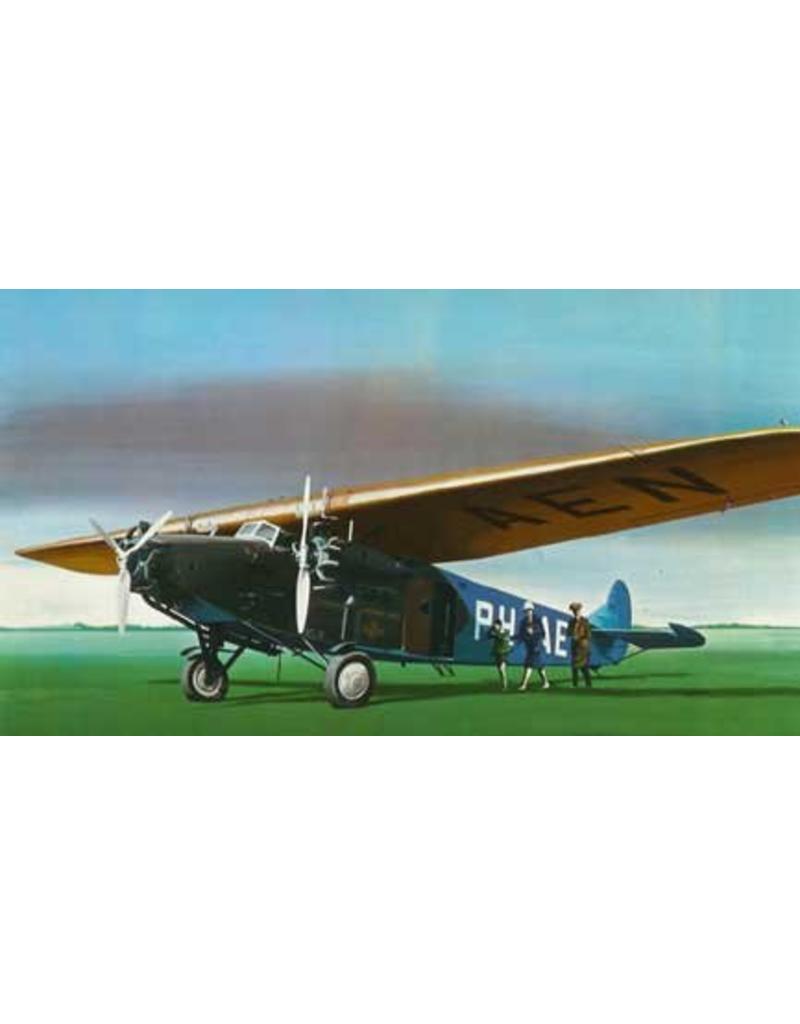
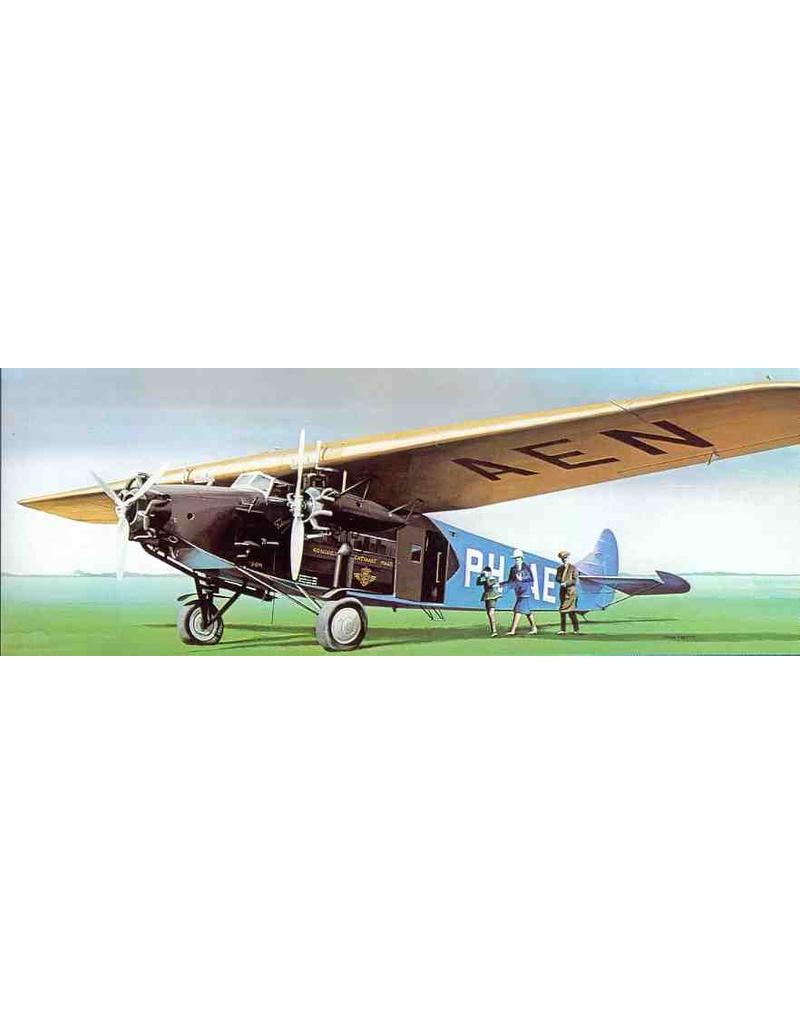
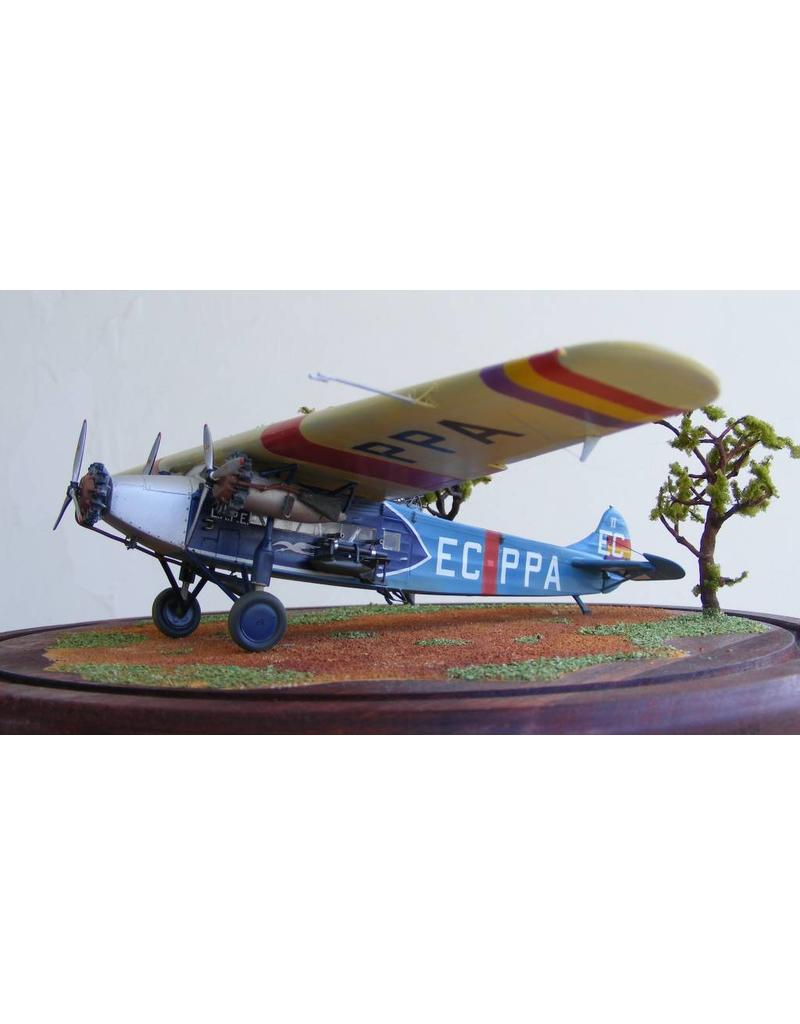
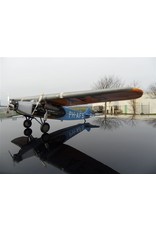
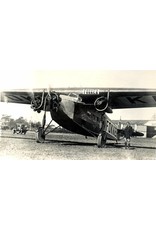
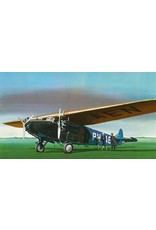
The Fokker F.VII is a high-wing passenger aircraft built by the Dutch aircraft manufacturer Fokker and its American subsidiary Atlantic Aircraft Corporation. The maiden flight took place on 11 April 1924. The F.VII was produced under licence by various aircraft manufacturers.
Design and development.
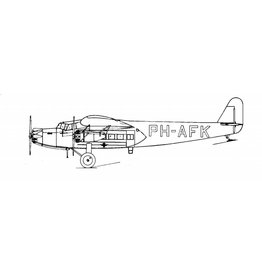
The initial design of the F.VII was created by Walter Rethel and was a further development of the Fokker F.V. Anthony Fokker improved the design by fitting the aircraft with two additional engines. This was also the configuration in which it competed in the Ford Reliability Tour in 1925, which it won. As a result, all models of the F.VII were fitted with three engines from that point onwards, leading to the aircraft becoming known as the Fokker Trimotor.
Ì´Ì_
Operational history.
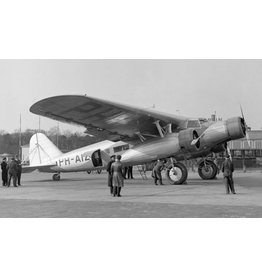
The Fokker, which could accommodate eight to twelve passengers, was the choice of many airlines, both in North America and in Europe. Together with the comparable Ford Trimotor, the F.VII dominated the American market in the late 1920s. However, the popularity of the F.VII came to a swift end following the death of Notre Dame Football coach Knute Rockne in a plane crash on TWA Flight 599 in a Fokker F.10 in 1931. The subsequent investigation, which revealed problems with Fokker’s multiplex laminate construction, resulted in a ban on this aircraft for commercial flights and the rise of all-metal aircraft such as the Boeing 247 and the Douglas DC-2.
Ì´Ì_
The first flight to the Dutch East Indies.
The F.VII was used to make the first flight from the Netherlands to the Dutch East Indies. To organise this, the ‘Comité voor de Vliegtocht Nederland – Indië’ (Committee for the Flight from the Netherlands to the Dutch East Indies) was established. The aircraft used, the H-NACC, was provided by KLM. The crew consisted of the pilots Thomassen, Theussink van der Hoop (KLM) and Van Weerden Poelman (Aviation Department) and the flight engineer Van den Broeke. The flight began on 1 October 1924 at Schiphol. Two days later, the journey was abruptly interrupted due to an engine failure. An emergency landing had to be made near Philippopel (Plovdiv) in Bulgaria. The aircraft sustained minor damage and could be repaired, but the engine had to be replaced. A collection was held among the readers of the magazine ‘Het Leven’, which enabled a new engine to be purchased. On 2 November 1924, the journey was able to continue. On 23 November, the aircraft landed in Muntok, and on 24 November, the final destination of Batavia was reached. Here, the crew received an enthusiastic welcome.
Ì´Ì_
After a number of local flights, the H-NACC was dismantled and transported back to the Netherlands on a steamship belonging to the Koninklijke Rotterdamsche Lloyd. On 9 July 1926, the aircraft was lost in an accident in thick fog near Wolvertem (Belgium).
Ì´Ì_
Aviation pioneers.
The F.VII was used by many aviation pioneers:
From 1926 to 1928, the Australian polar explorer Hubert Wilkens made several flights to the North Pole. On the Detroit Arctic Expedition, he used an F.VIIa and an F.VIIb/3m. The expeditions with the pilot Carl Ben Eielson were anything but successful.
Richard E. Byrd claimed to have flown over the North Pole in the Fokker F.VIIb/3m Josephine Ford on 9 May 1926, a few days before Roald Amundsen achieved this in his airship Norge.
In June 1927, two lieutenants from the US Army Air Corps, Lester Maitland and Albert Hegenberger, flew from the US mainland to Hawaii in the Fokker C-2 Bird Of Paradise.
Richard E. Byrd, Bernt Balchen and two others flew across the Atlantic Ocean to France in the Fokker C-2 America in June 1927, where they made an emergency landing on the beach. This was the third successful heavier-than-air crossing of the Atlantic Ocean.
Lieutenant-Colonel ‘Dan’ Minchin, Captain Leslie Hamilton and Princess Loewenstein-Wertheim attempted to become the first to cross the Atlantic Ocean in their F.VIIa St. Raphael on 31 August 1927. Their fate remains unknown.
Sir Charles Kingsford Smith’s F.VIIb/3m Southern Cross was the first aircraft to cross the Pacific Ocean from the United States to Australia in June 1928, in three stages from Oakland, California, to Brisbane. Furthermore, the Southern Cross was the first to cross the Tasman Sea to New Zealand and back in September of the same year.
Amelia Earhart became the first woman to cross the Atlantic Ocean on 17 June 1928 as a passenger aboard the F.VIIb/3m Friendship.
A group of U.S. Army Air Corps pilots led by Major Carl Spaatz set a record of more than 150 consecutive hours of flight from 1 January to 7 January 1929 in the C-2 Question Mark over Los Angeles. The aim of the mission was to experiment with in-flight refuelling.
Ì´Ì_
Fokker F.VII at KLM
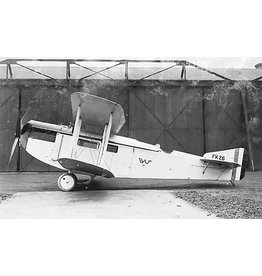
From 1924 onwards, KLM owned five F.VIIs and 15 F.VIIas, four of which were built by its own technical department.
Ì´Ì_
Versions.
F.VII: single-engine transport aircraft, a total of five built, all for KLM
F.VIIa: single-engine transport aircraft, slightly larger than the original F.VII with new wings and landing gear. First flight on 12 March 1925. The first F.VIIa was fitted with a Packard Liberty engine, producing 310 kW (420 hp). The other 39 F.VIIa‰Û¡ÌÝå»s were mostly fitted with a Bristol Jupiter radial engine or a Pratt & Whitney Wasp engine.
F.VIIa/3m: The F.VIIa/3m was the first version of the F.VII with three engines instead of two. The two additional engines were mounted under the wings. The maiden flight took place on 4 September 1925. The first two aircraft of this type were identical to the F.VII (with the exception of the number of engines); those produced subsequently had a fuselage eighty centimetres longer and were powered by Wright J-4 Whirlbird radial engines. It is likely that only eighteen of this type were built, with many ‘standard’ F.VIIas being converted into F.VIIa/3ms.
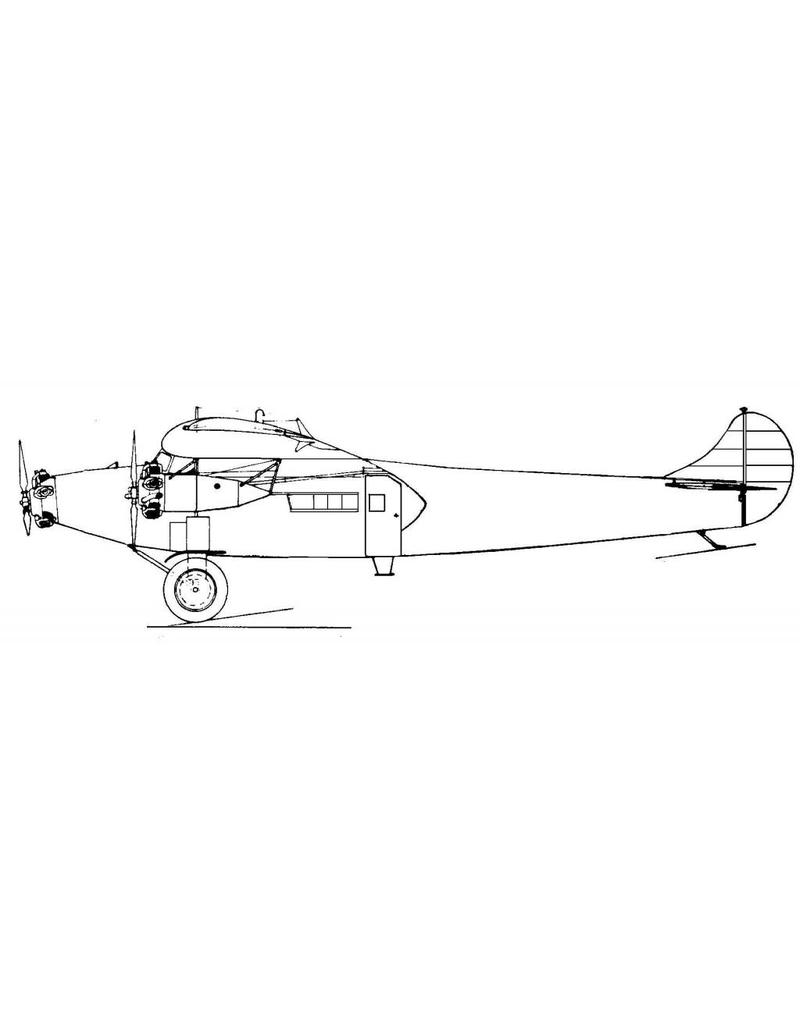
F.VIIb/3m: Main production version with a larger wingspan; 154 were built, including those produced under licence.
F.10: American passenger version, enlarged to carry twelve passengers.
Licence-built versions
Atlantic Aircraft Corporation
Avia: 18 units built
Avro: 14 units built as the Avro 618 Ten
KLM: 4 units built by the Technical Department
Plage & LaåÌkiewicz: 11 passenger aircraft and 20 bombers further developed by Jerzy Rudlicki
3 units built in Italy as IMAM Ro.10
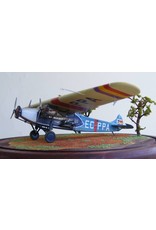
1 unit built in Spain
Ì´Ì_
Users.
Civilian operators
Belgium SABENA 28 F.VIIs
Denmark Det Denske Luftfartselskab ‰Û¡ÌÝÌÕ 3 F.VIIa‰Û¡ÌÝå»s
France CIDNA ‰Û¡ÌÝÌÕ 7 F.VIIa‰Û¡ÌÝå»s
STAR ‰Û¡ÌÝÌÕ 1 F.VIIa
Hungary MALÌÎÌ_RT ‰Û¡ÌÝÌÕ 2 F.VIIa‰Û¡ÌÝå»s
Netherlands KLM ‰Û¡ÌÝÌÕ 5 F.VII‰Û¡ÌÝå»s and 15 FVIIa‰Û¡ÌÝå»s
Poland Aero ‰Û¡ÌÝÌÕ 6 F.VIIa‰Û¡ÌÝå»s for a short period in 1928; in January 1929, all aircraft were transferred to LOT Polish Airlines
LOT Polish Airlines operated 6 F.VIIa aircraft and 13 F.VIIb aircraft between 1929 and 1939
United States American Airways
Pan Am ‰Û¡ÌÝÌÕ F.VIIb‰Û¡ÌÝå»s
TWA
Switzerland Swissair ‰Û¡ÌÝÌÕ 1 F.VIIa and 8 F.VIIb
Ì´Ì_
Ì´Ì_
Military users
Finland ‰Û¡ÌÝÌÕ 1 F.VIIa
Yugoslavia
Croatia
Netherlands ‰Û¡ÌÝÌÕ 3 F.VIIa bombers
Poland ‰Û¡ÌÝÌÕ 21 F.VIIb‰Û¡ÌÝå»s (of which 20 were built under licence)
Spain ‰Û¡ÌÝÌÕ 7 F.VII‰Û¡ÌÝå»s
Czechoslovakia
United States United States Army
United States Navy and United States Marine Corps
Ì´Ì_
Technical data:
|
Manufacturer |
|
|
Length |
14.60 m |
|
Wingspan |
28.88 m |
|
Height (from the ground) |
3.90 m |
|
Passenger seats |
8 |
|
Unladen weight |
3050 kg |
|
Engines |
3x Wright J-5 Whirlbird radial engines, 164 kW (220 hp) each |
|
Cruising speed |
195 km/h |
Ì´Ì_
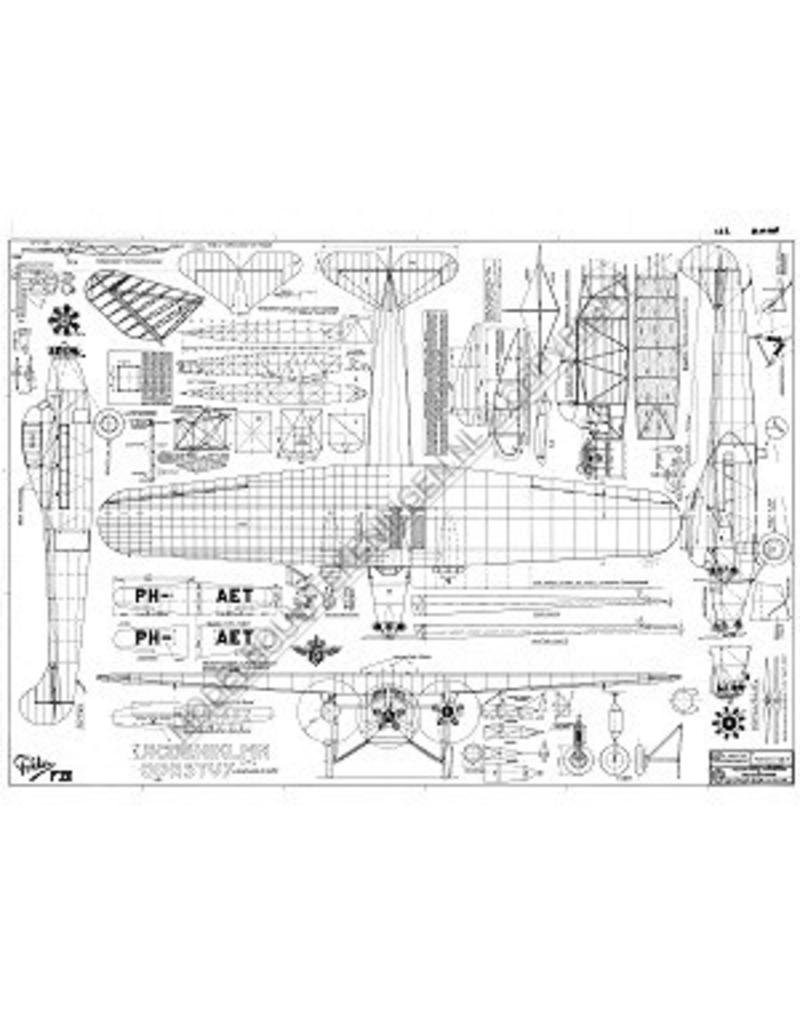
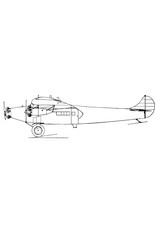
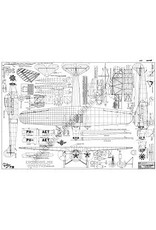
Specifications Model drawing:
|
Drawing number |
50.00.008 |
|
Author |
C. ter Horst |
|
Description |
Fokker FVIIb |
|
Quality |
Ì´Ì_ |
|
Difficulty |
D |
|
Scale |
1 : 50 |
|
Number of sheets A00 |
0 |
|
Number of A0 sheets |
1 |
|
Number of A1 sheets |
0 |
|
Number of A2 sheets |
0 |
|
Number of A3 sheets |
0 |
|
Number of A4 sheets |
0 |
|
Total number of drawing sheets |
1 |
|
Number of A4 text sheets |
0 |
|
Weight in grams |
105 |
|
Special features |
span 87 cm |
|
Comments |
Ì´Ì_ |