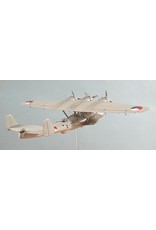
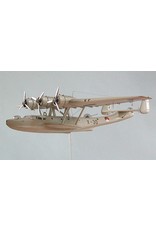
| Article number: | 50.10.006 |
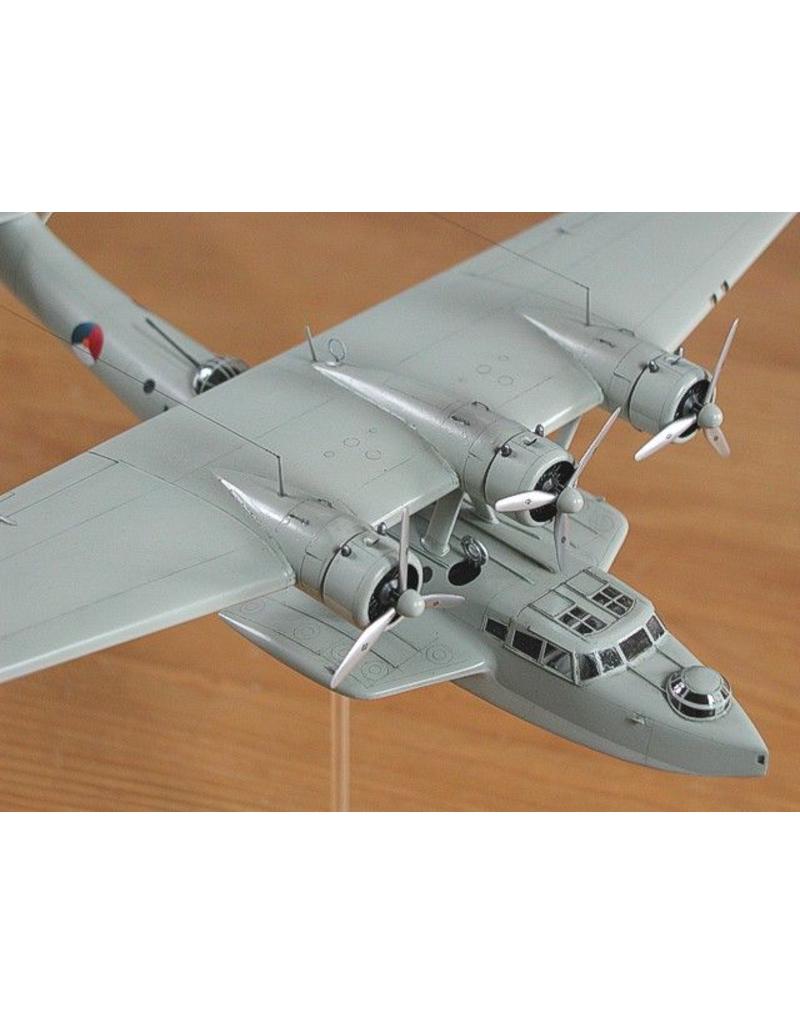
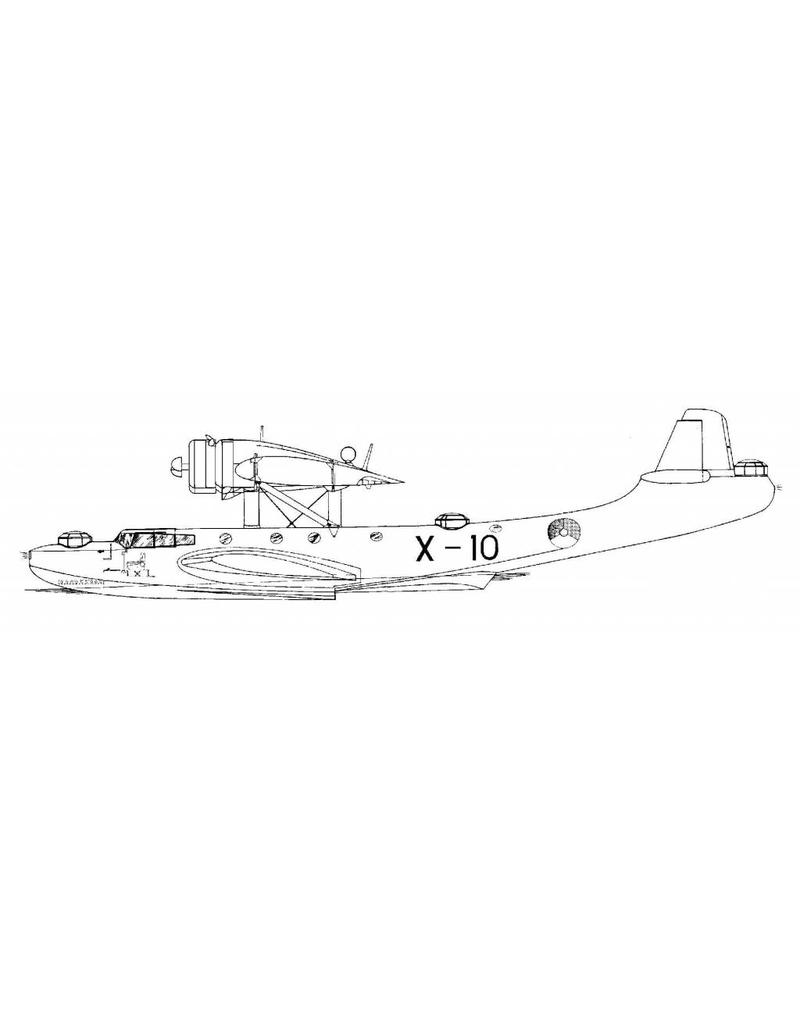
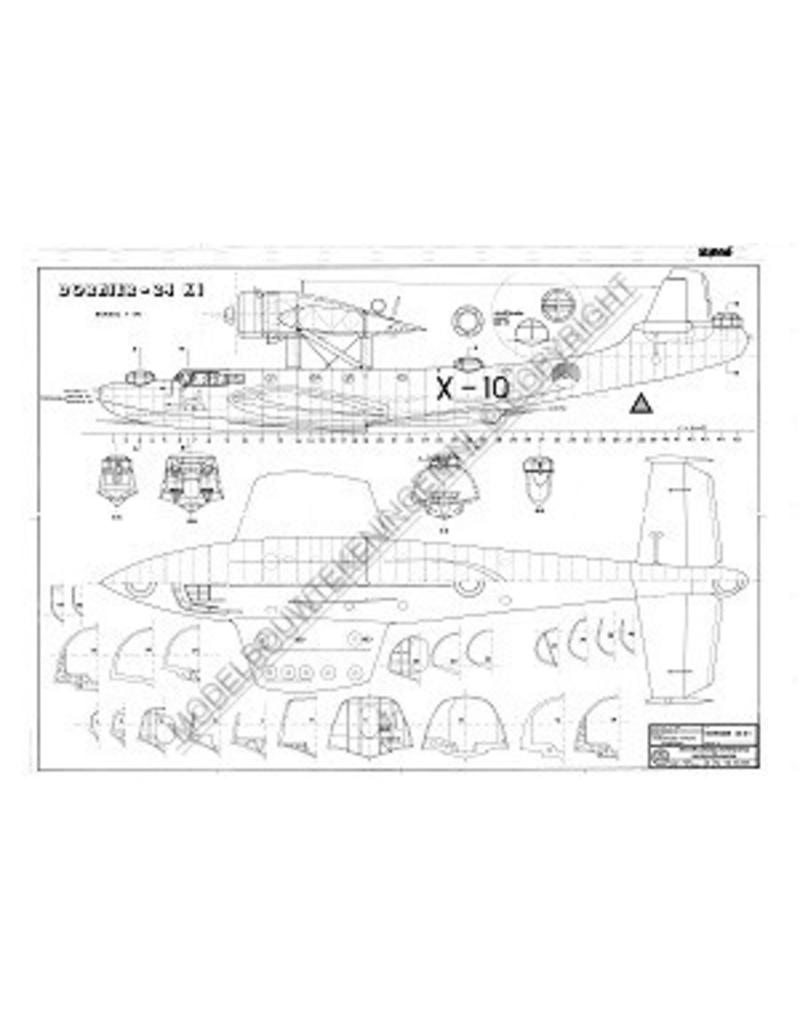
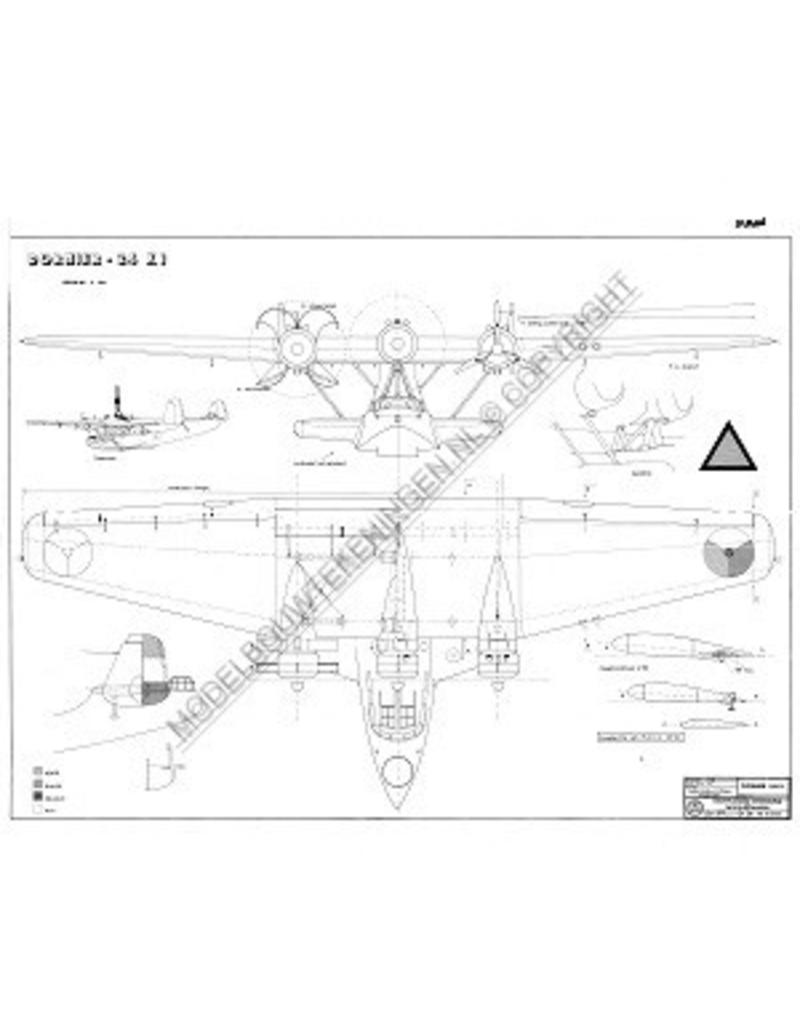
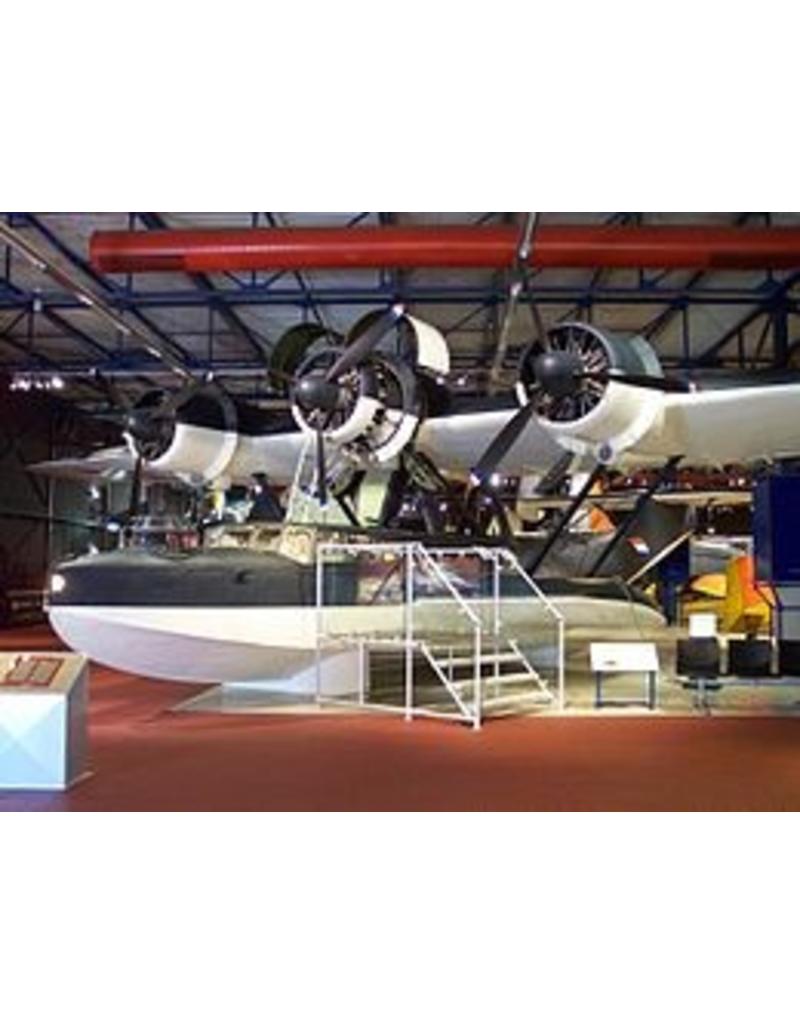
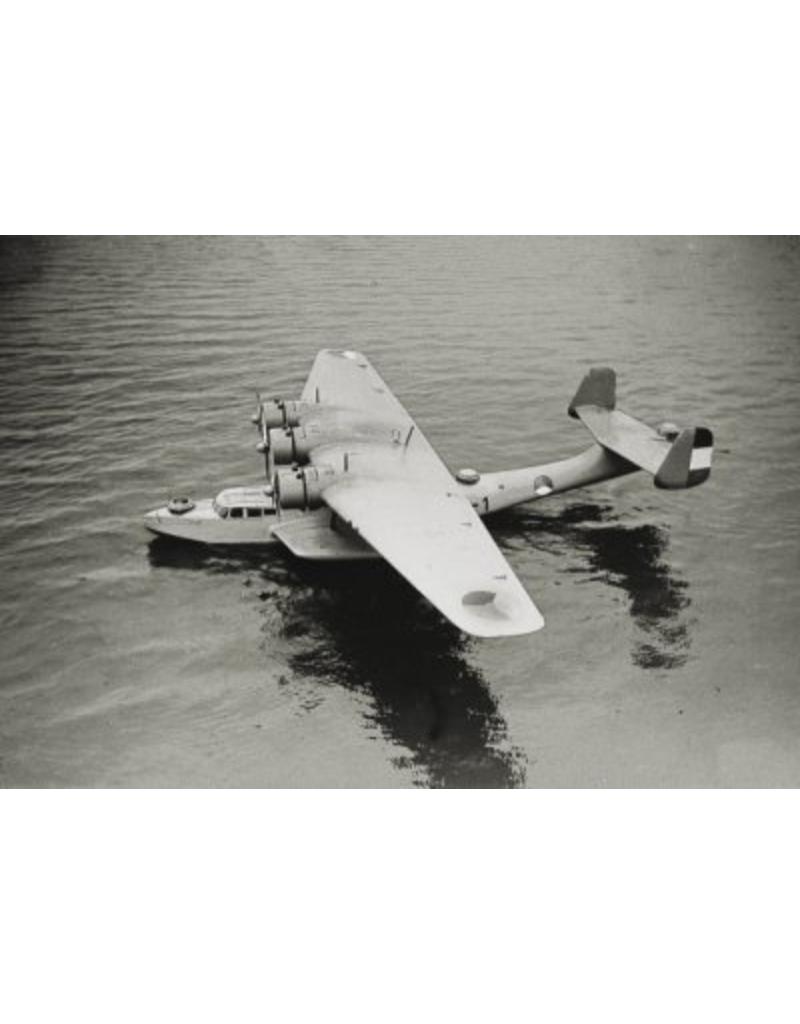
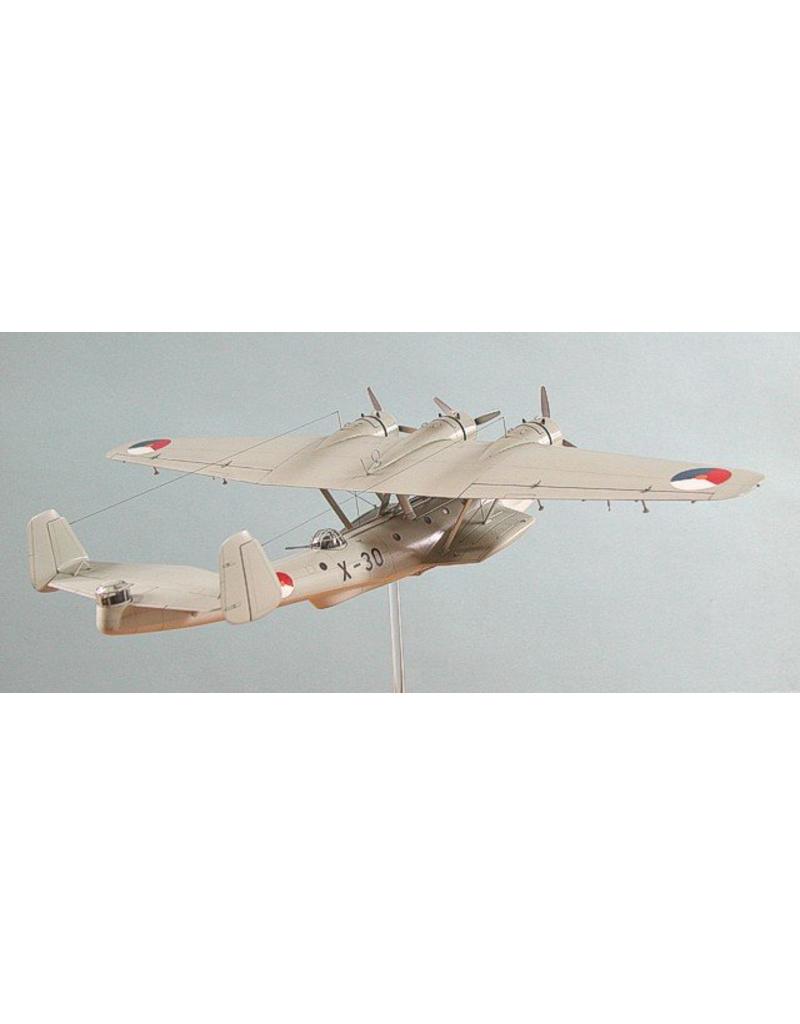
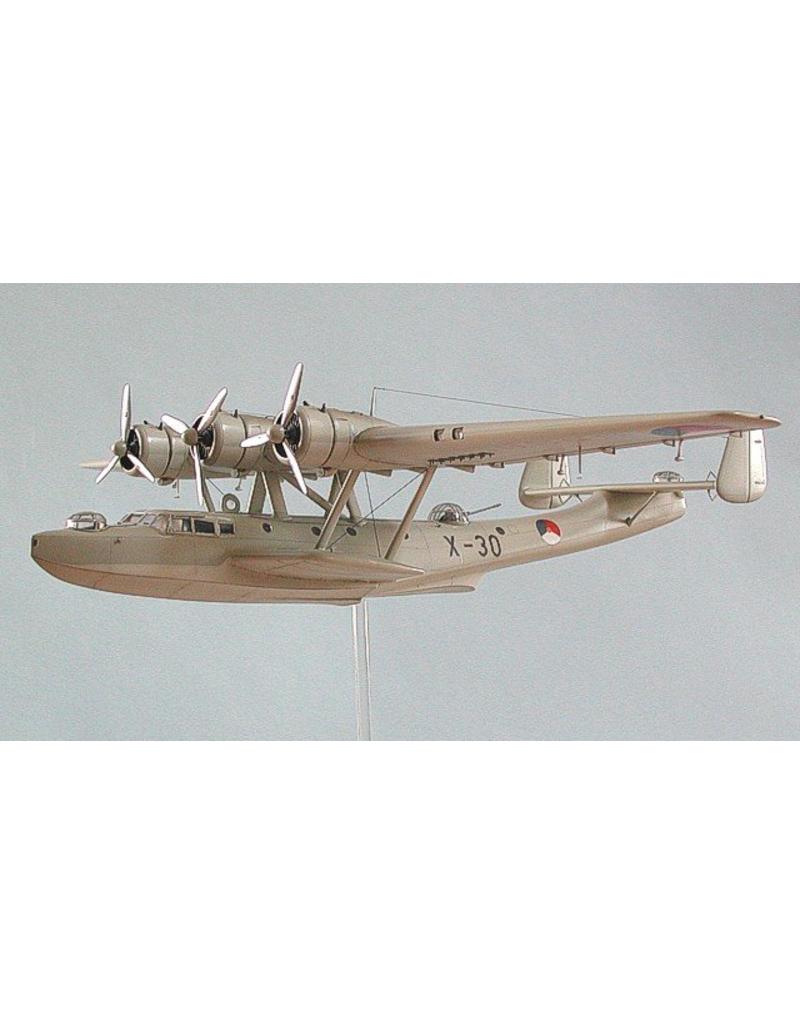
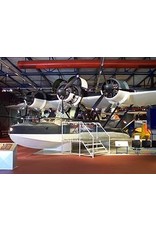
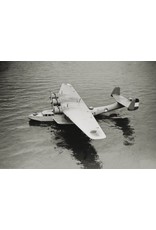
Dornier 24K1
Source: www.members.casema.nl/lnamesac/nl/Dornier_nl.html
In the mid-1930s, the MLD identified a need for a successor to the successful but outdated Dornier Do-J "Wal" flying boats for use in the vast archipelago of the Dutch East Indies. Thanks to the extensive experience gained with the Wal flying boats, the MLD was able to draw up clearly defined and detailed specifications for the new aircraft, which were presented to the aircraft manufacturers Dornier, Fokker and Sikorsky.
However, Sikorsky’s design did not meet the specifications, and Fokker’s design would have taken too long to complete, so the choice fell on Dornier’s design, which, according to MLD specifications, was to be fitted with Wright Cyclone engines and was designated the Do-24 K. At the same time, a variant was developed for the German Luftwaffe, equipped with Junkers Jumo diesel engines – which were later to be replaced by BMW Bramo Fanfir engines – and designated the Do-24 T. The prototype made its maiden flight on 2 July 1937 and proved to be an aircraft with excellent performance and exceptionally good seakeeping ability.
Orders were placed with Dornier and, in the years that followed, a total of 29 Do-24 K-1 aircraft (X-1 to X-29) and one of the improved Do-24 K-2 type (X-37) were delivered. In June 1938, licensed production also commenced in the Netherlands at the Aviolanda/De Schelde factory complex, which ultimately delivered a further seven Do-24 K-1s (X-30 to X-36) to the MLD, after which the war broke out and production continued during the occupation for the Luftwaffe.
X-30
The X-30 was the first Do-24 built by Aviolanda/De Schelde and was completed on 15 June 1939, after which it was shipped to the Dutch East Indies on 29 July.
On 17 December 1941, the X-30 was involved in a remarkable incident.
The aircraft had only just landed at the small MLD auxiliary base at Ternate in the Moluccas following a long patrol flight from the GVT 5 base on Lake Tondano at the northern tip of Celebes. The crew were enjoying a well-deserved rest in the government lodgings on shore, and the Dornier was bobbing a few hundred metres away at the buoy when suddenly the roar of engines could be heard from the direction of the sea. The approaching four-engine aircraft was recognised as a Japanese Kawanishi H6K flying boat, and the crew decided without hesitation to give chase, running to the jetty where the motorboat was already being started to take them back to the Dornier.
In the chaotic early days of the war in Asia, information about the enemy was often out of date or based on misconceptions. The skill of enemy pilots was underestimated; enemy fighters appeared in places thought to be out of reach, or information on aircraft armament was no longer up to date. This was also the case with information on the defensive armament of the Kawanishi H6K. Three machine guns distributed across the nose, dorsal and tail turrets were known to be fitted to this type. No cannon, then. The X-30’s Hispano Suiza 20 mm cannon had been temporarily replaced with a machine gun at that time, so the odds were considered even.
Meanwhile, the crew in the motorboat were on their way to the moored Dornier when the bombs fell on the shore near the auxiliary support point’s fuel depot and the Kawanishi was already turning away. But once they arrived at the Dornier, everything happened very quickly!Ì´Ì_ The engines were started and all take-off procedures were completed in record time to get the aircraft airborne as quickly as possible. But the generator still had to be brought on board and the mooring lines cut!Ì´Ì_ My late father, a young apprentice mechanic in those days, barely managed to be the last to jump on board whilst the aircraft had already begun its take-off preparations. With all hands on deck, full throttle was applied to the two running engines and halfway through the run-up the third engine also started, whereupon the Dornier took off in pursuit, a chase that lasted about half an hour. Once within firing range of the Kawanishi, fire was opened on the belly of the flying boat in accordance with MLD regulations, and hits were reported. However, it was not long before the bullets were flying past the Dornier’s crew as well, and when the centre engine was hit and failed, the pursuit was abandoned. Powered by the two remaining engines, the aircraft returned to Ternate, where the size of the bullet holes revealed that the Kawanishi had indeed been equipped with a cannon.
This incident is described in the annals of the MLD as possibly the first rare ‘dogfight’ of the Second World War between flying boats, which, moreover, lasted a remarkably long time.
The following day, the X-30 flew on two engines to the MLD base at Ambon to replace the faulty engine, so that it could subsequently take part in a bombing raid on units of the Japanese fleet near Davao in the Philippines on 23 December. During this attack, the X-27 was hit and had to make an emergency landing, after which the crew was picked up by the X-30 under difficult conditions and brought to safety.
On 3 February 1942, the X-30 was finally destroyed during a Japanese bombing raid on the Morokrembangan Naval Air Base.
The entire crew of the X-30 was awarded the Pilot’s Cross.
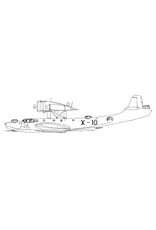
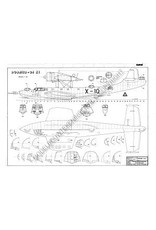
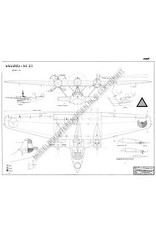
Specifications Model construction drawing:
|
Drawing number |
50.10.006 |
|
Author |
F. Slagt |
|
Description |
Dornier 24K1 |
|
Quality |
Ì´Ì_ |
|
Difficulty |
Dornier 24K1 |
|
Scale |
1 : 30 |
|
Number of sheets A00 |
0 |
|
Number of A0 sheets |
1 |
|
Number of A1 sheets |
1 |
|
Number of A2 sheets |
0 |
|
Number of A3 sheets |
0 |
|
Number of A4 sheets |
0 |
|
Total number of drawing sheets |
2 |
|
Number of A4 text sheets |
0 |
|
Weight in grams |
145 |
|
Special features |
span 91 cm |
|
Comments |
Ì´Ì_ |