| Article number: | 10.00.002 |
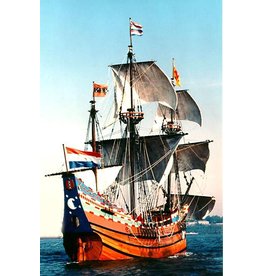
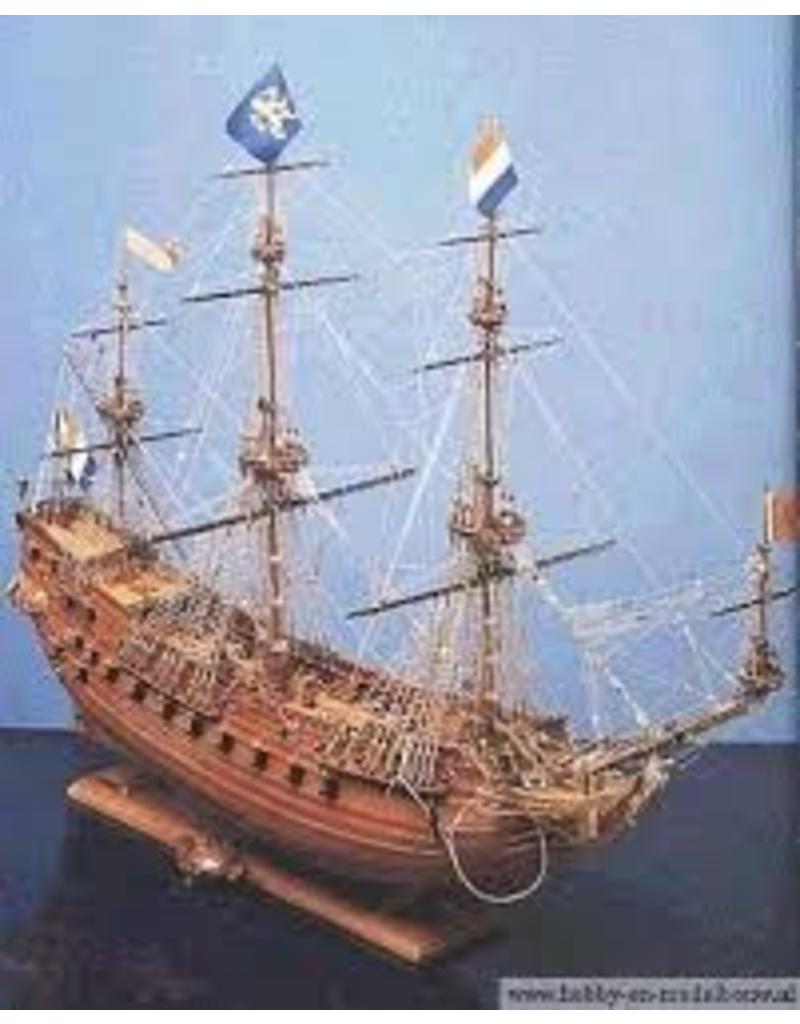
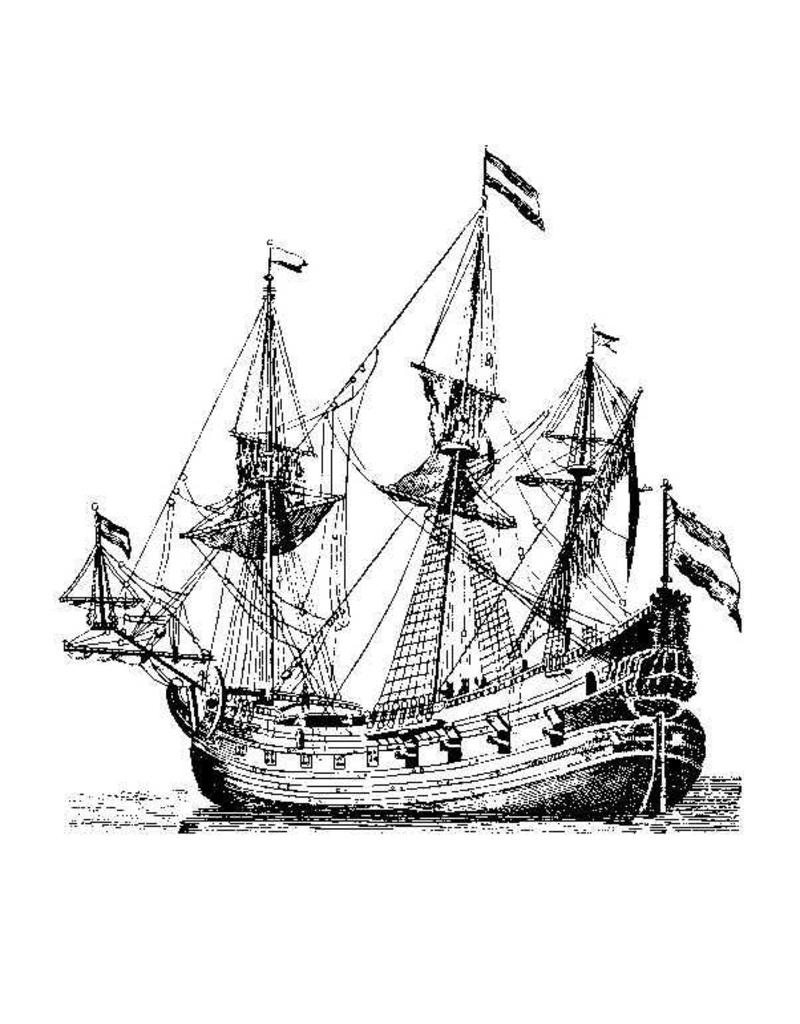
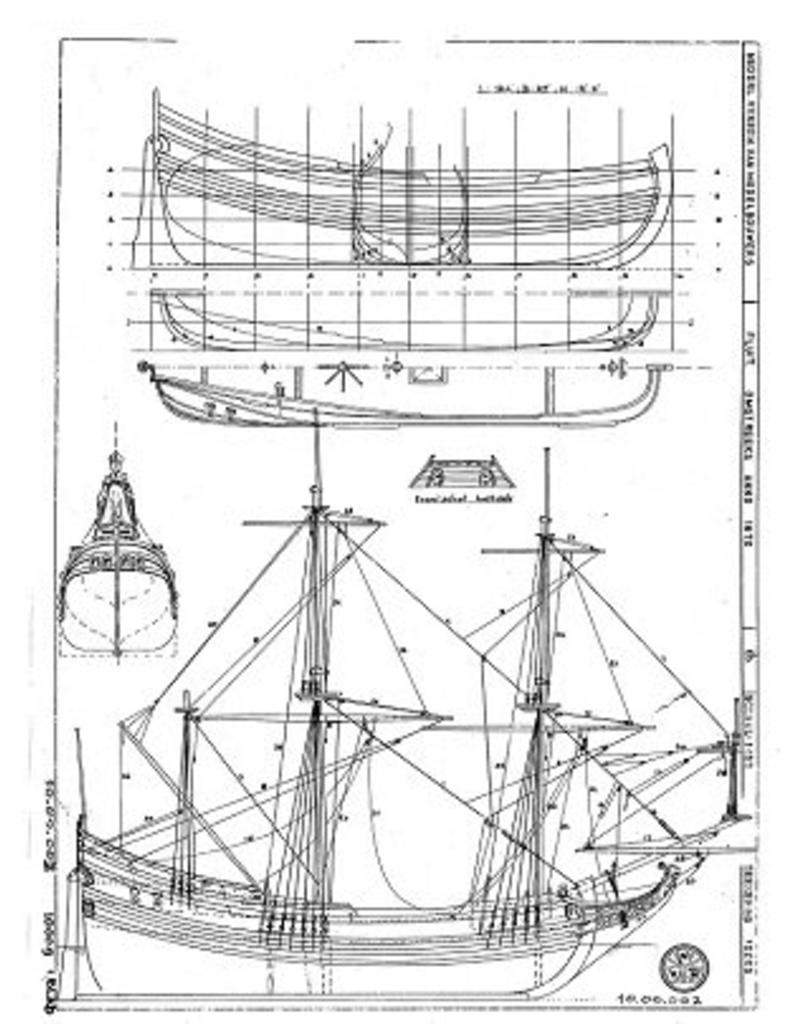
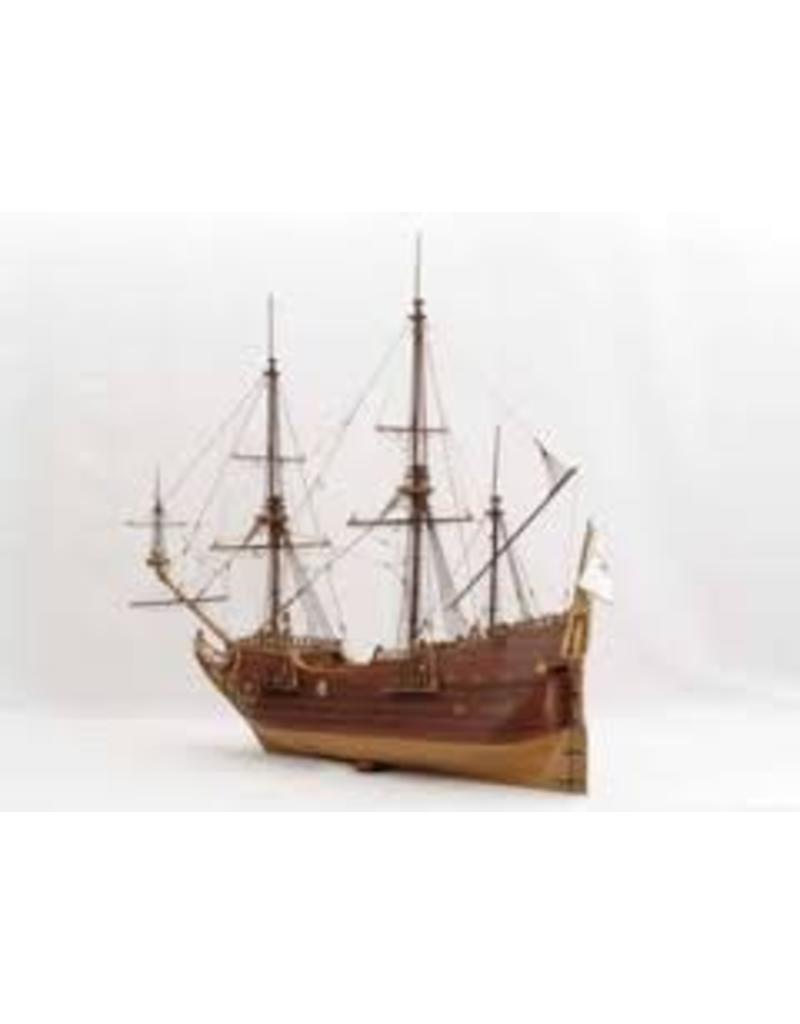
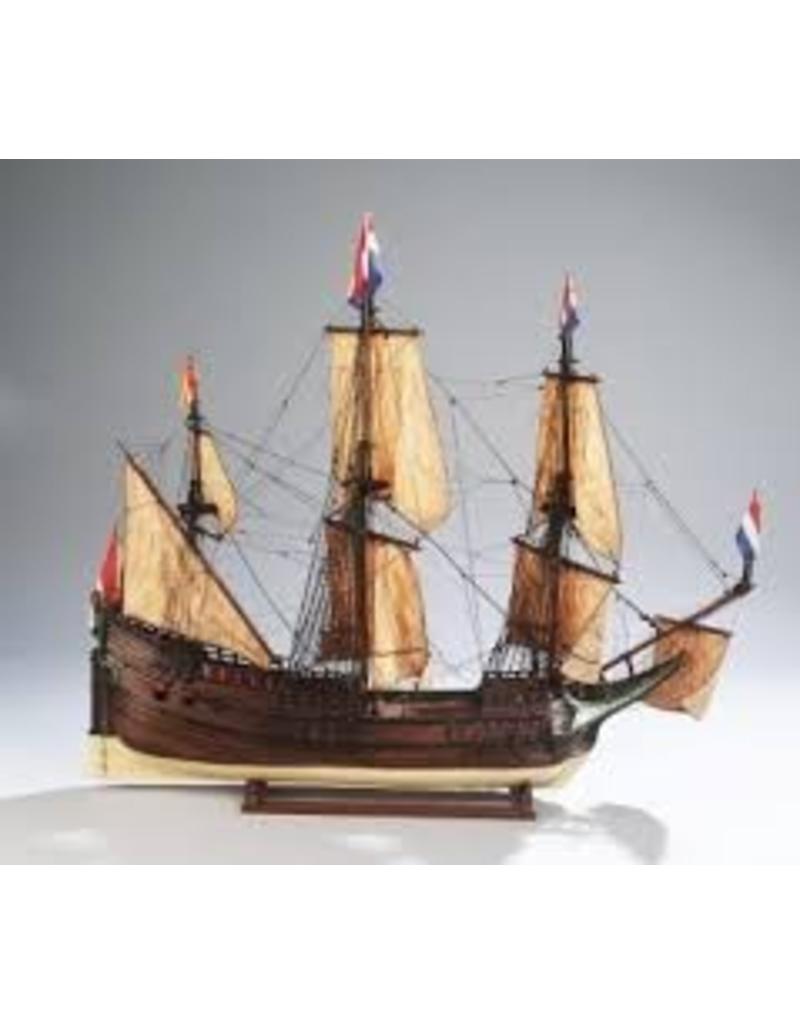
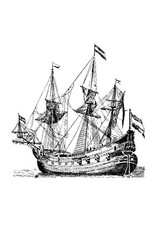
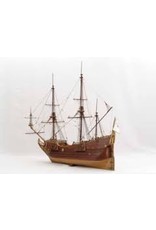
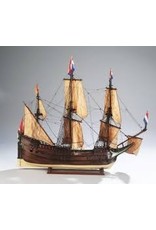
The fluitschip originated in the Northern Netherlands at the end ofthe 16th century from experiments with lengthening existing ships. Ships with this elongated hull,known as ‘gaings’, appeared as early as1588.[1] Pieter Jansz Vael, known as themerchant Pieter Jansz Liorne, designed an even slimmer, unarmed ship in 1595. Characteristic features included a rounded, decorated stern and a sloping upper deck, which gave the ship its pear shape. There was an important economic reason for this shape: tolls were levied onthe Sont. The amount ofthe Sound toll depended on the width of the deck. The narrow deck above the wide hold allowed a maximum cargo to be carried for a minimum toll. This method of calculating tolls remainedin useuntil 1669. Ships built after that were given a wider deck.
The flute was particularly well-suited to European trade due to the limited number of crew members required to sail it (around 12 compared to around 30 for other types of ships of similar dimensions) and its shallow draught. The flute was also faster and more stable than many other ships, and had a greater cargo capacity. Over the course of the century, cargo capacity rose from100 last to 180 last, and per crew member from 9–10 last to 13–14 last.[1]_The ship consequently became one of the most important types of vessel for Dutch international shipping. Duringthe Golden Age, up to eighty per cent of seagoing vesselswere flutes.[source?]_Four to five hundred were built each year at the shipyards in Holland and Zeeland. At the time, this was made possible in part by technical innovations inthe_sawmill. Mechanical sawing allowed fluit ships to be produced quickly and cheaply.
In 1671,Nicolaes Witsen stated that a standard fluit was37 metres in length, and 35 metres for a fluitintended forBaltic Sea trade.[source?]_Cornelis van Yk_gave the dimensions in 1697 as a length of 40 metres and a width of 5.5 metres.[source?]
The rigging was the same as that of other three-masted ships:a foremast and a mainmast, each with up tothree square sails, anda mizzenmast witha lateen sail and sometimesa jib. One or two jibs were also carried onthe bowsprit.
Specifications:
|
Drawing number |
10.00.002 |
|
|
Description |
Dutch Flute Ship |
|
|
Quality |
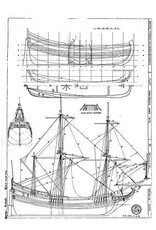
line drawings; elevation, deck plan; rigging plan shows only standing and running rigging |
|
|
Scale |
1 : 162 |
|
|
Number of sheets A00 |
0 |
|
|
Number of A0 sheets |
0 |
|
|
Number of A1 sheets |
0 |
|
|
Number of A2 sheets |
0 |
|
|
Number of A3 sheets |
1 |
|
|
Number of A4 sheets |
0 |
|
|
Number of A4 text sheets |
0 |
|
|
Weight in grams |
35 |
|
|
Details |
total length 28 cm |
|
|
Comments |
||