| Article number: | 10.11.050 |
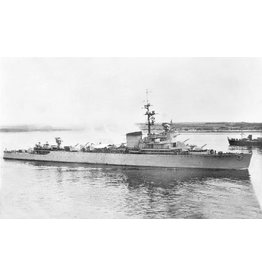
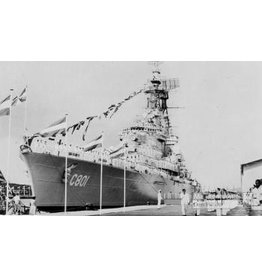
Background: Flagship of the Java class, designed for the defence of the Dutch East Indies. Keel laid in 1916, commissioned 1 May 1925
Technical: 155 m long, 16 m wide, 6.22 m draught, with three propellers and 73,000 shp; top speed approximately 31 knots
Armament (prior to refit): Ten 150 mm guns in open single-barrel mounts, four 75 mm anti-aircraft guns, plus mines and seaplanes (Fokker IIID / C.VII-W)
Refurbishment (1937–1938):
Fitting of a modern fire-control computer and Hazemeyer stabilisation for 40 mm Bofors guns
Replacement of old 75 mm AA guns with four twin Bofors 40 mm guns, addition of four Browning .50 machine guns .
Mastwork shortened, improved signal stations and six searchlights (1.2 m reflector)
Following this, resumed in January 1938 fire support for convoys in Gibraltar and return to the East Indies
Background: Second ship of the class; keel laid in 1916, delayed by a turbine fire, commissioned 26 May 1926
Technical: Same dimensions and power (three screws, ~82,000 shp), speed 30–31 knots; range ~8,000 km at 12 knots
Armament: Ten 150 mm guns, initially four 75 mm AA guns (later replaced), four 12.7 mm machine guns, mines, and two seaplanes
Modernisation (1934–35):
Replacement of 75 mm AA guns with six Bofors 40 mm guns, installation of derricks for aircraft
Further overhauls in Surabaya and later modifications in England and the US.
Service prior to WWII: Convoy escort during the Spanish Civil War, protection operations in Shanghai and fleet visits in Asia.
Course of the Second World War: Flight to the UK in 1940, transport of Princess Juliana, subsequently used for defence and training. Deployed in 1944 as an artificial breakwater at D-Day and ultimately destroyed (April 1944).
| Characteristic | Java (after 1937) | Sumatra (after 1935) |
|---|---|---|
| AA weapons | 4× twin 40 mm Bofors + 4× .50 cal MG | 6× 40 mm Bofors |
| Fire control | Hazemeyer system + calculating table | Modern system, not exactly Hazemeyer |
| Detection/illumination | 6× 1.2 m searchlights, larger signal station | Limited information, but new derricks |
| Role after refurbishment | Convoy escort, colonial patrols | Same, later unsuitable for combat after 1940 |
The modernisations were crucial to give these obsolete ships modern AA capability and to shift from open gun turrets to enclosed fire control and better sensory equipment. Nevertheless, they remained vulnerable to submarines and air attacks, and their outdated design did the rest.
Specifications:
|
Drawing number |
10.11.050 |
|
Author |
J.TH.M. Buter |
|
Description |
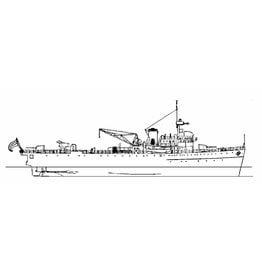
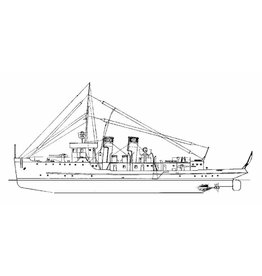
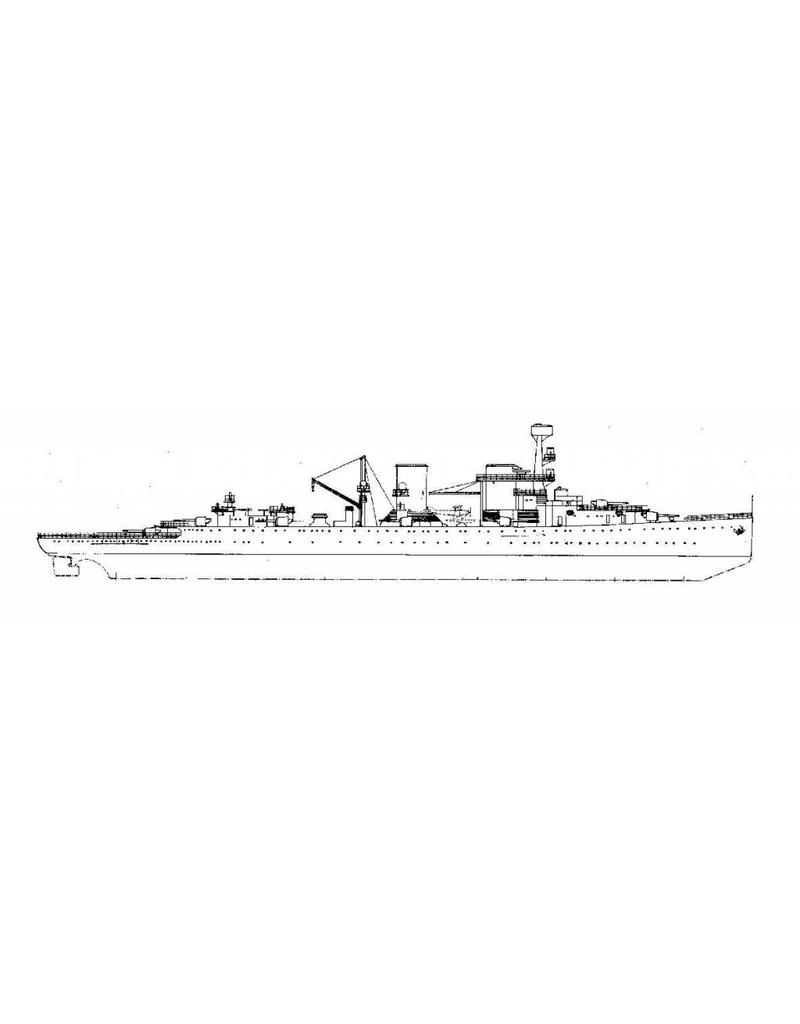
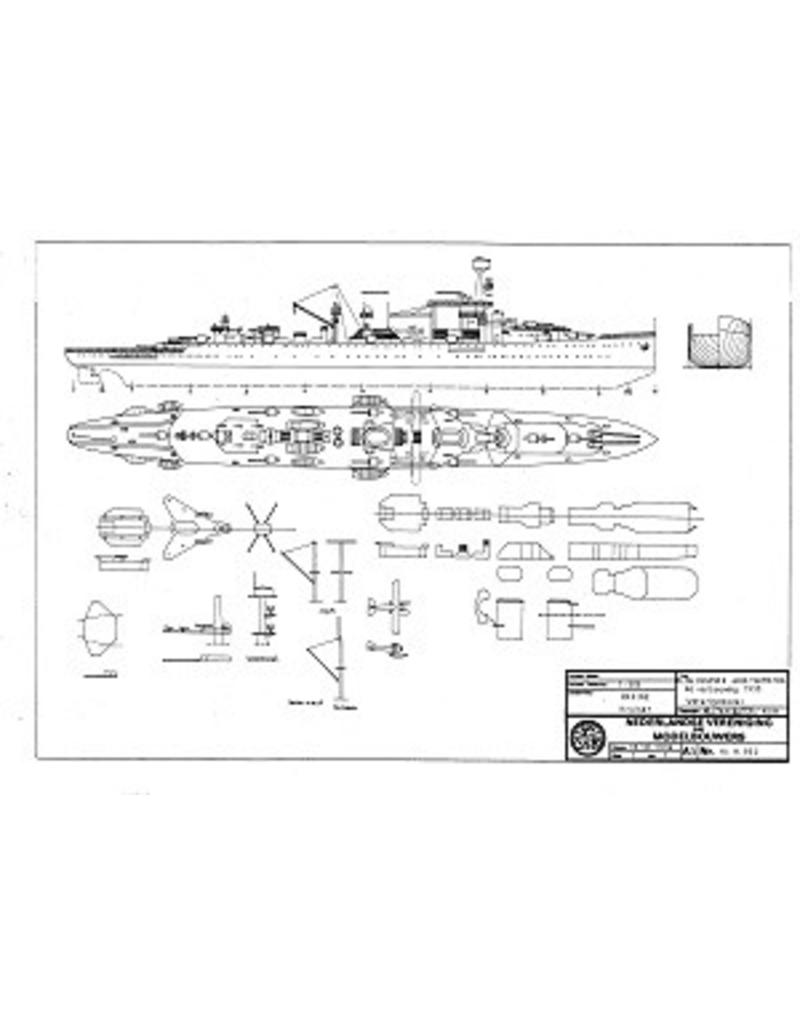
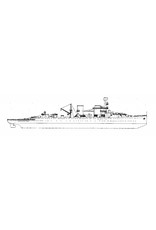
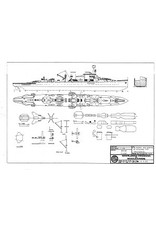
Royal Navy cruisers "Java" (1925), "Sumatra" (1926); after refit (1937) |
|
Quality |
frames; side view; deck plan; some details of superstructure |
|
Scale |
1 : 500 |
|
Number of sheets A00 |
0 |
|
Number of A0 sheets |
0 |
|
Number of A1 sheets |
0 |
|
Number of A2 sheets |
0 |
|
Number of A3 sheets |
1 |
|
Number of A4 sheets |
0 |
|
Total number of drawing sheets |
1 |
|
Number of A4 text sheets |
0 |
|
Weight in grams |
35 |
|
Details |
L.O.A. 31 cm |
|
Remarks |