| Article number: | 10.11.095 |
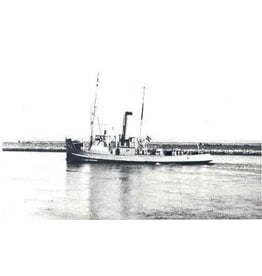
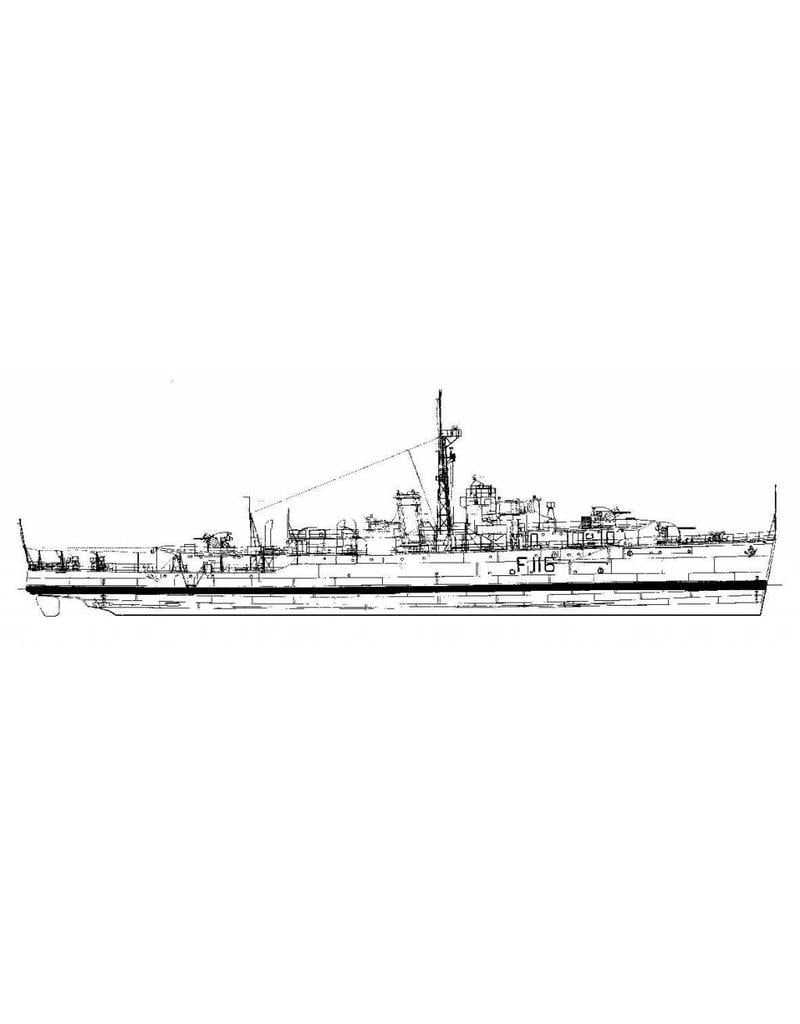
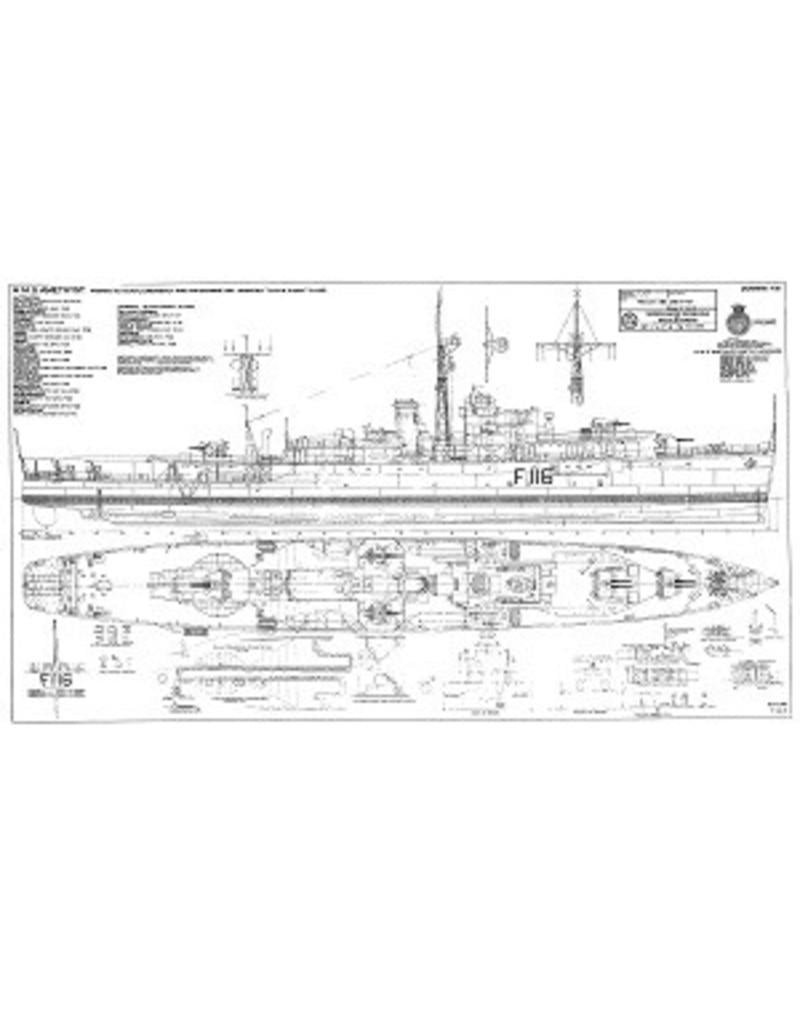
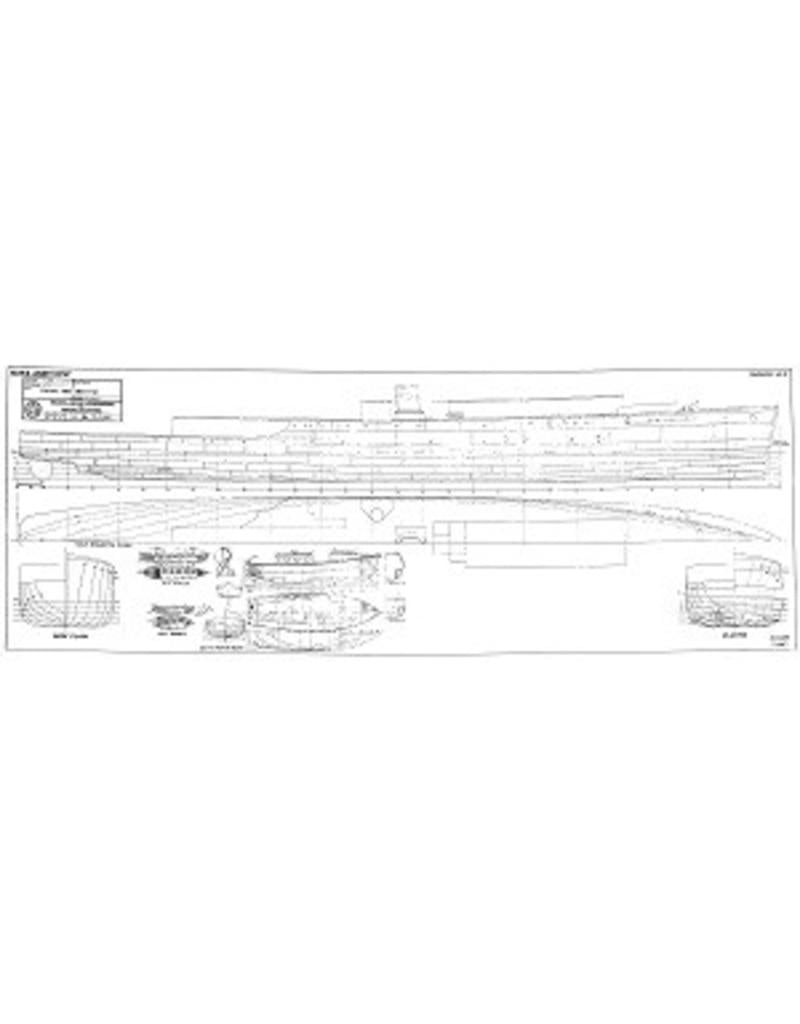
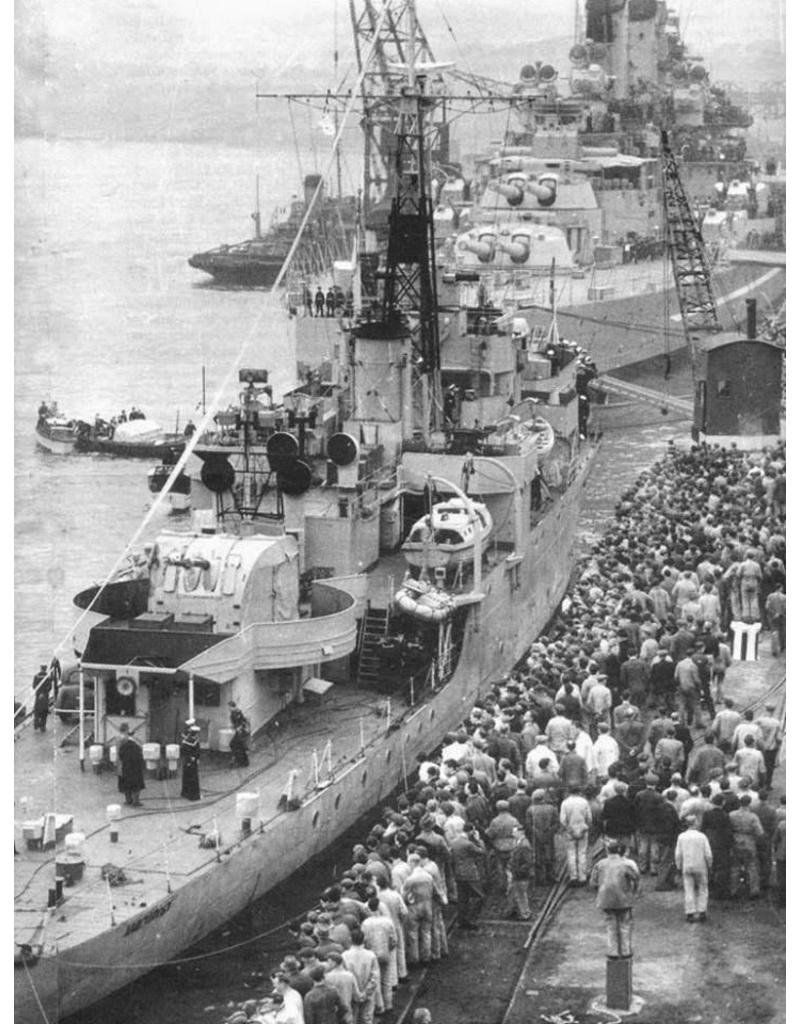
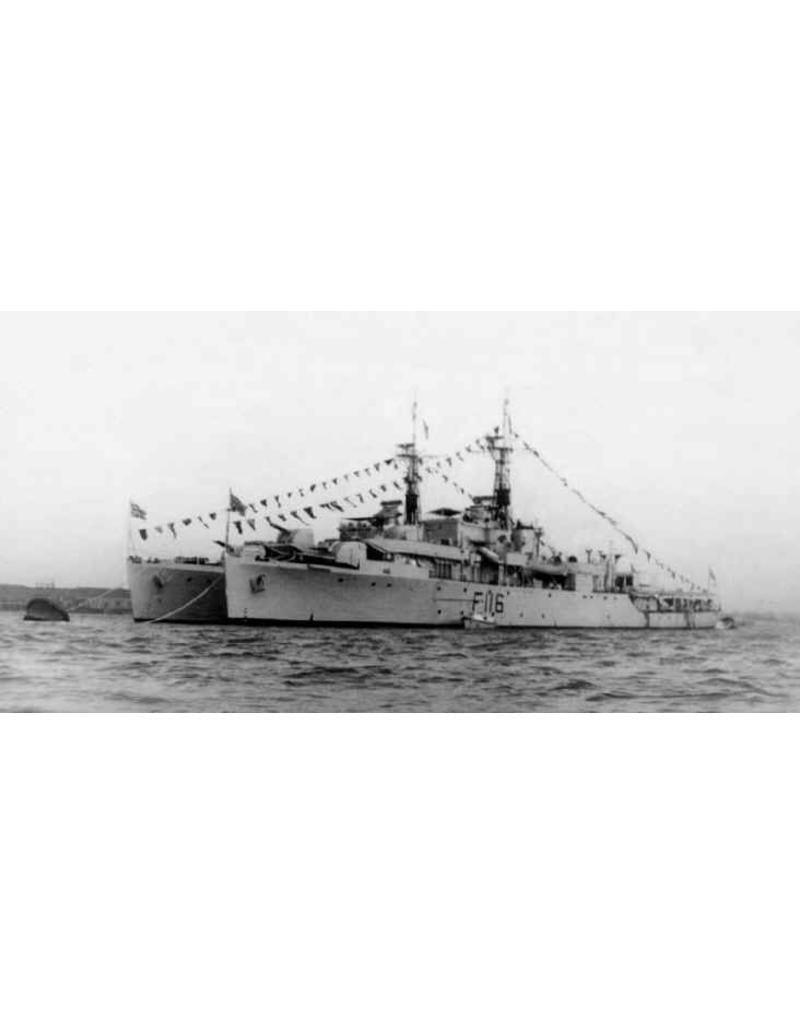
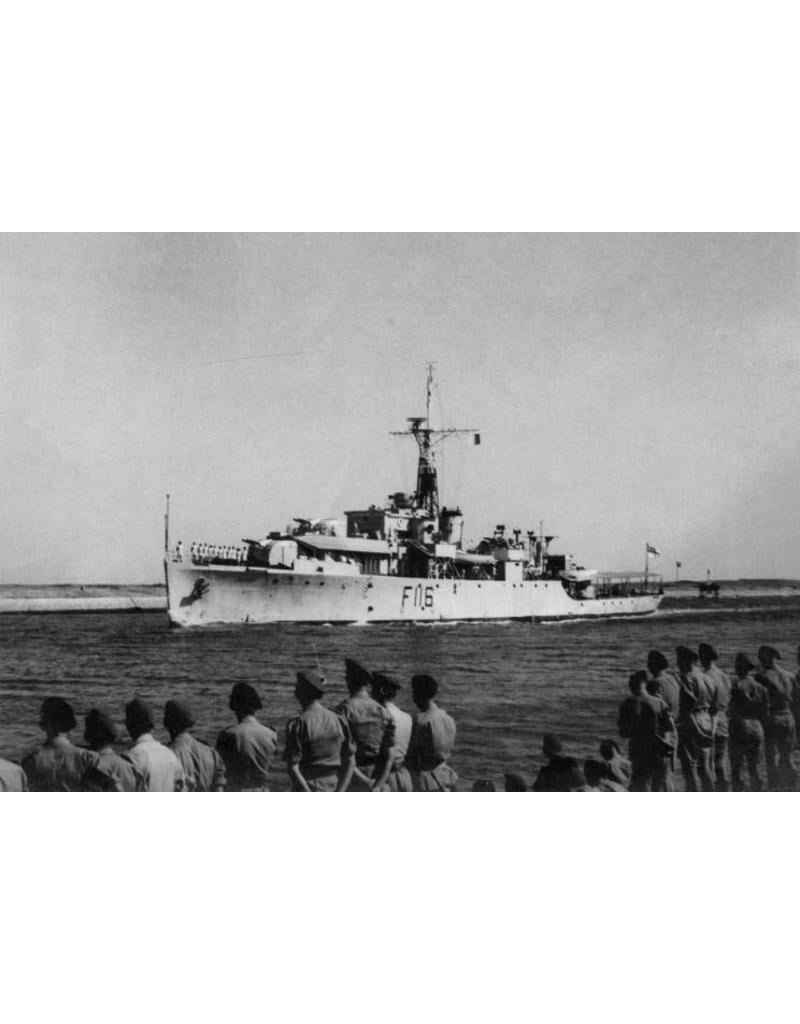
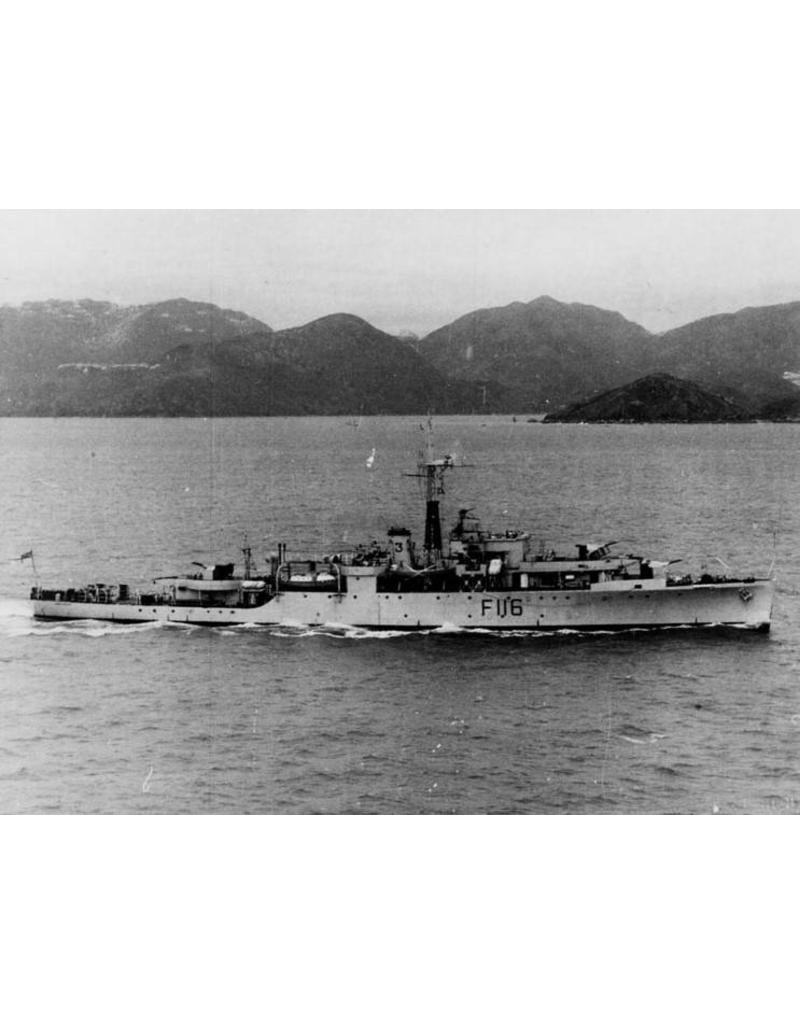
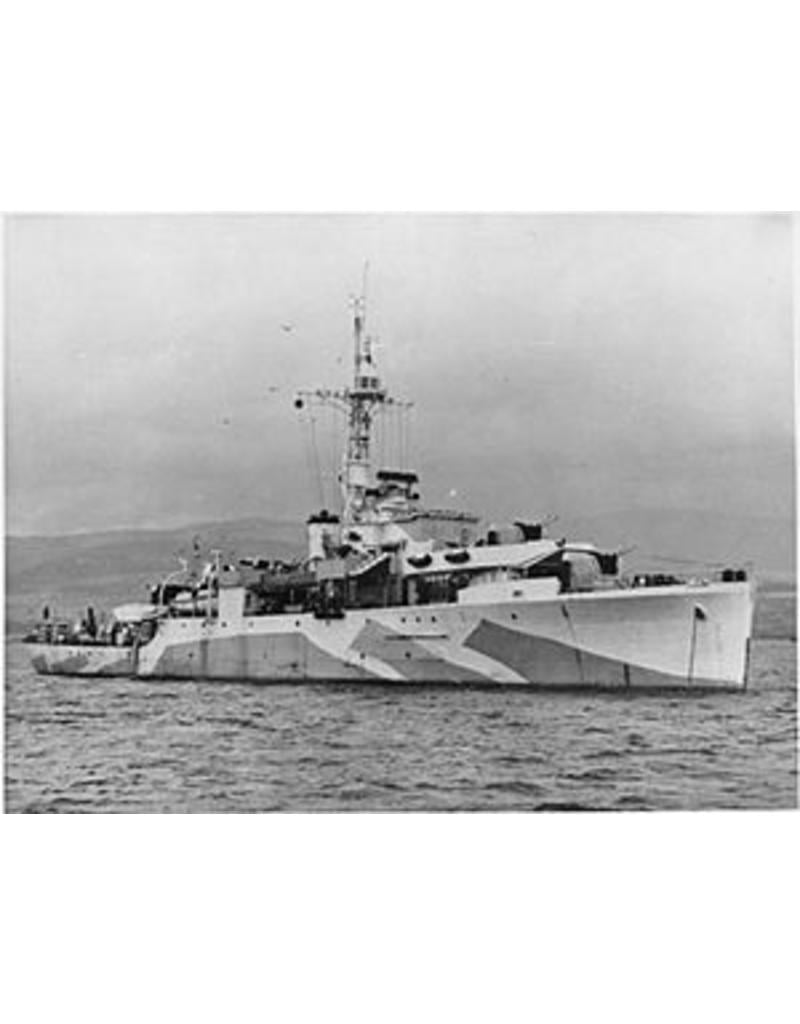
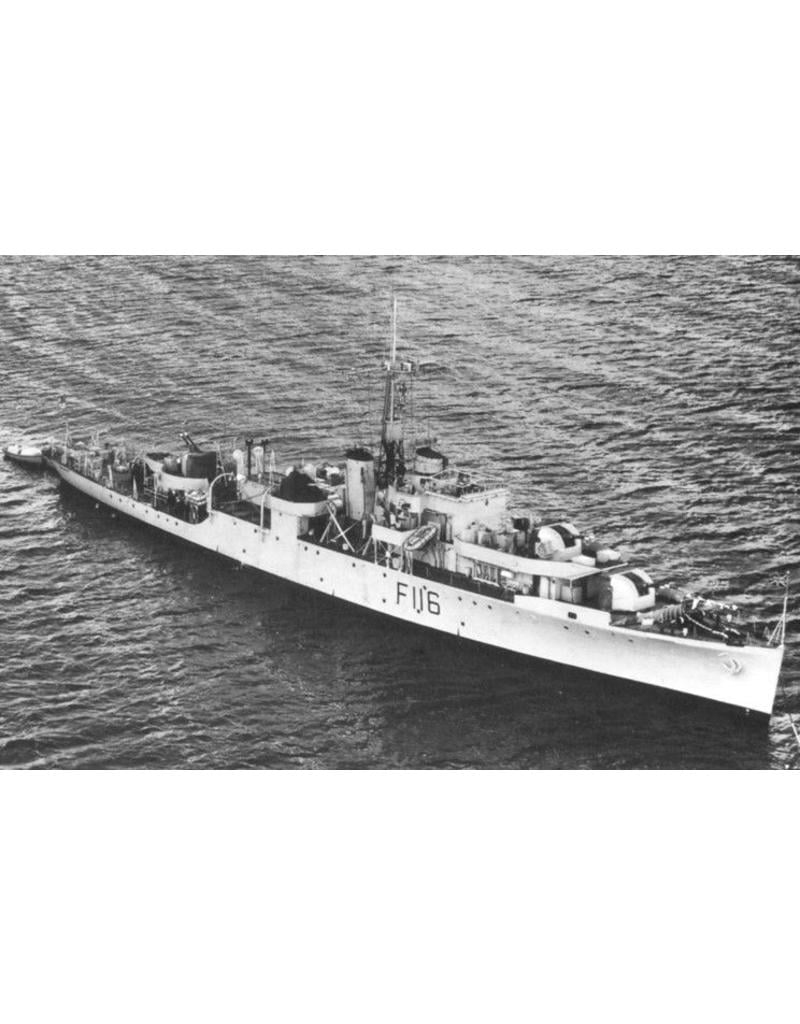
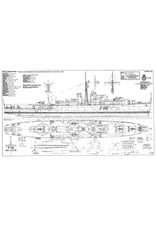
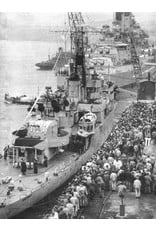
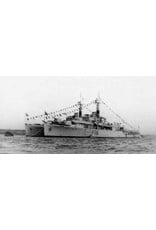
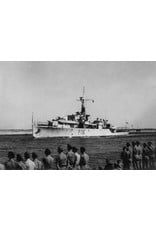
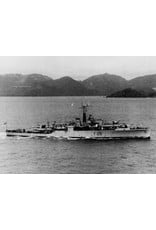
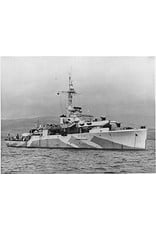
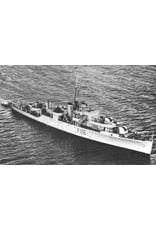
Description of the HMS Amethyst (F116), one of the most famous British warships of the post-war period — best known for the incident on the Yangtze River in 1949.
Type: Frigate (originally a sloop)
Class: Modified Black Swan-class
Hull number: F116 (formerly U16)
Builder: Alexander Stephen & Sons Ltd., Govan, Scotland
Keel laid: 25 March 1942
Launched: 7 May 1943
Commissioned: 2 November 1943
Decommissioned: 1957
HMS Amethyst was built as a Modified Black Swan-class sloop, designed for anti-submarine warfare and convoy escort duties.
She served during the final phase of the war in the Atlantic and Indian Oceans, where her duties included escorting convoys and protecting them from Japanese and German submarines.
The most famous chapter in the history of the Amethyst took place in April 1949, during the Chinese Civil War:
On 19 April 1949, HMS Amethyst sailed up the Yangtze River towards Nanking to resupply the British embassy.
Off Kiangyin, the ship was suddenly fired upon by artillery from the People’s Liberation Army (PLA).
The Amethyst was heavily hit — her captain, Lt. Commander Bernard Skinner, was killed, and 19 crew members were killed, with dozens more wounded.
The ship ran aground to limit further losses, but came under enemy fire for days on end.
After weeks of repairs under primitive conditions and diplomatic negotiations, the Amethyst managed to escape on 30 July 1949 under cover of night and fog — a journey of over 160 km along heavily guarded riverbanks.
It reached the open sea safely and was escorted by HMS Concord.
This became known worldwide as the ‘Yangtze Incident’, and the crew received much praise for their courage. The incident was later made into a film in 1957, titled The Yangtze Incident: The Story of HMS Amethyst, starring actor Richard Todd.
| Specifications | Data |
|---|---|
| Displacement | approx. 1,350 tonnes (standard), approx. 1,880 tonnes (fully loaded) |
| Length | 91 metres (299 ft) |
| Beam | 11.7 metres (38 ft 6 in) |
| Draught | 3.4 metres (11 ft) |
| Propulsion | 2 × Admiralty 3-drum boilers, Parsons geared turbines, 2 propellers, 4,300 shp |
| Speed | 19.75 knots |
| Crew | approx. 180 officers and crew |
| Armament (WWII) | 6 × 4-inch (102 mm) guns (3 twin mounts), 4 × 2-pounder anti-aircraft guns, 8 × 20 mm Oerlikon guns, depth charges |
| Armament (post-war) | Partially modernised for anti-submarine warfare |
Following the incident, Amethyst remained in service for several more years as a training and patrol frigate.
In 1957, she was decommissioned and scrapped in Sunderland.
Her ship’s bell and a few relics are kept in British maritime museums as a reminder of her brave crew.
|
Drawing number |
10.11.095 |
|
Description |
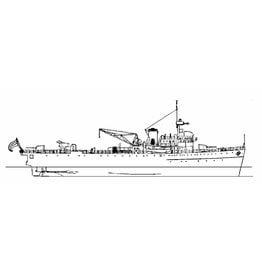
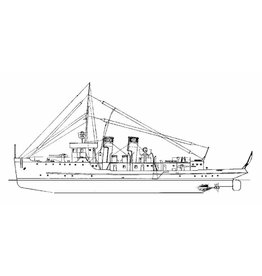
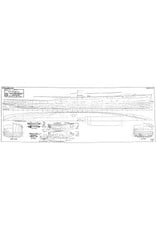
Frigate HMS "Amethyst" F116 (1943) after reclassification; ex Modified "Black Swan" sloop "Amethyst" U16 |
|
Quality |
line drawing; side view; deck plan; details of lesser quality; English text |
|
Scale |
1 : 96 |
|
Number of sheets A00 |
0 |
|
Number of A0 sheets |
0 |
|
Number of A1 sheets |
2 |
|
Number of A2 sheets |
0 |
|
Number of A3 sheets |
0 |
|
Number of A4 sheets |
0 |
|
Total number of drawing sheets |
2 |
|
Number of A4 text pages |
0 |
|
Weight in grams |
105 |
|
Details |
length 95 cm |
|
Comments |
artek 0036 |