| Article number: | 50.02.013 |
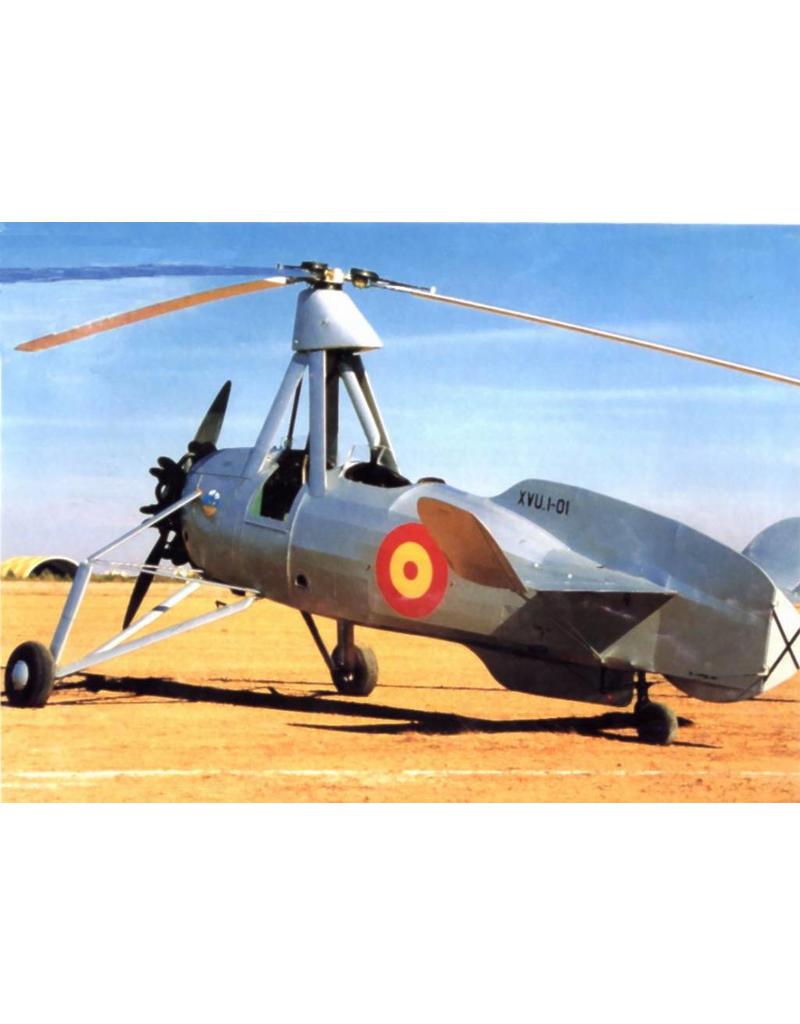
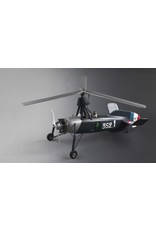
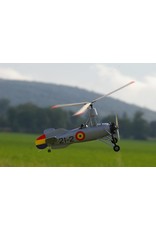
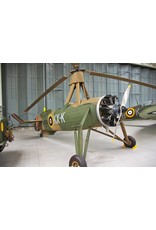
Autogiro: Cierva C.30
Source: www.wikipedia.org/wiki/Cierva_C.30
(Editor’s note: the accompanying text is in English; a Dutch version was not available.)
Design and development.
Before the experimental Cierva C.19 Mk V, autogyros had been controlled in the same way as fixed-wing aircraft, that is by deflecting the air flowing over moving surfaces such as ailerons, elevators and rudder. At the very low speeds encountered in autogyro flight, particularly during landing, these controls became ineffective. The experimental machine demonstrated that the way forward was a tilting rotor hub fitted with a control stick extending to the pilot’s cockpit, enabling him to alter the rotor’s plane. This was known as direct control and was fitted to the C.30. The production variant, known as the C.30A in England, was preceded by several development machines.
The first production design in the series was the C.30, a radial-engined autogyro with a three-blade, 37 ft (11.3 m) rotor mounted on a rear-leaning tripod, the control column extending into the rear of the two cockpits. The engine was the five-cylinder, 105 hp (78 kW) Armstrong Siddeley Genet Major I used in the C.19 series. The fabric-covered fuselage carried an unbraced tailplane, without elevators but with turned-up tips. The port side of the tailplane had an inverted aerofoil section to counteract roll-axis torque produced by the propeller. As with most autogyros, a high vertical tail was precluded by the sagging resting rotor, so the dorsal fin was long and low, extending well aft of the tailplane like a fixed rudder and augmented by a ventral fin. The wide-track undercarriage had a pair of single, wire-braced legs and a small tail wheel was fitted. This model flew in April 1933. It was followed by four improved machines designated C.30P (P here for pre-production), which differed in having a four-legged pyramid rotor mounting and a reinforced undercarriage with three struts per side. The rotor could be folded rearwards for transport. The C.30P used the more powerful (140 hp, 104 kW) seven-cylinder Armstrong Siddeley Genet Major IA radial engine.
The production model, known as the C.30A by Avro, was built under licence in Britain, France and Germany and was similar to the C.30P. The main change was a further increase in undercarriage track width with revised strut configuration, the uppermost strut featuring a pronounced knee with wire bracing. There was additional bracing to the tailplane, and both the tailplane and the fin carried small movable trim tabs. Each licensee used domestically built engines and employed slightly different names. In total, 143 production C.30s were built, making it by far the most numerous pre-war autogyro.
Between 1933 and 1936, de la Cierva used one C.30A (G-ACWF) to test his final contribution to autogyro development before his death in the crash of a KLM Douglas DC-2 airliner at Croydon Airfield in England on 9 December 1936. To enable the aircraft to take off without moving forward on the ground, he developed the ‘autodynamic’ rotor head, which allowed the rotor to be spun up by the engine in the usual way but to a higher rpm than take-off speed at zero rotor incidence, and then to reach operational positive pitch suddenly enough to jump some 20 ft (6 m) upwards.
At least one of the RAF C.30As was fitted with floats in January 1935 as a Sea Rota.
Ì´Ì_
Production.
Avro
Avro obtained the licence in 1934 and subsequently built 78 examples, under their model designation, fitted with an Armstrong Siddeley Genet Major IA (known in the RAF as the Civet 1) 7-cylinder radial engine producing 140 hp (100 kW). The first production C.30A was delivered in July 1934.
LiorÌÎå©-et-Olivier
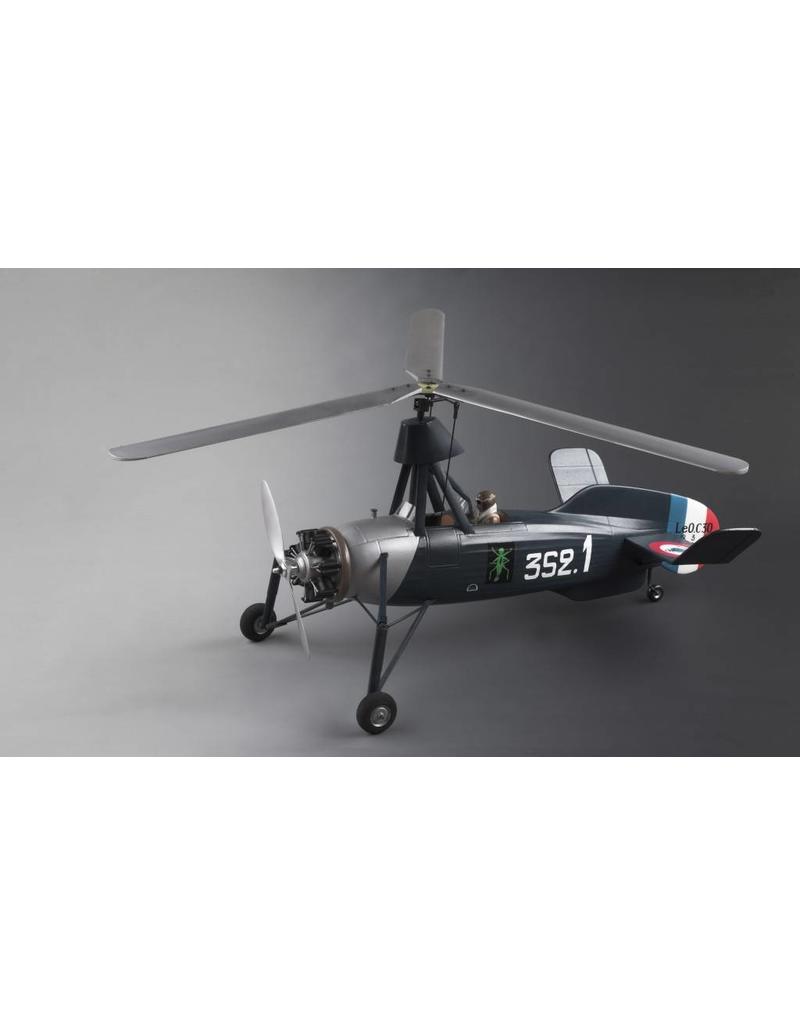
Twenty-five aircraft were built in France by LiorÌÎå©-et-Olivier as the LeO C.301 with a 175 hp (130 kW) Salmson 9NE 9-cylinder radial engine.
Focke-Wulf
Forty aircraft were built in Germany as the Focke-Wulf Fw 30 Heuschrecke (Grasshopper) with a 140 hp (105 kW) Siemens Sh 14A 7-cylinder radial engine.
Ì´Ì_
Operational history
Of the 66 non-RAF aircraft built in the UK by Avro, 37 appeared at least for a while on the UK register. Some (perhaps a dozen) were sold abroad, but others were flown by wealthy enthusiasts and by flying clubs offering autogyro training. By the end of the decade, private pilots were returning to the comfort and cost-effectiveness of fixed-wing aircraft, and more C.30s were exported abroad, leaving the Autogyro Flying Club at London Air Park, Hanworth, as the main UK operator. 26 aircraft were exported directly by Avro. These went to both private owners and foreign air forces wishing to investigate the autogyro’s potential.
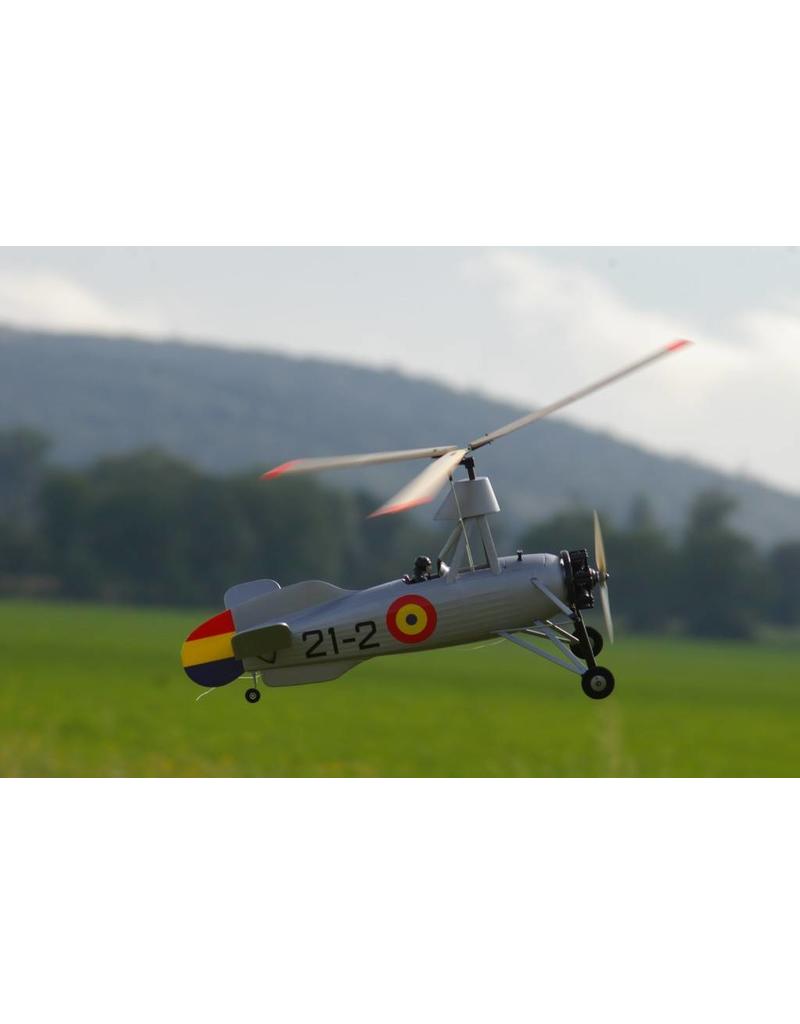
In 1934, a Spanish Navy C.30 piloted by Cierva landed on the Spanish seaplane tender Dedalo, anchored in Valencia harbour, and later took off.
In September 1935, five members of the Lithuanian Aero Club flew C.30As in an ‘air train’ together with the Schneider Grunau Baby glider and the de Havilland DH.60 Moth aeroplane over the Baltic Sea states: Kaunas, Riga, Tallinn and Helsinki.
Twelve C.30As built by Avro for the Royal Air Force (RAF) entered service as the Avro 671 Rota Mk 1 (serial numbers K4230 to K4239 and K4296 & K4775). The twelve were delivered between 1934 and 1935. They were assigned to the School of Army Co-operation at RAF Old Sarum near Salisbury.
Many of the surviving civil aircraft were also taken into RAF service between 1939 and 1940. In 1940 they equipped 1448 Flt. at RAF Duxford. Later they equipped 529 Sqn. at RAF Halton for radar calibration work; following the squadron’s disbandment in October 1945, the twelve survivors were sold to civilian owners.
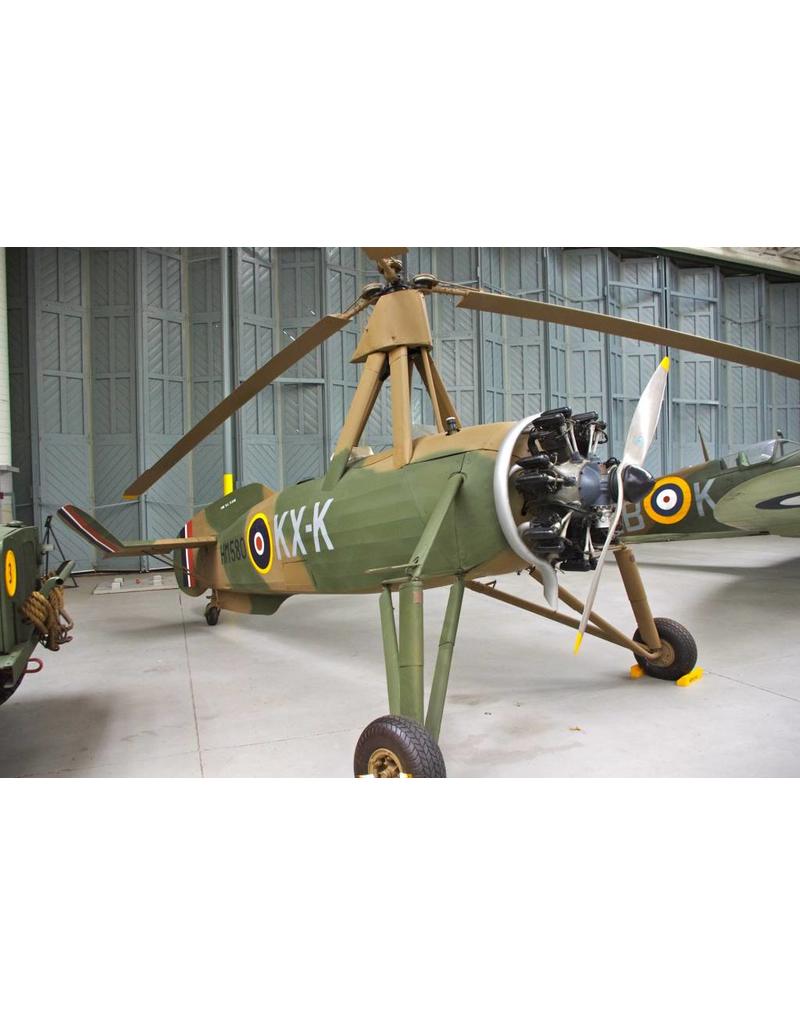
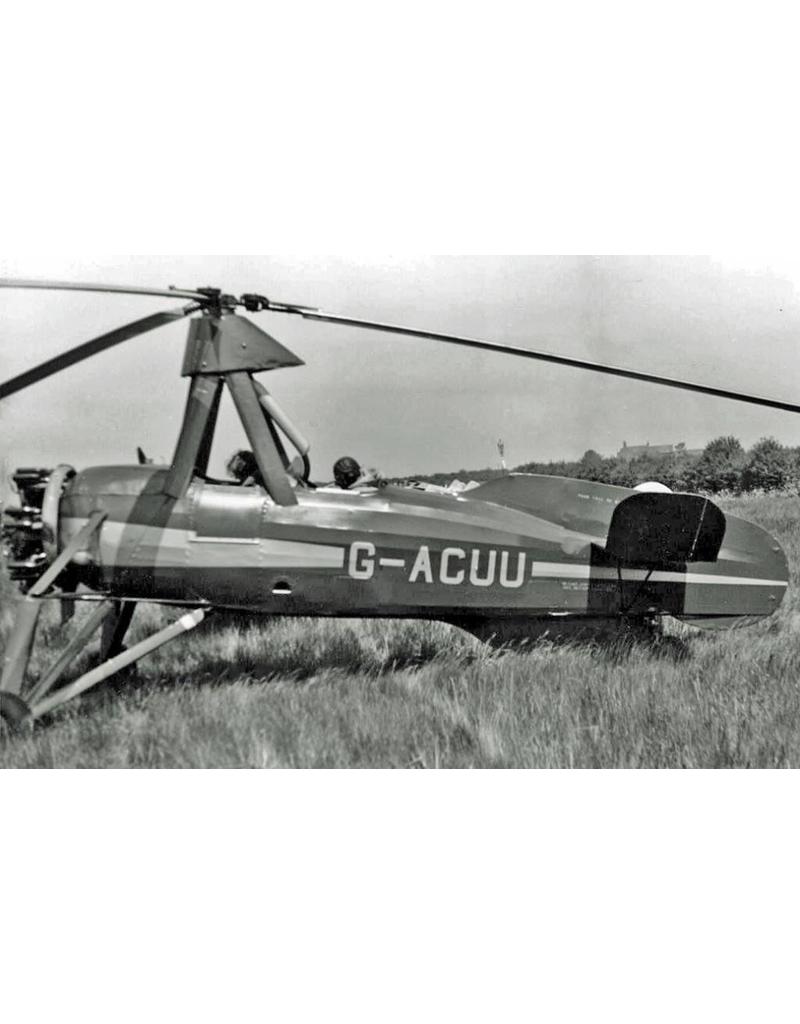
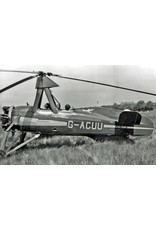
Most of these did not last long, although two were used by Fairey to provide pilots with rotary-wing experience as part of their Fairey Gyrodyne helicopter programme. Rota Towels kept one ex-RAF Rota aircraft, G-AHTZ, airworthy until an accident in 1958. G-ACUU, the Imperial War Museum’s C.30A exhibit at Duxford, had one of the longest active service lives. It joined Air Service Training Ltd in 1934, was requisitioned (as Rota HM580) in 1942, serving with 529 Squadron and returning to civilian use by G.S. Baker based at Birmingham’s Elmdon Airport with its original registration and the nickname Billy Boy, and was not withdrawn from service until 1960.
Ì´Ì_
Specifications (C.30A)
General characteristics
Performance
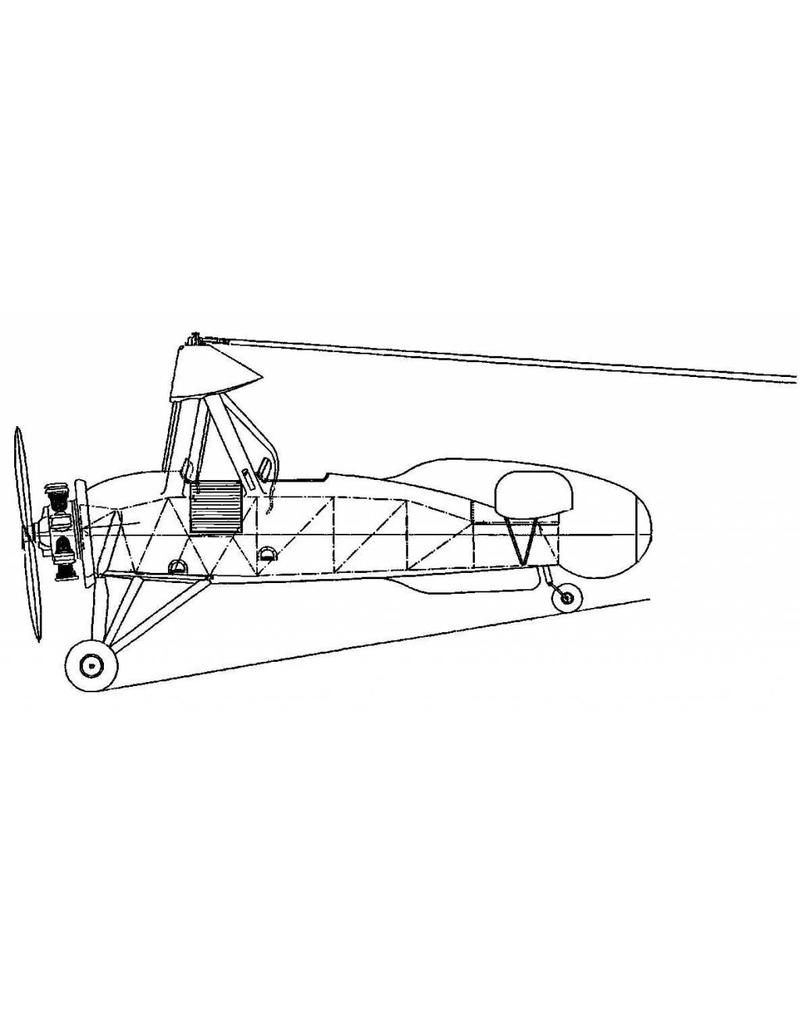
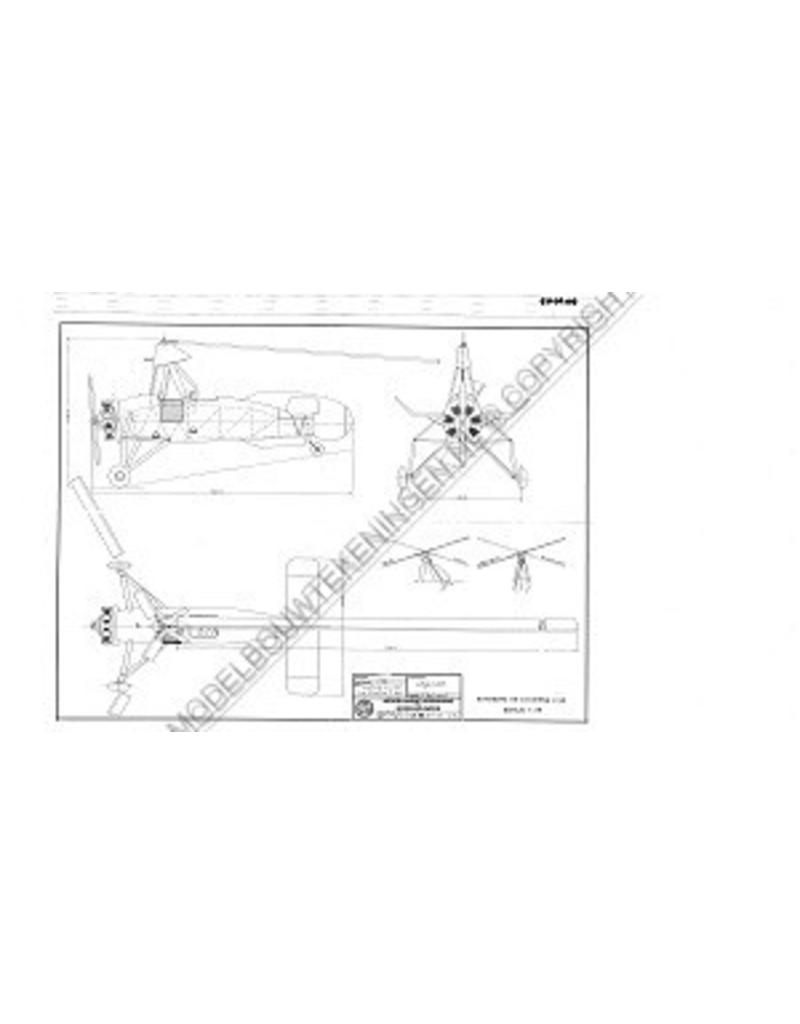
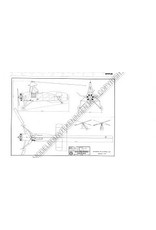
Specifications Model construction drawing:
|
Drawing number |
50.02.013 |
|
Author |
C. ter Horst |
|
Description |
De La Cierva C30 autogyro |
|
Quality |
Ì´Ì_ |
|
Difficulty |
D |
|
Scale |
1 : 20 |
|
Number of sheets A00 |
0 |
|
Number of A0 sheets |
0 |
|
Number of A1 sheets |
1 |
|
Number of A2 sheets |
0 |
|
Number of A3 sheets |
0 |
|
Number of A4 sheets |
0 |
|
Total number of drawing sheets |
1 |
|
Number of A4 text pages |
0 |
|
Weight in grams |
45 |
|
Details |
dM 2001/9, 2002/1 |
|
Comments |
Ì´Ì_ |