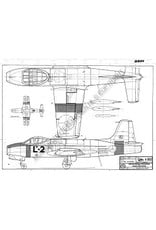
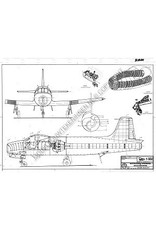
| Article number: | 50.10.011 |
Fokker S.14
Source: www.wikipedia.org/wiki/Fokker_S.14
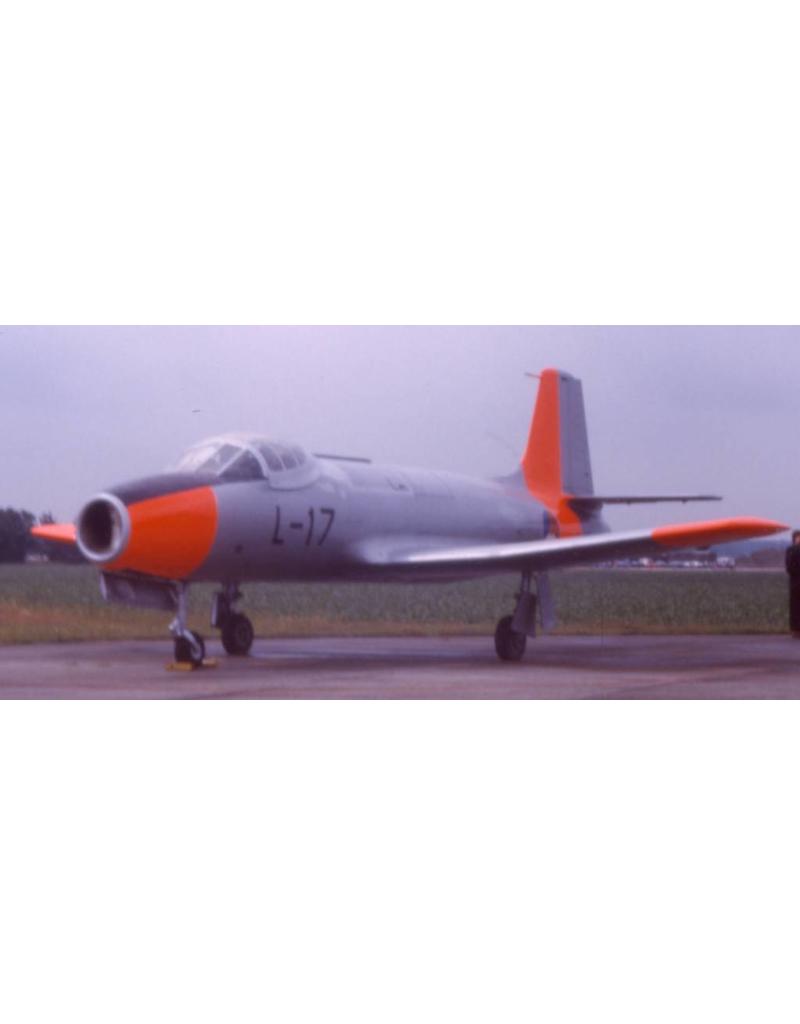
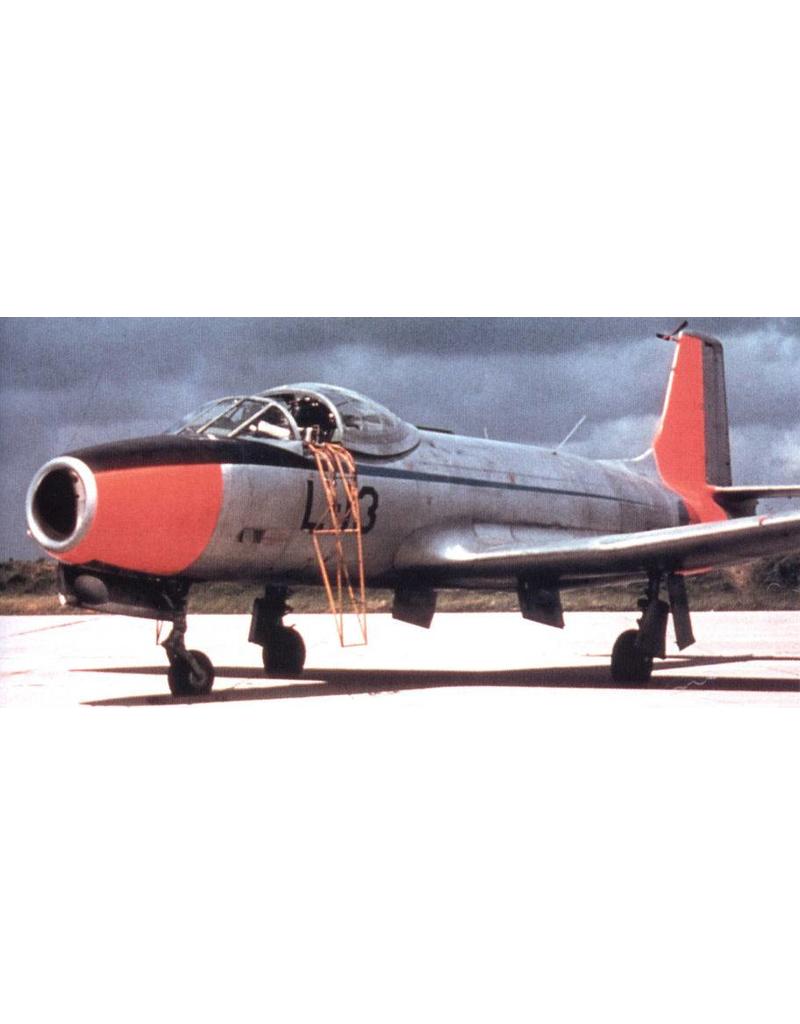
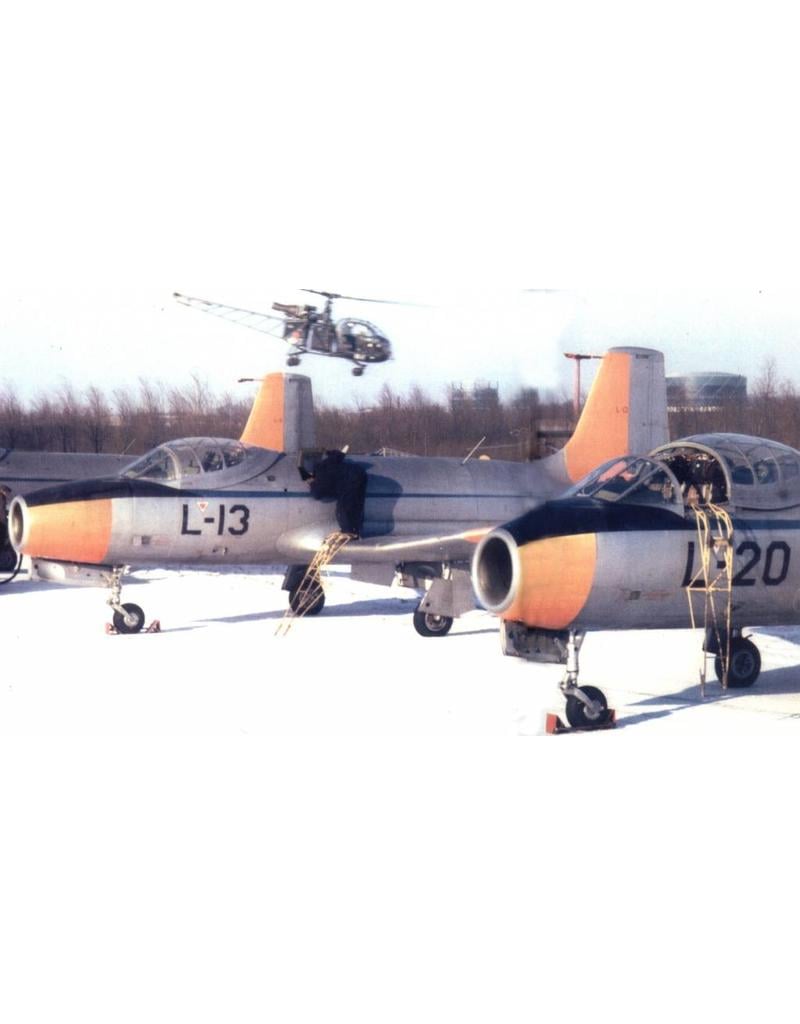
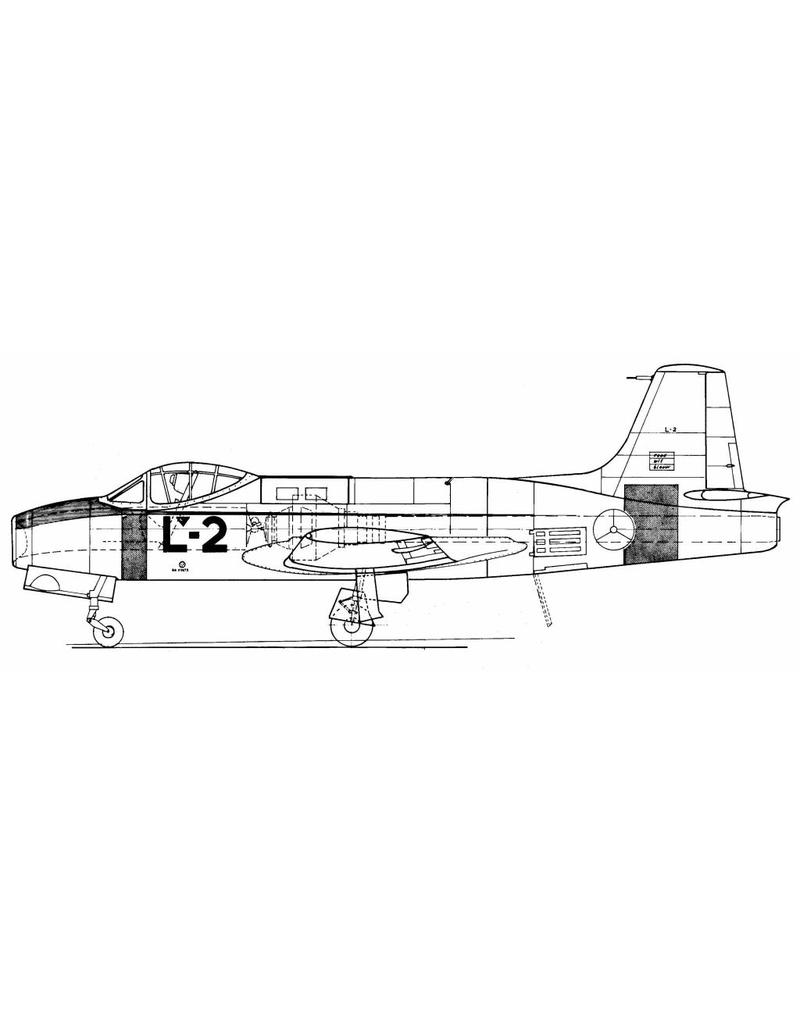
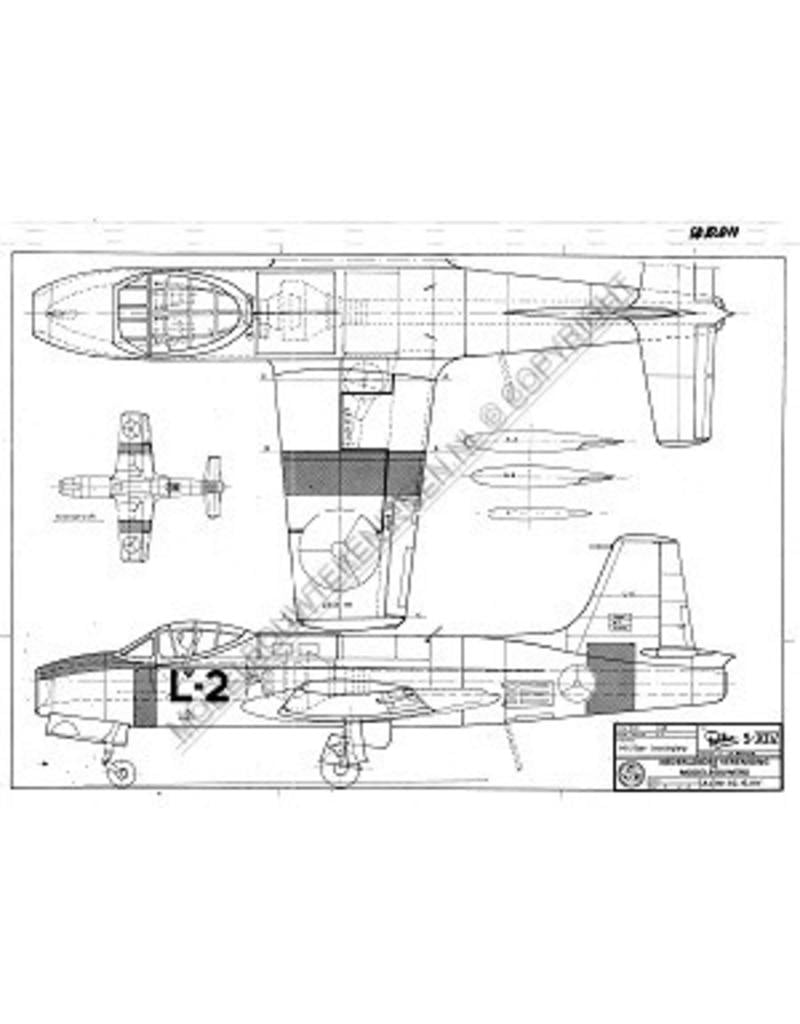
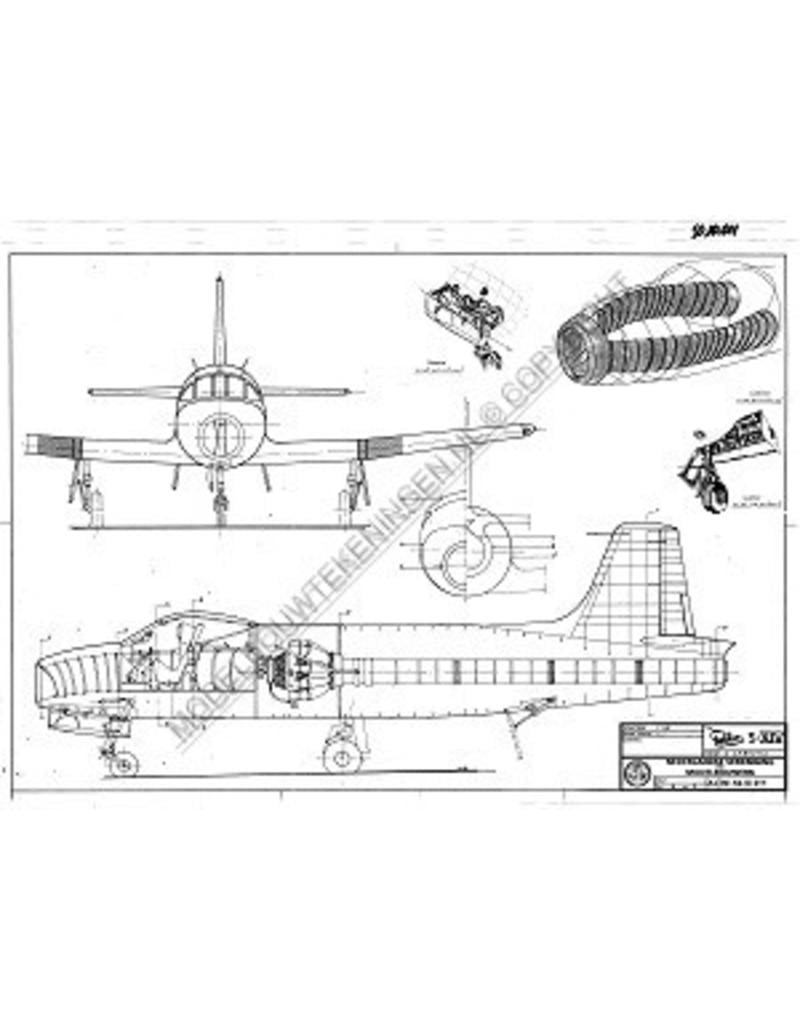
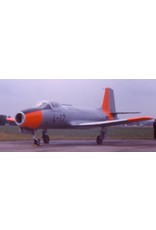
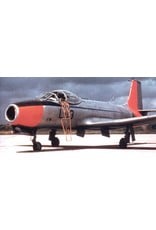
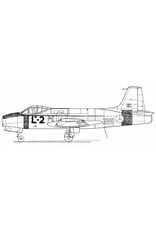
The Fokker S.14 "Machtrainer" served as a jet trainer (fighter pilot training) with the Royal Netherlands Air Force between 1955 and 1967. This aircraft has straight wings with an air intake in the nose of the fuselage and is equipped with Martin-Baker ejection seats. The instructor and student sit side by side, an unusual arrangement for this category of trainer. The wider fuselage does, however, have a negative impact on the maximum speed. The type was popular with pilots because it flew well (partly due to the V-shaped wings) and could land at much lower speeds than most jet aircraft of the time, thanks to its straight, high-surface-area wing.
Ì´Ì_
History.
Production.
The Fokker S.14 made its maiden flight on 19 May 1951. It was the first jet aircraft built by Fokker and the world’s first aircraft designed as a trainer and equipped with a jet engine; this was in contrast to, for example, the Lockheed T-33, a two-seater variant derived from the P-80 Shooting Star.
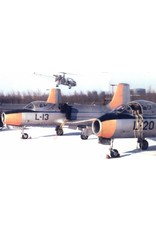
The only orders for the S.14 came from the Royal Netherlands Air Force, which received 20 aircraft. These were numbered L-1 to L-20. The first aircraft in this series was delivered 3.5 years after the prototype’s maiden flight.
In 1952, Fairchild had been promised the licensing rights. They hoped to sell the aircraft as a trainer to the US Air Force. However, the US Air Force had no interest as they had the Cessna T-37 Tweet trainer at their disposal by around 1955.
In 1958, a number of modifications were made to the prototype (PH-XIV). It was fitted with a Rolls-Royce Nene Mk.3 engine instead of the Rolls-Royce Derwent jet engine. This modified prototype was known as the Machtrainer Mk II. The aircraft for the Royal Netherlands Air Force were all equipped with RR Derwent 8 engines
Ì´Ì_
Service with the Royal Netherlands Air Force.
The primary task of the S.14s was to familiarise pilots with flying jet aircraft. A few aircraft were also used for promotional purposes. The (L-4) undertook a tour of the United States in 1955. During this tour, the aircraft crashed, resulting in the death of the well-known test pilot Gerben Sonderman.
An S.14 once took part in the race between London and Paris, a well-known event at the time.
The S.14 served with the following units/airfields:
Fighter Flight School, Twenthe Air Base
Conversion Flight 700 Squadron (with F-86K ‘Kaasjager’)
Soesterberg Air Base/Twenthe Air Base for instrument flying
Ypenburg Airfield
Woensdrecht Air Base
Ì´Ì_
Survivors.
Of the 21 aircraft produced in total, three remain. These are all located in the Netherlands. The last one to fly served for years at the NLR as a flying test platform. One S.14, L-11, is in storage at the National Military Museum (NMM) in Soesterberg. A second (L-17) is being restored as a static display at the Royal Netherlands Air Force Historical Flight (KLuHV), and the third (PH-XIV / K-1) is in the collection of the Aviodrome at Lelystad Airport.
Ì´Ì_
Technical data:
|
General |
|
|
Manufacturer |
|
|
Role |
Trainer |
|
2 |
|
|
Status |
|
|
Use |
Out of service |
|
Dimensions |
|
|
13.3 m |
|
|
4.7 m |
|
|
12 m |
|
|
Wing area |
31.80 m² |
|
Weight |
|
|
Empty weight |
3,765 kg |
|
Max. weight |
5350 kg |
|
Power source |
|
|
1 * Rolls-Royce Derwent VIII |
|
|
1,575 kN |
|
|
Performance |
|
|
Top speed |
781 km/h |
|
Climb rate |
942 m per min / 2,874 ft per min (m/s) |
|
Range |
965 km |
|
Armament |
|
|
4 × 11.4 kg practice bombs |
|
Specifications Model construction drawing:
|
Drawing number |
50.10.011 |
|
Author |
J.H. Bosman |
|
Description |
Fokker S-XIV |
|
Quality |
Ì´Ì_ |
|
Difficulty |
B |
|
Scale |
1 : 25 |
|
Number of sheets A00 |
0 |
|
Number of A0 sheets |
0 |
|
Number of A1 sheets |
0 |
|
Number of A2 sheets |
2 |
|
Number of A3 sheets |
0 |
|
Number of A4 sheets |
0 |
|
Total number of drawing sheets |
2 |
|
Number of A4 text pages |
0 |
|
Weight in grams |
65 |
|
Special features |
span 47 cm |
|
Comments |
Ì´Ì_ |