| Article number: | 50.00.007 |
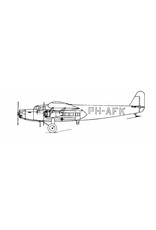
Fokker F.IX
Ì´Ì_
Source : www.wikipedia.org/wiki/Fokker_F.IX
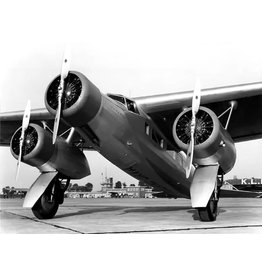
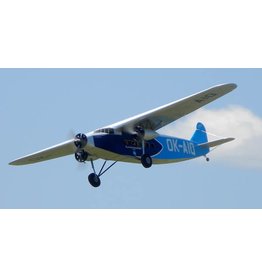
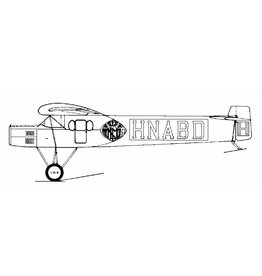
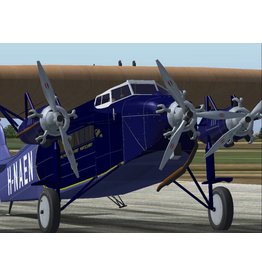
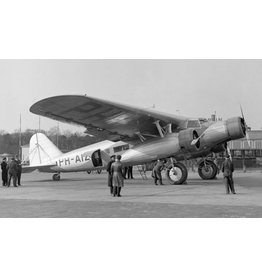
The Fokker F.IX is a Dutch high-wing passenger aircraft built by Fokker. Its first flight took place on 21 August 1929. The intention was for KLM to acquire a suitable aircraft with the F.IX for flights to Batavia (Dutch East Indies).
Ì´Ì_
Design and development.
The F.IX is a 3-engined high-wing aircraft of conventional configuration, equipped with a tailwheel. The wings are made of wood and the fuselage of welded steel tubes covered with fabric. When the aircraft was present at the Salon International de l'Aéronautique et de l'Espace, Paris-Le Bourget - the Paris Air Show, in 1930, it received the Grand Prix de Comfort et d'Élégance d'Avions de Transport – the public's beauty prize.
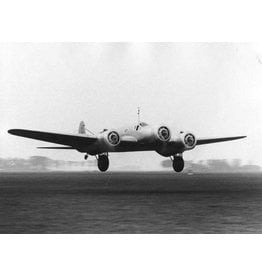
The Czechoslovak aircraft manufacturer Avia bought a licence to produce bombers based on this type for the Czechoslovak Air Force, when it became clear that the F.VII (which was already produced by Avia under licence) was too small for such a role. In 1932, 12 Avia-produced F.IXs were in service as F.39s. Yugoslavia bought two F.39s and a licence to build this type domestically, although the latter did not happen. The F.39s differed from their civilian counterparts not only by the bomb racks, but also by a machine gun placed on the back of the aircraft, either in a gun turret or with a step. Avia also built two examples for ČSA as F-IXD (Dopravni – "Transport"). One of these two survived until World War II, after which it was taken over by the Luftwaffe and received the registration TF + BO.
A proposed further military development by Avia, the 2-engined F.139, never progressed beyond the drawing board.
Ì´Ì_
Operational history.
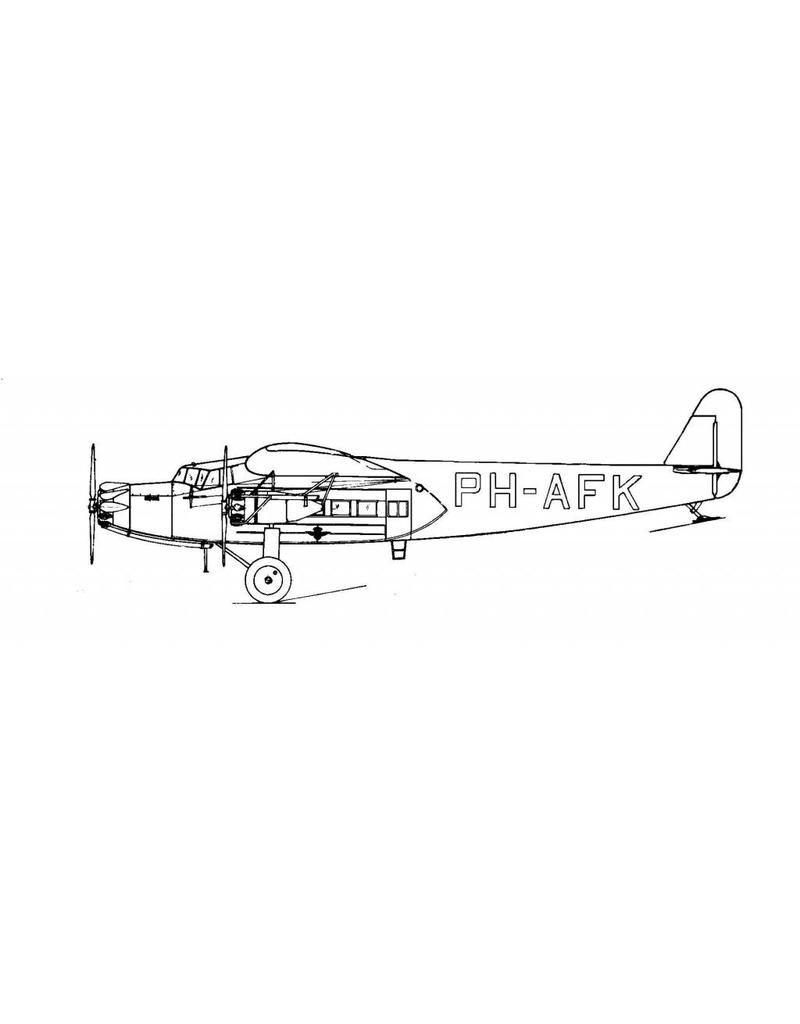
As early as 1925, Albert Plesman, then director of KLM, requested Fokker to build a larger successor to the Fokker F.VII. Because Fokker knew that KLM would likely be the only major customer, with talk of an order for more than 10 units, Plesman had significant influence on the aircraft's design. Unfortunately for Fokker, 1929 was not only the year of the F.IX's introduction but also that of the New York stock market crash. Due to the poor economic climate, KLM only took delivery of two F.IXs. Although KLM had commissioned the F.IX for the route to Batavia, the small number of aircraft of this type that KLM now possessed made it logistically impractical to deploy the aircraft on this route. Both F.IXs flew to the Dutch East Indies only once and otherwise served only within Europe. One of the two KLM aircraft, the PH-AFK, was written off after an accident on 4 August 1931. The other, the PH-AGA Adelaar (Eagle), continued to fly until 1936, after which it was sold to the Spanish Republicans to serve as a bomber in the Spanish Civil War.
Ì´Ì_
Versions.
Fokker.
F.IX: 3-engined passenger aircraft for KLM
Avia.
F.39: 3-engined bomber for the Czechoslovak Air Force, known by Avia as BH-39
F.139: Proposed 2-engined version of the F.39, none built.
F.IX D: 3-engined passenger aircraft for ČSA
Ì´Ì_
Users.
Civilian users.
Netherlands KLM - 2 F.IXs, the PH-AFK and the PH-AGA.
Czechoslovakia ČSA - 2 Avia F.IX Ds
Ì´Ì_
Military users.
Germany - 1 F.IX D: war prize, registered as TF + BO
Yugoslavia - 2 F.39s
Croatia – 1 F.39: war prize
Spanish Republic - the PH-AGA: purchased from KLM
Czechoslovakia - 12 F.39s
Ì´Ì_
Technical specifications :
|
Manufacturer |
|
|
Length |
19.31 m |
|
Wingspan |
27.16 m |
|
Passenger seats |
20 |
|
Empty weight |
5450 kg |
|
Max. take-off weight |
9000 kg |
|
Engines |
3x Gnome et Rhone 9A Jupiter radial engines |
|
Max. thrust per engine |
360 kW (480 hp) |
|
Cruising speed |
172 km/h |
|
Max. range |
1150 km |
|
First flight |
21 August 1929 |
|
Status |
historical |
Ì´Ì_
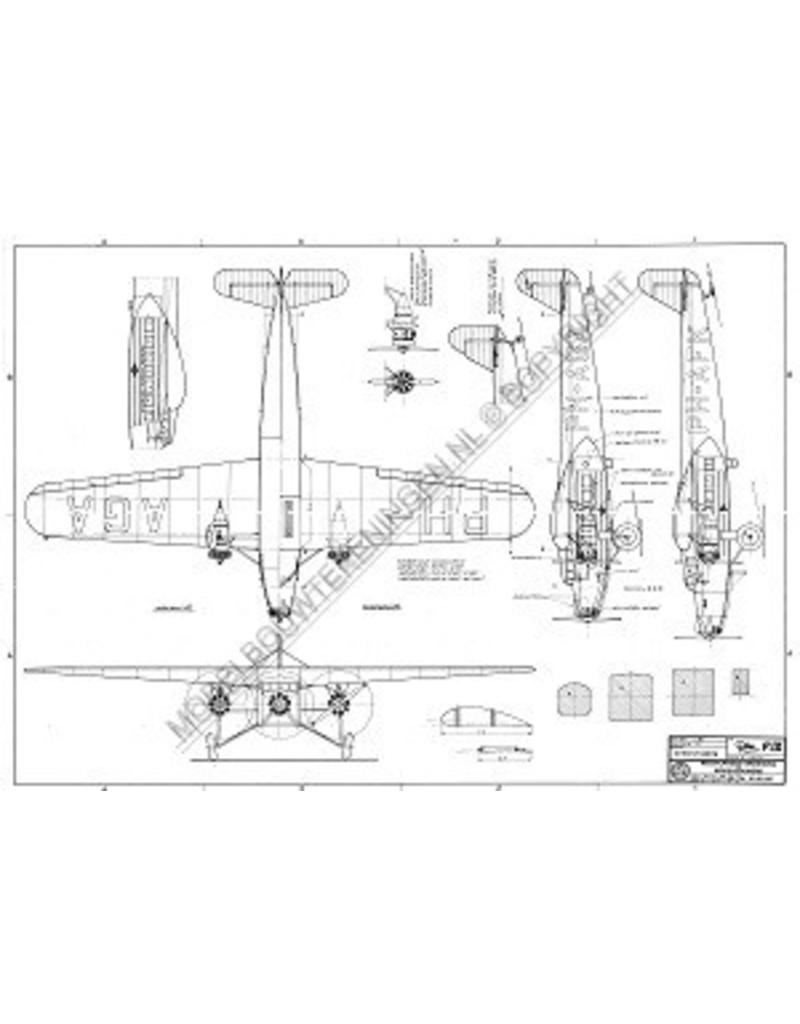
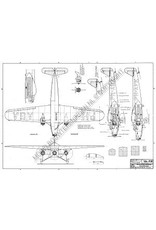
Model Drawing Specifications :
|
Drawing number |
50.00.007 |
|
Author |
J.H. Bosman |
|
Description |
Fokker FIX |
|
Quality |
Ì´Ì_ |
|
Difficulty |
C |
|
Scale |
1 : 50 |
|
Number of sheets A00 |
0 |
|
Number of sheets A0 |
0 |
|
Number of sheets A1 |
1 |
|
Number of sheets A2 |
0 |
|
Number of sheets A3 |
0 |
|
Number of sheets A4 |
0 |
|
Total number of drawing sheets |
1 |
|
Number of A4 text sheets |
0 |
|
Weight in grams |
65 |
|
Special features |
wingspan 54 cm |
|
Remarks |
Ì´Ì_ |