| Article number: | 50.02.015 |
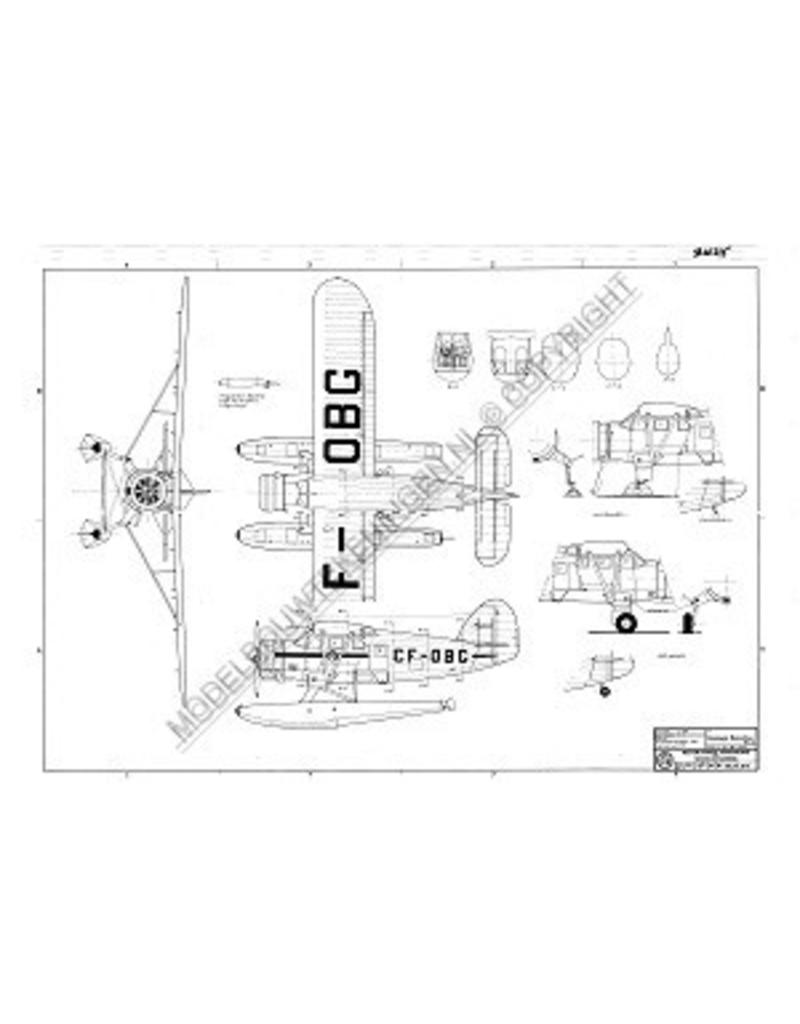
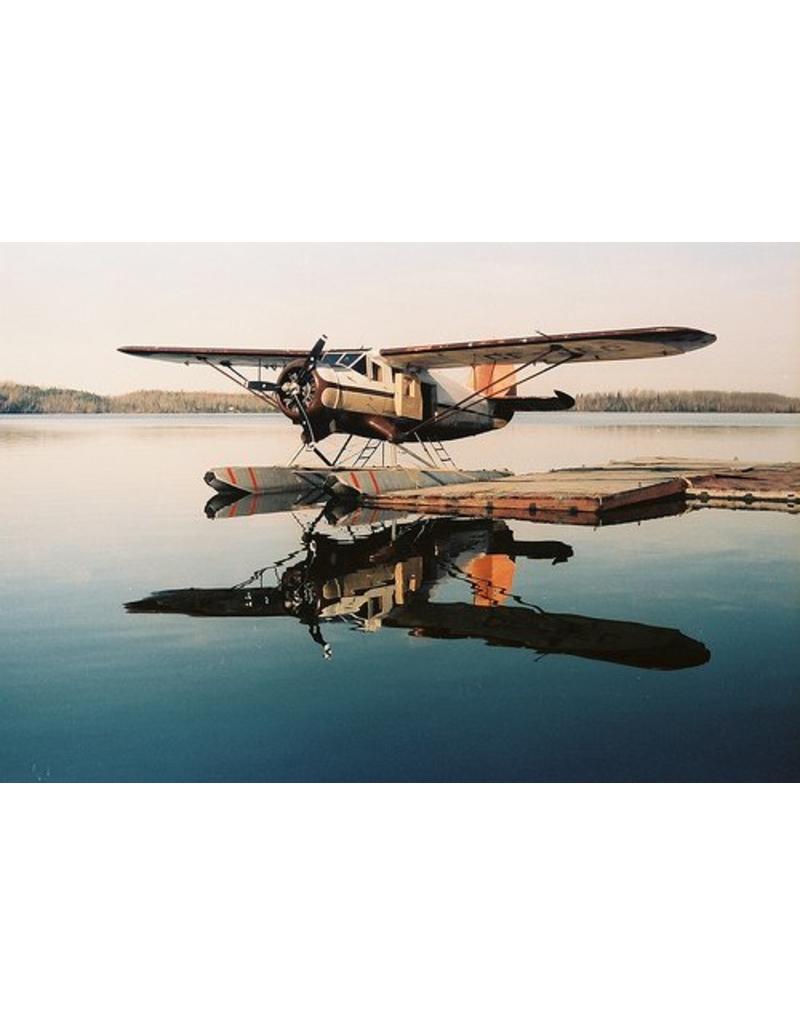
Noorduyn Norseman Mk V
Ì´Ì_
Source: ww.wikipedia.org/wiki/Noorduyn_Norseman
(Editor’s note: the accompanying text is in English; a Dutch version was not available.)
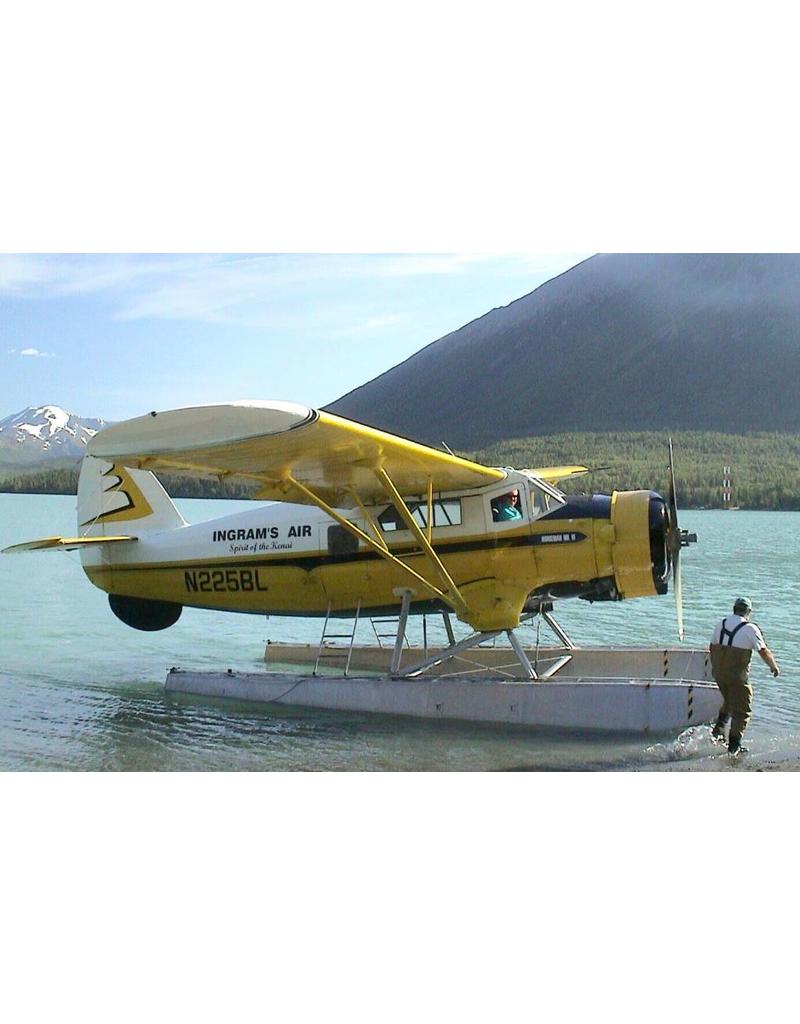
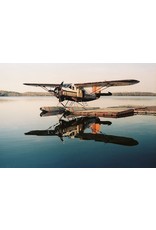
The Noorduyn Norseman is a Canadian single-engine bush plane designed to operate from unimproved surfaces. Distinctive stubby landing gear protrusions from the lower fuselage make it easily recognisable.
Originally introduced in 1935, the Norseman remained in production for almost 25 years, with over 900 produced. A number of examples remain in commercial and private use to this day. Norseman aircraft are known to have been registered and/or operated in 68 countries throughout the world and have also been based and flown in the Arctic and Antarctic regions.
Ì´Ì_
Design and development.
Designed by Robert B.C. Noorduyn, the Noorduyn Norseman was produced from 1935 to 1959, originally by Noorduyn Aircraft Ltd. and later by the Canada Car and Foundry company.
Drawing on his experience of working on many groundbreaking designs at Fokker, Bellanca and Pitcairn-Cierva, Noorduyn decided to create his own design in 1934: the Noorduyn Norseman. Together with his colleague, Walter Clayton, Noorduyn founded his original company, Noorduyn Aircraft Limited, in early 1933 in Montreal, whilst a successor company bearing the name, Noorduyn Aviation, was established in 1935.
Noorduyn’s vision of an ideal bush plane began with a high-wing monoplane airframe to facilitate the loading and unloading of passengers and cargo at seaplane docks and airports; next, a Canadian operator utilising existing talent, equipment and facilities should be able to make a profit using it; finally, it should be superior in every respect to those already in use there.
From the outset, Noorduyn designed his transport to have interchangeable wheel, ski or twin-float landing gear. Unlike most aircraft designs, the Norseman was first fitted with floats, then skis and, finally, fixed landing gear.
The final design bore a strong resemblance to Noorduyn’s earlier Fokker designs: a high-wing braced monoplane with an all-welded steel-tubing fuselage. Attached wooden stringers supported a fabric skin. Its wing was constructed entirely of fabric-covered wood, with the exception of steel-tubing flaps and ailerons. The split landing gear was fitted to fuselage stubs; legs were secured with two bolts each to allow for the alternate arrangement of floats or skis. The tail wheel strut could be fitted with a wheel or tail skid.
Ì´Ì_
Operational history.
The first Norseman, powered by a Wright R-975-E3 Whirlwind, underwent flight testing on floats on 14 November 1935 and was sold and delivered to Dominion Skyways Ltd. on 18 January 1936, registered as "CF-AYO" and named "Arcturus". In the summer of 1941, Warner Brothers leased CF-AYO for the filming of “Captains of the Clouds”, starring James Cagney. Principal aerial photography took place near North Bay, Ontario, with CF-AYO carrying the temporary registration “CF-HGO”. CF-AYO was lost in a crash in Algonquin Park in 1952. Its wreckage is currently on display at the Canadian Bushplane Heritage Centre.
Almost immediately, the Norseman proved itself to be a rugged, reliable workhorse with steady sales. The first aircraft, CF-AYO, was designated the Norseman Mk I. The next aircraft, "CF-BAU", which required some minor modifications following the certification tests and was fitted with a new Pratt & Whitney R-1340 Wasp SC-1 engine upgraded from 420 to 450 hp, was designated Norseman Mk II, whilst the next three aircraft were Norseman Mk IIIs: ‘CF-AZA’ went to MacKenzie Air Service, Edmonton, Alberta; ‘CF-AZE’ to Prospector Airways, Clarkson, Ontario; and ‘CF-AZS’ to Starrat Airways, Hudson, Ontario. ‘CF-BAU’ was modified on 26 June 1937 to become the prototype Norseman Mk IV, powered by a Pratt & Whitney Wasp S3H-1. The Mk IV became the "definitive" model, but production might have ended at a few hundred examples had it not been for the outbreak of the Second World War.
Ì´Ì_
Second World War.
Until 1940, the Noorduyn company had sold only 17 aircraft in total, primarily to commercial operators in Canada’s north and to the Royal Canadian Mounted Police. With the outbreak of war in Europe, demand for a utility transport led to major military orders. The Royal Canadian Air Force and the United States Army Air Forces became the two largest operators; the RCAF ordered 38 Norseman Mk IVWs for radio and navigational training for the Commonwealth Air Training Plan.
USAAF Colonel Bernt Balchen had been involved in establishing a staging route across Greenland to facilitate the ferrying of aircraft from North America to Europe. He required a bush plane rugged enough to survive in the harsh conditions of the Arctic. After evaluating six Norsemans diverted from a previous RCAF order, late in 1941, he recommended the purchase of the Norseman Mk IV, specially modified to USAAF requirements as the YC-64A. Following the US entry into the Second World War, the USAAF placed the first of several orders for a production version, the C-64A Norseman. The principal changes involved fitting two fuselage belly tanks, bringing the standard fuel capacity to 201 imperial gallons (914 litres); an additional cabin fuel tank of 32 imperial gallons (145 litres) could also be installed. These changes resulted in an increase of 950 lb (431 kg) in the loaded weight of the standard Mk IV. Deliveries began in mid-1942, with the American military eventually placing orders for 749 Norseman Mk IVs as the C-64A (later UC-64A).
Throughout the Second World War, the USAAF Norseman aircraft were used in North America (primarily Alaska) as well as in other theatres of war, including Europe. Three UC-64As were used by the US Navy under the designation JA-1. Six C-64B floatplanes were used by the US Army Corps of Engineers, as well as by other Allied air forces, who placed orders for 43 Norseman Mk IVs. The RCAF ordered a further 34 aircraft as Norseman Mk VI. Noorduyn was the sole manufacturer, but when the USAAF considered ordering a larger number of C-64As, licensed production of 600 by Aeronca Aircraft Corp. (Middletown, Ohio) was contemplated before the contract was cancelled in 1943.
It was a UC-64A Norseman (s/n 44-70285) flown by F/O John R. S. Morgan in which Major Glenn Miller was flying as a passenger when he disappeared over the English Channel on 15 December 1944, possibly due to aircraft carburettor icing or from bombs jettisoned by RAF Lancasters following an aborted raid.
It was also in 1944 that a Norseman crashed into King Alfred’s Tower, a 50-metre-tall folly in Somerset, England, tragically killing all five crew members. The tower, part of the celebrated Stourhead estate and landscape, was not repaired until 1986, a process which involved the use of a Wessex helicopter to lower a 300-kilogram (47 st) stone onto the top. As of 2013, the site of the collision is visible as a patch of newer bricks on the side of the building, 25 metres above the ground.[citation needed]
Ì´Ì_
Post-war.
In post-war production, the Canada Car and Foundry in Fort William, Ontario acquired the rights to the Norseman design, producing a version known as the Norseman Mk V, a civilian version of the wartime Mk IV. In order to further exploit the market, the "Can Car" factory designed and built the Norseman Mk VII. This version had a larger engine, a new all-metal wing and greater cargo capacity but was destined never to go into production. With major commitments during the Korean War at that time, the company placed it in temporary storage, where it was destroyed in a hangar fire in September 1951.
In 1953, Noorduyn led a group of investors who bought back the jigs and equipment from Canada Car and Foundry and established a new company called Noorduyn Norseman Aircraft Ltd. Bob Noorduyn fell ill and died at his home in South Burlington, Vermont, on 22 February 1959. The company continued to provide support for operating Norseman aircraft and built three new Mk V models before selling its assets in 1982 to Norco Associates. Norco provided support services only, as Norseman aircraft manufacture was labour-intensive and very expensive.
The last Noorduyn Norseman to be built was sold and delivered to a commercial customer on 19 January 1959. A total of 903 Norseman aircraft (Mk I – Mk V) were produced and delivered to various commercial and military customers. There are currently 42 Norseman aircraft on the active Canadian aircraft register. The number in use worldwide is not known.
In recognition of the Norseman’s role in serving the remote villages of northern Canada, the town of Red Lake, Ontario, a gateway to remote communities in north-western Ontario, promotes itself as The Norseman Capital of the World. Every July, the "Norseman Floatplane Festival" brings Norseman aircraft to Red Lake as the centrepiece of a community-based weekend festival featuring stage entertainment, children’s games and rides, competitions, cultural and historical displays, and street vendors with craft and speciality stalls.
The Canadian Second World War “ace of aces” George Beurling died in a Norseman whilst landing at Urbe Airport in Rome, Italy, in 1948.
Norseman aircraft have appeared in the films Grey Owl (1999) and The Snow Walker (2003).
General characteristics
Performance
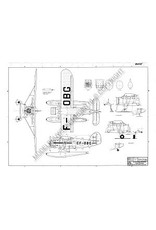
Specifications Model drawing:
|
Drawing number |
50.02.015 |
|
Author |
J.H. Bosman |
|
Description |
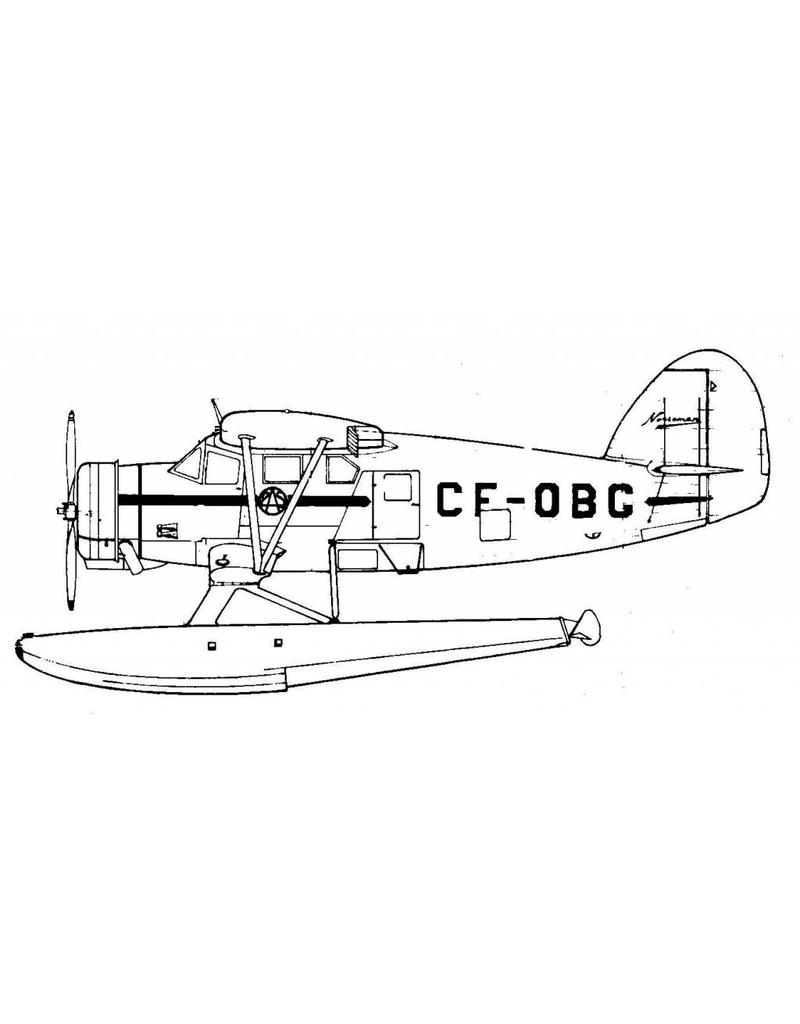
Noorduyn Norseman Mk V transport aircraft |
|
Quality |
Ì´Ì_ |
|
Difficulty |
D |
|
Scale |
1 : 32 |
|
Number of sheets A00 |
0 |
|
Number of A0 sheets |
0 |
|
Number of A1 sheets |
1 |
|
Number of A2 sheets |
0 |
|
Number of A3 sheets |
0 |
|
Number of A4 sheets |
0 |
|
Total number of drawing sheets |
1 |
|
Number of A4 text sheets |
0 |
|
Weight in grams |
65 |
|
Specifications |
span 49 cm |
|
Comments |
was 50.11.009 Ì´Ì_
|